
LGBTQ+ Sensitivity Training Guide for Inclusive Workplaces
February 2, 2026Global companies often implement well-intentioned diversity policies, yet many LGBTQ+ employees continue to face discrimination and exclusion at work. Persistent challenges, especially for transgender and non-binary staff, make it clear that legal protections alone are not enough to ensure true inclusion. By focusing on thorough policy assessment and stakeholder engagement, HR managers can uncover hidden gaps and set the stage for sensitivity training that truly supports every nationality and identity in the workplace.

Step 1: Assess Current Workplace Policies
Effectively evaluating your company’s workplace policies is the critical first step in developing comprehensive LGBTQ+ sensitivity training. By thoroughly examining existing guidelines, you can identify gaps and opportunities for meaningful inclusion that support all employees.
To conduct a comprehensive policy assessment, start by gathering all current HR documentation related to diversity, harassment, and employee conduct. Workplace discrimination data reveals significant challenges that require careful policy review. Focus on examining these key areas:
- Anti-discrimination language covering sexual orientation and gender identity
- Specific protections for transgender and nonbinary employees
- Procedures for reporting harassment or discrimination
- Equal benefits and support for LGBTQ+ workers
- Inclusive dress code and bathroom access policies
The goal isn’t just checking boxes. You need to understand how these policies translate into real workplace experiences. Transgender workplace climate research highlights that explicit, affirmative policies significantly impact job satisfaction and mental health.
Creating inclusive policies means moving beyond legal minimums to genuinely support employee dignity and potential.
Consider engaging LGBTQ+ employee resource groups or external diversity consultants to provide nuanced feedback during your assessment. Their lived experiences can reveal policy gaps that might otherwise remain invisible.
Pro tip: Request anonymous employee feedback through confidential surveys to gain candid insights about current policy effectiveness and perceived inclusivity.
Step 2: Engage Diverse Stakeholders for Input
Building an effective LGBTQ+ sensitivity training requires gathering insights from multiple perspectives across your organization. The goal is to create a comprehensive and nuanced approach that reflects the real experiences of your diverse workforce.
Stakeholder engagement strategies highlight the importance of involving multiple voices in training development. Start by identifying and connecting with key groups:
- LGBTQ+ employee resource groups
- Human resources representatives
- Diversity and inclusion leaders
- Leadership team members
- External LGBTQ+ advocacy organizations
Each stakeholder group brings unique insights that can strengthen your training approach. Collaborative policy development demonstrates how diverse perspectives create more robust and meaningful inclusion strategies.
Authentic inclusion requires listening to those most impacted by workplace policies and practices.
When engaging stakeholders, create safe spaces for honest dialogue. Use structured interviews, focus groups, and anonymous feedback mechanisms to collect candid insights. Remember that some employees might feel vulnerable sharing their experiences, so approach conversations with empathy and respect.
Here’s a comparison of approaches to engaging stakeholders in LGBTQ+ sensitivity training development:
Pro tip: Rotate meeting facilitators and use multiple engagement methods to ensure all voices feel equally welcomed and heard.
Step 3: Develop Inclusive Training Materials
Creating comprehensive LGBTQ+ sensitivity training materials requires thoughtful, nuanced approaches that genuinely reflect the diverse experiences within the LGBTQ+ community. Your goal is to develop content that educates, supports, and empowers employees while challenging existing biases and misconceptions.
Inclusive educational toolkit guidelines emphasize the importance of authentic representation. Focus on developing materials that incorporate multiple perspectives and experiences:
- Authentic personal narratives
- Intersectional representation
- Culturally sensitive language
- Real-world workplace scenarios
- Interactive learning modules
LGBTQ+ training resources demonstrate that effective materials go beyond simple definitions. They should explore complex topics like sexual orientation, gender identity, and the unique challenges faced by LGBTQ+ professionals.
Truly inclusive training transforms understanding by centering lived experiences, not just theoretical concepts.
Ensure your materials avoid stereotypes and tokenization. Instead, aim to create content that respects individual experiences while providing comprehensive, nuanced education about LGBTQ+ identities, challenges, and contributions in the workplace.

Pro tip: Conduct multiple review cycles with LGBTQ+ employees and external diversity experts to validate the authenticity and impact of your training materials.
Step 4: Conduct Interactive Training Sessions
Successful LGBTQ+ sensitivity training goes far beyond lecture-style presentations. Your goal is to create an engaging, dynamic learning environment that encourages active participation, empathy, and genuine understanding among employees.
Interactive training approaches demonstrate the power of hands-on learning techniques. Design your sessions to include multiple engagement strategies:
- Role-playing scenarios
- Small group discussions
- Anonymous Q&A opportunities
- Case study analyses
- Personal reflection exercises
- Interactive digital polling
Safe schools training methods highlight the importance of creating a supportive, non-judgmental environment. Facilitators should establish clear ground rules that promote respect, confidentiality, and open dialogue.
Effective training transforms intellectual understanding into genuine empathy and behavioral change.
Encourage participants to explore their own biases and perspectives while providing a safe space for learning. Use real-world examples that demonstrate the tangible impact of inclusive workplace practices, helping employees understand the human experiences behind LGBTQ+ workplace challenges.
Pro tip: Create a feedback mechanism that allows participants to share anonymous insights and suggestions, helping you continuously improve future training sessions.
Step 5: Evaluate Training Impact and Improve Continuously
True organizational transformation requires more than just delivering a training session. Your goal is to create a robust, data-driven approach that measures the real-world effectiveness of your LGBTQ+ sensitivity training and continuously adapts to emerging insights.
Impact evaluation methodologies emphasize collecting comprehensive feedback and performance metrics. Design your evaluation process to capture both quantitative and qualitative data:
- Pre and post-training assessments
- Employee sentiment surveys
- Behavioral change tracking
- Workplace incident reporting analysis
- Long-term inclusion metrics
- Anonymized participant feedback
LGBTQ+ inclusion monitoring demonstrates that continuous improvement requires more than surface-level measurements. Look beyond immediate reactions to understand deeper cultural shifts and systemic changes within your organization.
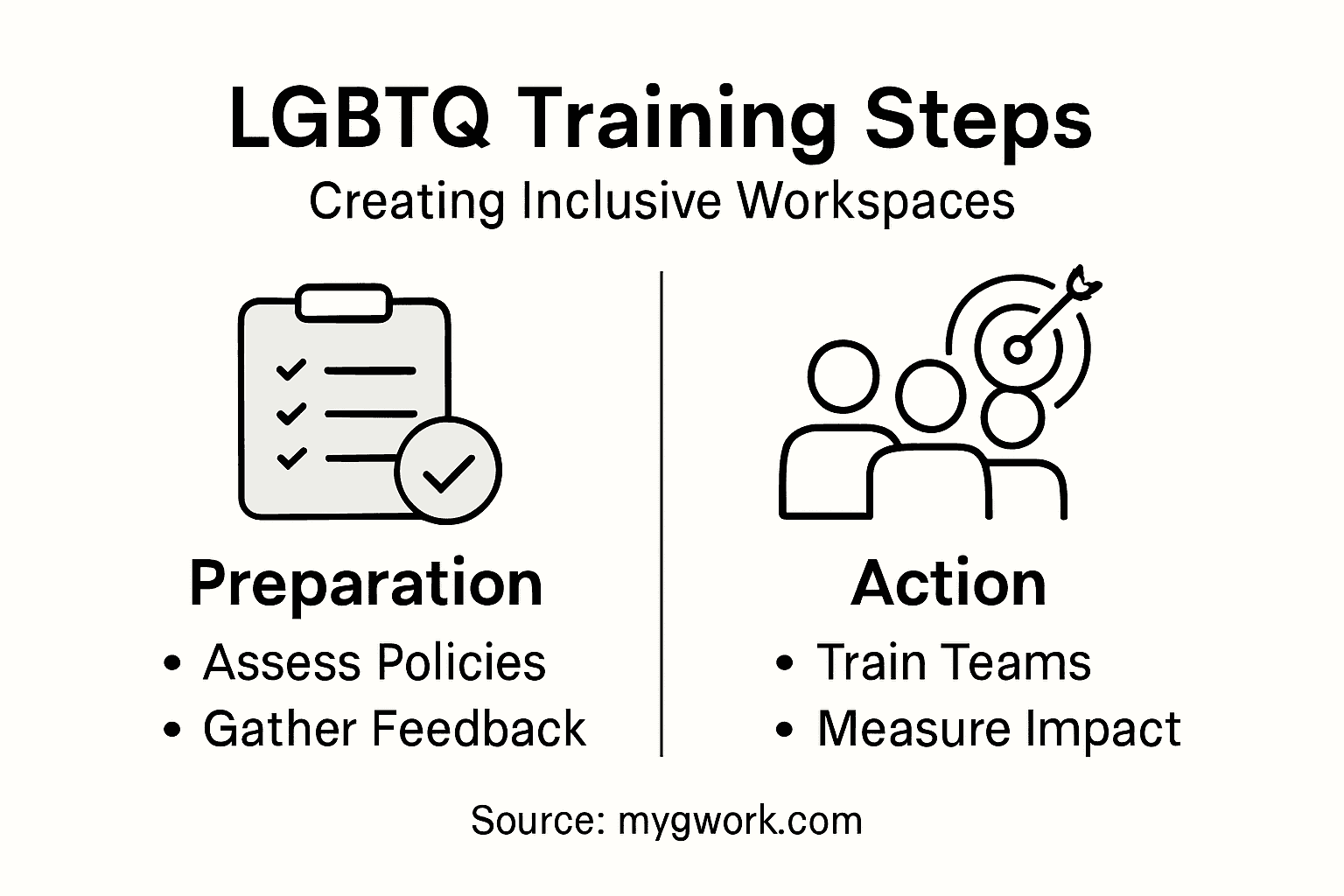
Below is a summary of key metrics for evaluating the impact of LGBTQ+ sensitivity training:
Meaningful progress happens when evaluation becomes a continuous dialogue, not a one-time checkbox.
Encourage transparency by sharing aggregated evaluation results with employees. This demonstrates your commitment to genuine inclusion and invites ongoing conversation about workplace culture and belonging.
Pro tip: Create a dedicated cross-functional team responsible for analyzing training impact and recommending iterative improvements based on comprehensive data.
Build Truly Inclusive Workplaces with myGwork
Creating effective LGBTQ+ sensitivity training means addressing real challenges your employees face such as policy gaps, unconscious bias, and the need for authentic representation. Your goal is to foster a work culture where every individual feels valued and empowered regardless of sexual orientation or gender identity. With insights from comprehensive training steps like engaging diverse stakeholders and evaluating impact continuously, taking action now will make a meaningful difference.
Discover how myGwork supports your journey toward workplace inclusion by connecting you with a vibrant community of LGBTQ+ professionals, tailored resources, and expert-driven insights. Access a specialized network that promotes diversity in hiring, advocacy, and career advancement. Visit myGwork today to explore opportunities for growth and meaningful engagement that complement your LGBTQ+ sensitivity initiatives. Start building a more inclusive and supportive workplace culture right now.
Frequently Asked Questions
What are the key steps to assess current workplace policies for LGBTQ+ sensitivity?
To assess current workplace policies for LGBTQ+ sensitivity, begin by reviewing all HR documentation related to diversity and discrimination. Focus on identifying gaps in anti-discrimination language, protections for transgender and nonbinary employees, and reporting procedures. Take action by conducting this review within the next month to develop a comprehensive understanding of your policies.
How can I engage diverse stakeholders for input in developing LGBTQ+ sensitivity training?
Engaging diverse stakeholders involves reaching out to LGBTQ+ employee resource groups, human resources representatives, and diversity leaders. Use methods like structured interviews and focus groups to gather insights from these groups. Aim to complete this engagement within 4–6 weeks to inform your training development effectively.
What should I include in the training materials for LGBTQ+ sensitivity training?
Training materials should include authentic personal narratives, intersectional representation, and real-world workplace scenarios. Ensure that the language is culturally sensitive and engages employees in interactive learning. Develop these materials over the next 2 months to promote a deeper understanding of LGBTQ+ experiences in the workplace.
How can I create interactive training sessions for effective LGBTQ+ sensitivity training?
Design interactive training sessions that include role-playing scenarios, small group discussions, and anonymous Q&A opportunities. Establish a supportive environment with clear ground rules to encourage open dialogue. Conduct these sessions regularly, aiming for quarterly training to foster ongoing empathy and understanding among employees.
What metrics should I use to evaluate the impact of my LGBTQ+ sensitivity training?
Evaluate the training impact by using metrics such as employee sentiment surveys, incident reporting analysis, and pre/post-assessments to track knowledge gains. This approach will help you understand behavioral changes and overall workplace culture improvements. Implement this evaluation process after each training session to ensure continuous improvement in your training program.
How often should I update my LGBTQ+ sensitivity training materials?
It is essential to review and update your LGBTQ+ sensitivity training materials at least annually or after significant changes in workplace policies. Regularly gathering feedback from participants can guide necessary adjustments. Aim to implement updates within 30 days of collecting new insights to maintain relevance and effectiveness.