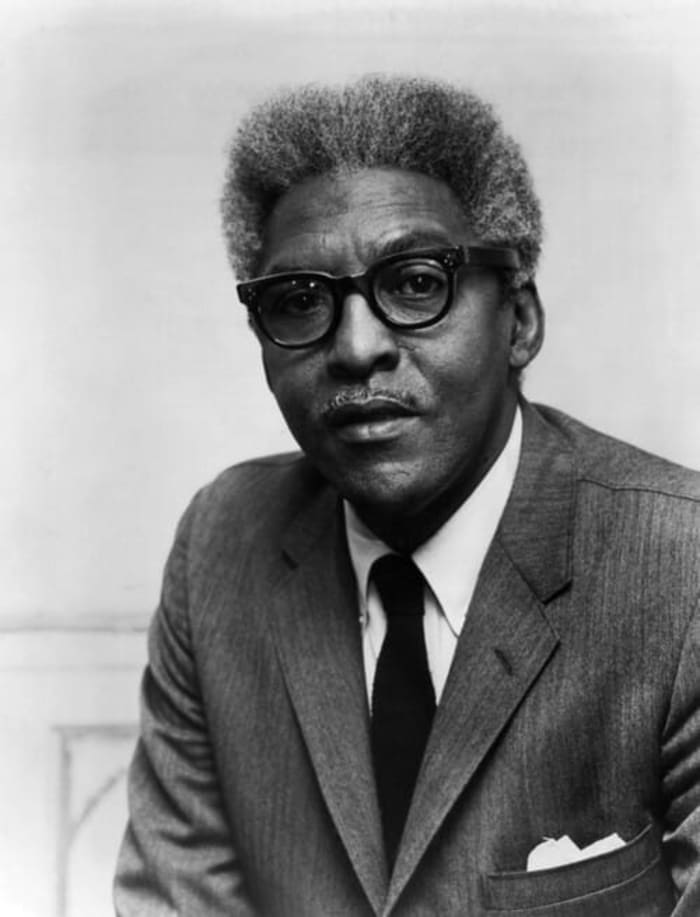
Looking to History for a Lesson About Intersectionality from Bayard Rustin
February 2, 2023Adrian Alexander, Senior Global Copywriter at Valtech shares the story of Bayard Rustin, and the impact he had on shaping his identity.
Some of my clearest memories from childhood are of being told in different ways that I didn’t belong. I was a young Black boy who spent more time reading than playing sports. I spoke clearly in standard American English rather than in more common dialects, very rarely used profanity, and regularly developed friendships with the girls in my class with whom I had more in common. All of which marked me as “other” by the boys in my peer group. I didn’t fully realize it at the time, but my blossoming sexuality had a lot to do with that.
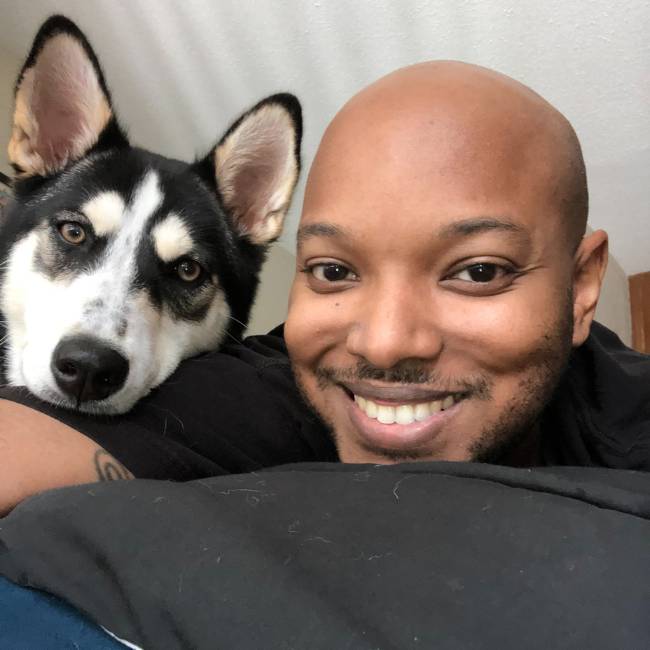
Growing up, I expected to find the belonging I’d longed for as a child. The rude awakening I experienced in that search was to discover the LGBTQ community was as prone to racism as I’d found the Black community was prone to homophobia/heteronormativity. As my sexuality developed, I realized that it would be easier to find Black adults that similarly conversed in the same way as me but finding Black adults who openly shared my queer identity was nearly impossible. The message seemed clear: There was no way to exist in the world as an openly gay Black man. And that perception was one I held strongly until college.
It’s for this reason that I can’t overstate the importance of learning about Bayard Rustin. Born in 1912, Bayard Rustin was an active and prominent member of the American Civil Rights Movement that brought about the formal end of Jim Crow segregation. Among his many, highly unsung, achievements are his role in urging President Roosevelt to desegregate the U.S. military during WWII, acting as the advisor who got Dr. Martin Luther King Jr to give up his armed guard and commit fully to a path of non-violence, and his integral work in organizing the March on Washington for Jobs and Freedom.
There’s actually a story that Bayard was set to have a headlining speaking role at the March, but he took a lesser role reading the demands of those assembled, granting Dr. King the headlining spot to deliver his classic I Have a Dream speech. This was decided precisely because some of the other leaders of the movement were worried about putting an openly gay man in such an important position.
But that intersection of Rustin’s identity shows us the importance of intersectionality within identities in general (something we have more language to engage with now than the community had available to them during Rustin’s life). Rustin himself, after being arrested for refusing to move to the back of the bus (nearly 15 years before Rosa Parks’ famous demonstration) said, “It occurred to me shortly after that that it was an absolute necessity for me to declare [my] homosexuality because if I didn’t, I was a part of the prejudice. I was aiding and abetting the prejudice that was a part of the effort to destroy me.”
I can’t overstate how important this moment and this quote has always been to me. As a kid who couldn’t find a way to exist as both gay and Black, seeing that one of the (unsung) leaders of the Civil Rights Movement was so capable of easily drawing a connection between the importance of both standing up as a Black man as well as standing forward as a homosexual as a moment of standing against all forms of discrimination was a major eye opener as a college student.
February in the U.S. is African American
history month, while in the UK it’s LGBTQ+ history month. As such, I can think
of no better time to shine a light on Bayard Rustin, a man who was integral to
my own understanding not of the intersection of my identity, but to my
understanding of how to go about finding a place within the world while living
within the intersection of my own identity.