
Master Onboarding LGBTQ Employees Workflow for Success
January 22, 2026Every onboarding resource sends an immediate signal about how authentically LGBTQ employees are welcomed into multinational workplaces. For HR professionals committed to global inclusivity, preparing materials that go beyond surface-level fixes and use inclusive language underscores genuine support right from day one. This approach not only updated documents but also reflects a stronger commitment by providing resources that represent diverse identities, setting the foundation for meaningful diversity and equity throughout your organization.

Step 1: Prepare inclusive onboarding resources
The resources you create during this stage set the tone for how welcomed LGBTQ+ employees will feel from day one. This isn’t about creating separate materials or tokenizing diversity. Instead, you’re building thoughtful resources that reflect reality and signal genuine commitment to inclusion across all your onboarding touchpoints.
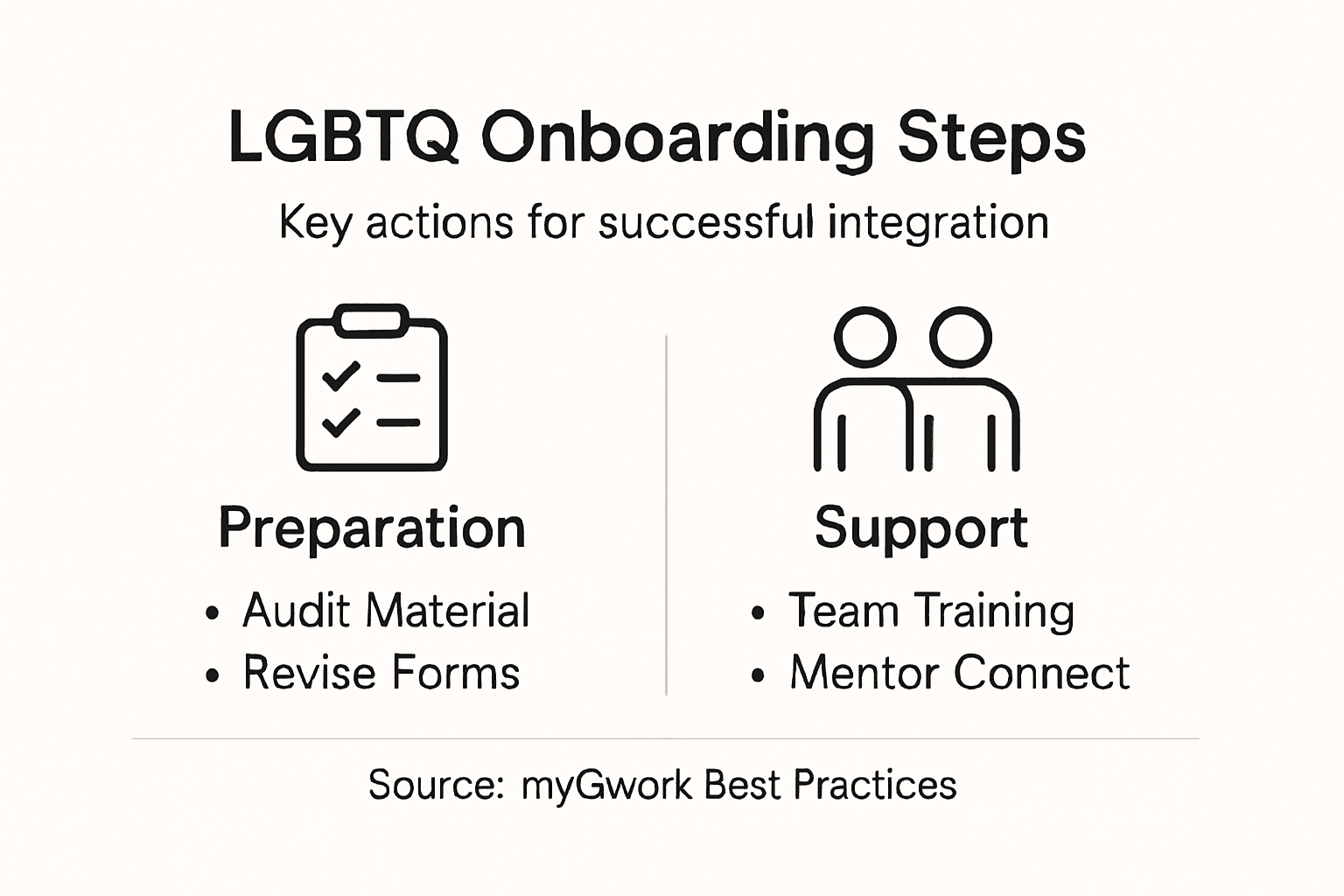
Start by auditing your existing onboarding materials with fresh eyes. Look at every document, email template, form, and welcome packet your company currently uses. Are pronouns assumed? Do your employee handbooks use gendered language unnecessarily? Are photos and examples representative of diverse identities and presentations? Check your benefits documentation carefully, especially sections covering spouse or domestic partner coverage. Many legacy policies contain outdated language that inadvertently excludes LGBTQ+ families. When you spot these gaps, don’t panic. This is exactly what you’re looking for.
Next, revise your intake forms and data collection systems. Your new hire paperwork should allow employees to indicate their pronouns, chosen name for email and directories, and emergency contact relationships in ways that don’t force them to out themselves or explain non-traditional family structures. A simple checkbox system that includes options like “prefer not to answer” removes unnecessary barriers. Consider how your HR information system will store and display this data. Can managers accidentally misgender an employee by defaulting to their legal name? Small technical fixes prevent daily harm.
Develop clear documentation on LGBTQ-inclusive language and workplace support that your entire team can reference during onboarding conversations. This doesn’t need to be a dense handbook. Create a one-page reference guide covering respectful pronoun usage, what to do if you make a mistake, and why inclusive language matters for psychological safety. Include concrete examples your managers will actually encounter, not just theoretical scenarios. When a manager knows how to respond genuinely when someone shares their transition story, they’re equipped to make that person feel valued rather than creating awkward silence.
Build your onboarding checklist to include explicit diversity and inclusion touchpoints. Pair new LGBTQ+ employees with mentors whenever possible, not just for skill transfer but for navigating workplace culture. Create a digital resource library accessible to all new hires that addresses common concerns specific to your company. Will your health insurance cover gender-affirming care? How do you handle name changes in corporate systems? Where can employees find affinity groups or employee resource groups? Transparency removes anxiety.
Consider producing a welcome video or recorded message from leadership that explicitly welcomes LGBTQ+ talent. This doesn’t require performative language. Authenticity matters far more than scripted diversity statements. If your CEO personally mentions commitment to LGBTQ+ inclusion in your new hire orientation, that message lands differently than finding it buried in a policy document.
Draw on comprehensive frameworks for operationalizing inclusivity across organizational programs to ensure your resources cover practical safety and security considerations too. Address workplace behavior standards explicitly. What will your company do if someone experiences harassment or discrimination? How confidential are those processes? LGBTQ+ employees want to know your policies protect them before they need that protection.
Pro tip: Test all your new resources with a small group of LGBTQ+ employees or community members before full rollout, and ask them specifically what made them feel genuinely included versus what felt like surface-level checking a box.
Here’s a comparison of standard versus LGBTQ-inclusive onboarding resources:
Step 2: Establish supportive team structures
Building supportive team structures goes far beyond posting a rainbow flag in the office. You’re creating the actual conditions where LGBTQ+ employees can show up authentically, contribute their full selves, and feel psychologically safe doing so. This requires deliberate structural choices that signal inclusion through action, not just words.

Start by examining your team composition and assignment practices. Are LGBTQ+ employees being assigned to teams based purely on skills and experience, or are there unconscious patterns concentrating them in specific departments or roles? Diversity of background strengthens problem-solving capacity. When you intentionally build teams with members from various backgrounds and experiences, you create spaces where different perspectives naturally emerge and get valued. This isn’t about tokenism. It’s about recognizing that cognitive diversity, including the lived experience of navigating marginalization, brings genuine business value. Look at your high-visibility projects and leadership development opportunities. Are LGBTQ+ employees getting equal access to stretch assignments and mentorship?
Next, address your team communication norms and psychological safety practices. Many teams develop unwritten rules about what topics are safe to discuss. When employees have to carefully monitor what they share about their weekend, their family, or their identity, they’re burning mental energy that should go toward work. Create explicit norms around respectful communication. This means naming that personal sharing is welcome, that mistakes around pronouns will happen and are correctable moments rather than disasters, and that jokes at the expense of any group won’t be tolerated. When someone new joins your team, orient them to these norms directly rather than assuming they’ll pick them up.
Implement open feedback channels that specifically invite input on inclusion. Many LGBTQ+ employees suffer in silence rather than risk being labeled as complainers or overly sensitive. Create multiple ways for people to share concerns, both anonymous and attributed. Some employees will want to speak directly to their manager. Others will trust an HR representative more. Still others will only feel comfortable using anonymous surveys. Offer all three options. When someone does raise a concern about inclusion, respond quickly and visibly. That action signals to the entire team that these issues matter and get taken seriously.
Consider how your team handles benefits and family recognition. Equitable benefits for same-sex partners and families should be standard, not an afterthought. But beyond policies, notice the small moments. When you’re celebrating team wins, do you ask about people’s partners and families in ways that don’t assume gender or marital status? When your company hosts family events, are partners of all kinds actually included? When someone transitions or comes out, does your team acknowledge this appropriately without making it uncomfortable or performative?
Emphasize the role of manager behavior in creating safety. Your managers set the tone for every interaction that happens in their teams. A manager who models inclusive language, corrects themselves without drama when they make mistakes, and actively advocates for LGBTQ+ employees sends a message that ripples through the entire team culture. Invest in manager training that goes beyond awareness. Give them concrete scenarios, tools for responding to microaggressions, and permission to not have all the answers. The best managers say “I don’t know the answer to that, but let’s figure it out together” rather than pretending expertise they don’t have.
Build mentorship and sponsorship relationships intentionally. Formal mentorship programs that match LGBTQ+ employees with experienced leaders create clear pathways for growth and belonging. Sponsorship is equally important. Your high-performing LGBTQ+ employees need people willing to advocate for them in rooms where career decisions get made. If sponsorship happens only through golf games and after work drinks where LGBTQ+ employees may not feel comfortable, you’ve created an invisible barrier. Deliberately surface sponsorship opportunities that work for different people.
Pro tip: Survey your team confidentially about psychological safety using questions specifically about identity and belonging, not just general engagement, and share aggregate results with clear action commitments based on what you learn.
Step 3: Implement LGBTQ-friendly onboarding procedures
Your onboarding procedures are where inclusion becomes operational reality. This is where new employees experience whether your commitment to diversity is genuine or performative. Implementing LGBTQ-friendly procedures means changing the actual mechanics of how you bring people into your organization, not just adding diversity talking points to existing processes.
Start with your application and hiring systems. Before someone even arrives on their first day, you’re already sending messages through your intake forms. Does your application ask for “first name” and “last name” in ways that accommodate people whose names don’t follow Western conventions? Does your system allow applicants to indicate pronouns? When you request emergency contact information, do your forms assume familial relationships or allow for chosen family? These details signal whether you actually expect diverse people to apply or whether you’re just saying you do. When you make the job posting itself welcoming by including statements about LGBTQ inclusion and showcasing diverse employee profiles on your careers page or through platforms like myGwork, you attract candidates who will thrive in your environment.
Next, redesign your first day orientation to center inclusivity. Your orientation materials should use inclusive language and avoid gendered assumptions throughout every document. Replace “Mr.” and “Mrs.” with just names. Stop assuming family structures in your explanations. When you explain benefits, use language like “your spouse or domestic partner” rather than “your wife or husband.” Give new hires a clear mechanism to update their preferred name and pronouns in your systems on day one, not as an awkward special request later. Have someone specifically walk them through this process rather than just pointing them to a form. That personal attention communicates that you anticipated this need and welcome it.
Build systematic training into your onboarding that goes beyond awareness and into action. Your new employee orientation should include specific training modules about LGBTQ inclusion and respect. This isn’t just for HR staff or managers. Everyone needs to understand why inclusive language matters, what microaggressions look like, and what to do if they make a mistake. Make this training mandatory and substantive, not a five-minute video people skip through. Include scenario-based learning where employees think through realistic workplace situations. What happens if someone accidentally uses the wrong pronoun? What if they overhear a coworker making assumptions about someone’s family? These concrete scenarios stick far better than abstract principles.
Communicate your LGBTQ-supportive benefits clearly during onboarding. Many companies have expanded benefits like covering same-sex domestic partners, providing transgender health coverage, or offering gender affirming care. Yet new employees often don’t know these benefits exist because nobody tells them explicitly. Include a dedicated section in your benefits materials that clearly outlines LGBTQ-inclusive coverage like transgender health services, family planning for non-traditional families, and mental health support. Normalize these as standard benefits, not special accommodations. When benefits are presented as normal and expected, LGBTQ employees can access them without fear of drawing unwanted attention.
Assign an onboarding buddy or mentor who has been trained in inclusion. This person should have experience in your company and be genuinely invested in making the new employee feel welcome. They can answer questions that someone might not feel comfortable asking HR or their manager. They can point out informal norms and unwritten rules. They can introduce the new employee to affinity groups and other LGBTQ+ colleagues. Make sure your buddy is compensated or recognized for this work so it doesn’t become invisible labor. This relationship can make the difference between someone feeling genuinely welcomed and someone just going through the motions.
Create space for new hires to provide feedback specifically about the onboarding experience. After two weeks, check in about how they’re feeling. After three months, ask what could have made their transition smoother. Include questions about inclusion and psychological safety, not just content knowledge. When someone shares that they felt uncomfortable or unseen, take that feedback seriously and make changes. When you’re visibly making adjustments based on employee feedback, you’re demonstrating that inclusion isn’t a one-time initiative but an ongoing commitment.
Pro tip: Have a senior LGBTQ+ employee or ally deliver part of your orientation welcome message sharing why inclusive onboarding matters to them, making the business and human case tangible rather than theoretical.
Step 4: Monitor integration and employee experience
Monitoring employee experience isn’t a one-time task you check off after onboarding completes. It’s an ongoing commitment to understanding how LGBTQ+ employees actually experience your workplace and making real adjustments based on what you learn. This step transforms your inclusion efforts from static policies into dynamic, responsive systems that evolve with your workforce.
Start by establishing regular feedback mechanisms that specifically invite input about inclusion and belonging. Anonymous pulse surveys work well because they remove fear of retaliation, but don’t rely solely on anonymity. Some employees will want to share their experience directly with you if they trust you’ll listen without defensiveness. Create multiple channels: one-on-one check-ins with managers, confidential conversations with HR, anonymous surveys, and focus groups with LGBTQ+ employee resource groups. The key is consistency. Don’t just survey once and then forget about it. Run these pulse checks quarterly or at minimum twice yearly so you’re catching emerging issues before they become serious problems. Research on workplace discrimination and LGBTQ+ employee experiences shows that sustained assessment and responsive feedback loops are critical for creating lasting change.
When you collect feedback, ask specific questions about integration, not just general satisfaction. Are LGBTQ+ employees being included in social activities and informal networking? Do they feel comfortable being themselves at work? Have they experienced or witnessed microaggressions? Are they getting equal access to growth opportunities and sponsorship? Do they feel psychologically safe raising concerns? Generic engagement surveys won’t capture this nuance. You need questions designed to surface the actual experience of LGBTQ+ employees. And crucially, when you get responses, actually do something with them. If multiple people report that a particular manager uses gendered language without self-correcting, address it. If employees say they don’t know about LGBTQ-supportive benefits, communicate them differently. Visible action signals that you’re genuinely listening.
Implement regular check-ins during the first 90 days of employment. Month one should focus on basic orientation questions: Can they find the resources they need? Are they connecting with their team? Month two should dig into inclusion: Do they feel welcomed? Have they experienced any concerning interactions? Month three should assess their trajectory: Do they see growth opportunities? Are they building relationships? These aren’t performance reviews. They’re focused on experience and belonging. Frame them as opportunities for you to understand what would help them thrive, not as chances to evaluate their fit.
Track turnover rates and exit interview data specifically for LGBTQ+ employees. If your LGBTQ+ turnover significantly exceeds your overall turnover, that’s a signal something isn’t working. When LGBTQ+ employees leave, ask directly about their experience. Did they feel included? Did they encounter discrimination? Were benefits adequate? Would they recommend the company to other LGBTQ+ professionals? This data is painful sometimes, but it’s invaluable. One company discovered through exit interviews that transgender employees were leaving because managers kept misgendering them and nobody was intervening. That’s actionable intelligence.
Create accountability by tracking inclusion metrics alongside business metrics. How many LGBTQ+ employees do you have in your pipeline? How many are advancing to leadership? What percentage of LGBTQ+ employees report feeling included? What’s your retention rate compared to the general population? Share these metrics internally so leaders own inclusion outcomes. When diversity numbers appear in your diversity reports but inclusion numbers are lagging, you know where to focus. And when conscious communication and regular check-ins lead to visible improvements in inclusion scores, celebrate those wins publicly. Transparency about both challenges and progress builds credibility.
Develop a system for handling concerns and complaints that feels safe to LGBTQ+ employees. Many have experienced retaliation elsewhere when they spoke up, so they need reassurance about confidentiality and protection. Document complaints thoroughly and follow through visibly. If someone reports being misgendered by a coworker, address it. If someone experiences harassment, investigate it. If someone feels discriminated against, take it seriously. And critically, follow up with the person who reported it to let them know what happened. Too many companies investigate concerns and then go silent, leaving the complainant wondering if anything was done.
Partner with your LGBTQ+ employee resource group if you have one, or build relationships with visible LGBTQ+ employees who can provide honest feedback about what’s actually happening. These connections offer insights that surveys might miss. Someone might not report a problematic comment in a survey but will mention it in conversation. Employee resource groups can also help identify emerging concerns before they become widespread problems. Treat these partnerships as genuine collaboration, not as checkboxes for your diversity initiatives.
Pro tip: Conduct a “culture audit” by having trusted LGBTQ+ employees and allies walk through your physical office space and digital systems, noting what messages about inclusion they send, from bathroom signage to job postings to benefits materials.
Step 5: Verify and refine workflow effectiveness
You’ve built your inclusive onboarding workflow, implemented it, and gathered feedback. Now comes the critical work of actually analyzing whether it’s achieving what you intended. Verification isn’t about feeling good about your efforts. It’s about measuring real outcomes and having the honesty to make changes when something isn’t working.
Start by establishing baseline metrics before you make any changes, if you haven’t already. What’s your current retention rate for LGBTQ+ employees versus your general workforce? What percentage of LGBTQ+ employees report feeling included in engagement surveys? How many discrimination complaints do you receive? How many LGBTQ+ employees are in leadership positions? These numbers might be uncomfortable. You might discover that despite your diversity recruiting, LGBTQ+ employees are leaving at twice the rate of others. That’s valuable information. Now you have something to measure against as you implement changes. Six months after rolling out your new onboarding workflow, compare these metrics again. Are retention rates improving? Are inclusion survey scores going up? Are complaints decreasing or changing in nature?
Analyze the specific feedback you’re receiving to understand patterns. If multiple LGBTQ+ employees mention that they didn’t feel welcomed by their team even though onboarding went well, that suggests a team culture problem rather than an onboarding problem. If people consistently don’t know about benefits even though you’re communicating them, maybe the communication method isn’t working. If transgender employees report bathroom anxiety but cisgender employees don’t mention physical space concerns, that’s a specific issue to address. Data-driven evaluation of onboarding and inclusion workflows using both quantitative metrics and qualitative feedback reveals where your workflow is succeeding and where it needs adjustment.
Conduct regular climate surveys that go beyond general engagement to measure inclusion specifically. Ask about comfort being out at work, experiences of discrimination, sense of belonging, and trust in leadership. Compare results across employee groups. If cisgender employees report high inclusion but transgender employees report low inclusion, you have specific work to do around transgender inclusion. If employees in certain departments report significantly lower inclusion than others, investigate what’s different about those team environments. Climate surveys aren’t one-time activities. Run them annually at minimum so you can track trends over time and see whether your refinements are actually moving the needle.
Review your complaint and feedback mechanisms to ensure they’re actually capturing issues. Are LGBTQ+ employees using them? Are the complaints you’re receiving representative of actual problems or just the most egregious cases? Sometimes the absence of complaints doesn’t mean everything is fine. It might mean people don’t trust the system. If you’re getting zero complaints but your exit interview data shows discrimination was a reason people left, your complaint mechanism isn’t working. This is where qualitative data from focus groups with LGBTQ+ employees becomes essential. They’ll tell you directly if they don’t trust the process or fear retaliation.
Evaluate whether your workflow is actually being implemented consistently across your organization. Did managers complete the training you designed? Are they using the inclusive language guides? Are they conducting the 90-day check-ins you outlined? Implementation drift is real. Your beautiful workflow on paper means nothing if managers aren’t actually executing it. Mystery shop your own onboarding. Have someone go through it as a new hire and document their experience. Did they get the welcome message from leadership? Were pronouns collected on forms? Did someone help them set up their preferred name in systems? This reality check often reveals gaps between what you designed and what’s actually happening.
Assess whether your workflow is scalable and sustainable. If your current approach requires one dedicated person working 50 hours a week to manage, it won’t survive when that person leaves or your organization grows. Look for bottlenecks. Can managers realistically conduct monthly check-ins with all new hires? Do you have enough trained buddies to pair with every new LGBTQ+ employee? Are your benefits communications reaching everyone or just people who dig through your intranet? Refine your workflow to work with the actual capacity and resources you have, not imaginary unlimited resources.
Create a formal review cycle where you explicitly examine your workflow quarterly and make documented changes. In January, review the previous year’s data and set targets. In April, check progress and make adjustments. In July, refine again based on mid-year data. In October, plan for the next year. This rhythm keeps inclusion work active rather than letting it fade. Document your changes so you can track what you’ve adjusted and why. This documentation also helps when leadership or new team members question why certain practices exist.
Build in mechanisms for continuous assessment and modification of programs to meet emerging needs. Inclusion work isn’t static. Your workforce demographics change. Your understanding of LGBTQ+ identity and needs evolves. New challenges emerge. Your workflow should evolve too. Maybe you originally included binary gender options on forms, but now you’re learning that’s excluding nonbinary employees. Update it. Maybe your pronouns training was focused on she, he, they, but now you have employees using other pronouns. Expand it. This responsiveness signals that you’re genuinely committed to inclusion rather than just checking a box.
Pro tip: Create a scorecard that tracks both hard metrics like retention and inclusion survey scores alongside softer indicators like employee resource group participation growth and LGBTQ+ employee promotions to leadership to get a complete picture of workflow effectiveness.
The following table summarizes key metrics to track onboarding effectiveness for LGBTQ+ inclusion:
Elevate Your LGBTQ+ Onboarding Strategy with Targeted Support
Effective onboarding for LGBTQ+ employees requires more than just updating policies. It demands a genuine, actionable commitment to inclusion that addresses unique challenges like pronoun recognition, psychological safety, and equitable access to benefits. The article highlights critical pain points including ensuring respectful workplace communication, implementing LGBTQ-friendly procedures, and continuously monitoring employee experience to foster belonging.
Take meaningful steps today by connecting with a thriving community and access resources designed specifically for LGBTQ+ professionals and inclusive employers. At myGwork, you can discover verified LGBTQ+ friendly employers, network with like-minded professionals, and find practical tools to enhance your organization’s onboarding workflow.
Don’t wait for change to happen. Empower your organization to build authentic inclusion from day one. Visit myGwork now and start creating a workplace where LGBTQ+ talent feels seen, valued, and supported every step of their career journey.
Frequently Asked Questions
How can I prepare inclusive onboarding resources for LGBTQ employees?
To prepare inclusive onboarding resources, audit existing materials for gendered language and outdated policies. Revise forms to allow employees to indicate their preferred pronouns and names, ensuring it respects diverse identities.
What steps should I take to establish supportive team structures for LGBTQ inclusion?
To establish supportive team structures, examine team composition and ensure diverse backgrounds are represented. Implement feedback channels that encourage open conversation about inclusion and ensure managers model inclusive behavior.
How can I implement LGBTQ-friendly onboarding procedures effectively?
Implement LGBTQ-friendly onboarding by redesigning application forms to allow for pronouns and non-traditional family structures, and use inclusive language throughout orientation materials. Assign an onboarding buddy trained in inclusion to help new hires navigate their experience from day one.
What metrics should I track to monitor the integration and experience of LGBTQ employees?
Track metrics such as retention rates, inclusion survey scores, and turnover data of LGBTQ employees. Analyze these metrics regularly to identify trends and areas for improvement, ensuring to act on feedback received to enhance the inclusion experience.
How can I verify and refine the effectiveness of my LGBTQ onboarding workflow?
To verify and refine your onboarding workflow, establish baseline metrics before implementing changes and compare them after six months. Conduct climate surveys annually to assess the inclusion experience specifically, focusing on psychological safety and opportunities for LGBTQ employees.