
Meet and Greet: Jane Devlin Grammer, Diversity & Belonging Champion at Dorchester Collection
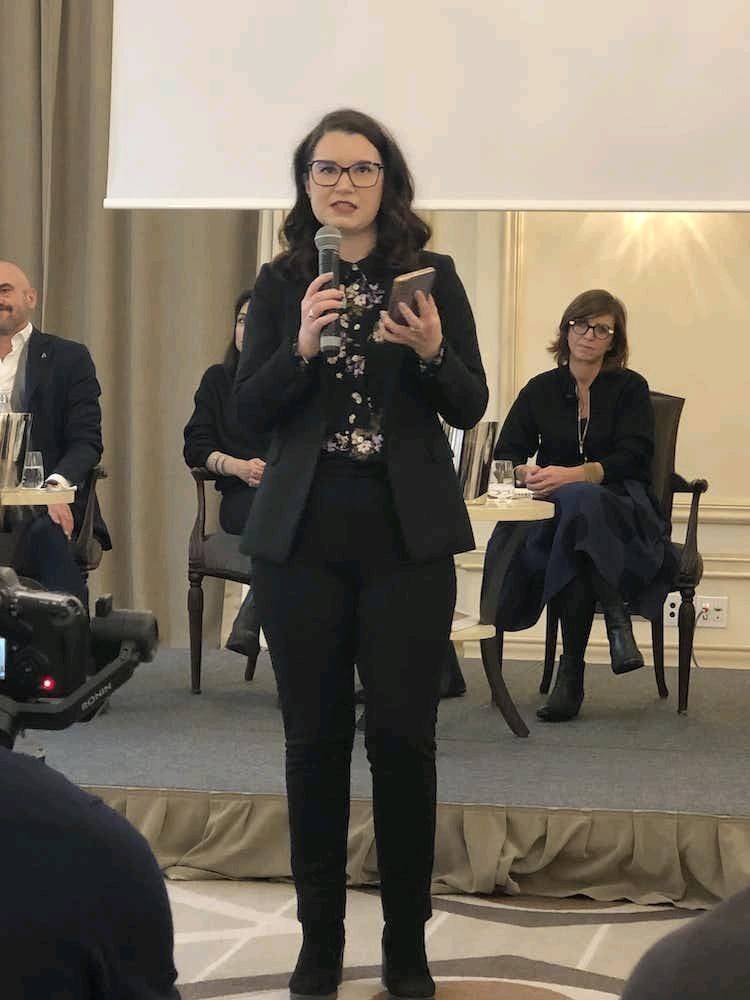
June 23, 2023In this week's Meet & Greet interview, myGwork member Jane Devlin Grammer provides an insight into her role as Diversity & Belonging Champion at Dorchester Collection, and shares why she's always been passionate about making the world a fairer place, especially for anyone who is considered “different”.

myGwork: Hi Jane, Can you tell us a bit about your role and how you got here?
Jane: In a nutshell, I oversee Dorchester Collection’s CSR (Corporate Social Responsibility)/DIB (Diversity, Inclusion and Belonging) strategy. I design and lead global initiatives and programs to ensure we recruit diversely at all levels of the organization; create inclusive work environments where people can thrive and reach their full potential; but also nurture compassionate and psychologically safe spaces where people feel like they belong.
How did I get here? Well, I’ve always wanted a career where I was making a positive difference in people’s lives, and I think that purpose is what guided me to this role in September 2022.
Before I even knew the acronym ‘DEI’ existed, I’ve been passionate about making the world a fairer place for anyone who is considered “different” by others or has been made to feel like they don’t belong. My younger brother, Gary, has complex learning and physical disabilities due to being born with Trisomy 13 and seeing how negatively some people behaved towards him is what sparked this for me. Growing up in Ireland I was exposed to anti-LGBTQ+ rhetoric and I became acutely aware of the sexist double standards women were subjected to. Both of these became recurring themes in the stories and blogs I wrote as a journalism student, which is also when I realised I was bi. Naturally, I then began advocating for the rights of all marginalized groups. Professionally, my career began as an eLearning designer and writer for an ethics and compliance company. There, I eventually became a DIB subject matter expert designing off-the-shelf and bespoke DIB training solutions which is how I navigated into my current role at Dorchester Collection.
myGwork: What does a typical day look like for you?
Jane: I live in Essex, so I’m up at 5:30am for my two-hour commute into the office. I grab a coffee from Pret on the way and I’m normally at my desk by 8:30am. I think there is a perception that working in DIB is all about planning parties and celebrations, but that’s probably 1% of the job. The vast majority of my time is spent at my computer analysing data, doing intense research, strategizing, designing and writing educational materials, scoping new partnerships, designing new initiatives and preparing presentations. The rest of the time is spent in meetings, leading workshops and networking but most importantly building relationships by talking and listening to people. I leave the office at 5:30pm and I’m home by 7:30pm to eat dinner (lovingly prepared by my partner who works from home) and watch Netflix before bed.
What part of your role do you enjoy the most?
Jane: I really love a challenge and there are plenty of those when you’re working in DIB, so I love having the opportunity to get creative when tackling a complex problem. But ultimately, it’s always very rewarding when you implement a new policy or initiative that really resonates with people because it impacts them in a positive way. There is no greater feeling than seeing your inbox fill up with appreciative emails from colleagues expressing their happiness and gratitude for listening to their needs and following through on your promise to address those needs.
myGwork: Which top three skills are vital for this role and why?
Jane: First is excellent writing and storytelling skills. You really have to think of yourself as an educator when you’re in a DIB role because you are constantly trying to educate people about complex and often polarizing issues that need to be handled with sensitivity, but delivered in new and engaging ways. Ultimately it has to be emotive and memorable, so having the ability craft your message into stories that elicit empathy and compassion is key.
Second is being able to manage and facilitate difficult conversations. In your role as an educator you’ll find yourself delivering DIB training, leading workshops and facilitating focus groups. In all of these situations you are inviting people to engage in conversations where they are being confronted with their own privilege. This can stir up a range of incredibly difficult emotions and it’s going to get uncomfortable. So you have to have the confidence and sensitivity to navigate these incredibly important conversations safely and respectfully.
Lastly, being able to influence people who may be resistant to change. In a DIB role you’ll be devising new initiatives, policies and processes that will need approval from your leadership team – especially if there are any financial implications – so having the skills to influence is key to successfully implementing change. However, that’s only the first hurdle – you also need buy-in from the leaders driving these changes across your organisation, so you need to tailor your message to your audience and appeal to their unique needs and context.
myGwork: What’s the most challenging aspect of your role?
Jane: I’m very new to the hospitality industry so that’s definitely my biggest challenge. While I’ve worked as a server and bartender I’ve never worked in hotels – let alone luxury hotels. In my previous role I predominantly worked with corporate clients whose workforce was mostly office-based, which has a lot of advantages in terms of implementing training and programmes. In hotels the vast majority of employees are operational and doing shift work. Of course, our priority has to be providing exemplary service to our guests but it can make it difficult to schedule time in for employees to engage in DIB initiatives and activities because they also need to rest.
myGwork: How do you help others feel like they belong in your team/promote inclusion?
Jane: I think it all revolves around listening, particularly empathetic listening. We’ve probably all had an experience where we’ve shared something about ourselves with someone in passing never expecting them to remember it, but a few days, weeks or months later they bring it up in conversation and ask you about it. Doesn’t it make you feel heard and valued? It really shows that person was listening and is invested in you. That’s why I always try and remember little details like that about a person. I also always ask everyone in the team for their opinion and input on my projects. It’s mutually beneficial because it makes people feel that their contribution is valued but it also brings a perspective I might not have considered.
When you listen you really get to know who a person is – their interests, values, likes and dislikes – which helps you find what connects you. That’s how you build the relationships that make people feel like they belong. As much as diversity is about celebrating our differences, it’s also about discovering what we have in common, because there is more that connects us than what makes us different.
myGwork: Which podcast/YouTube series would you recommend to someone interested in pursuing a career in this area to help develop their skills/prepare them for the role?
Jane: I’m not a huge podcast listener (I have a busy mind that tends to wander) and really only use YouTube for music or make-up tutorials - but I am a huge reader. If I could recommend just one book it would be DEI Deconstructed by Lily Zheng. This book has become my DIB bible and I refer back to it all the time. It’s essential (albeit triggering) reading for anyone considering a career in DIB because it’s a cold, hard reality check about what doing the work actually looks like. The book provides outcome-orientated goals and actionable steps you can take to achieve them. But what I found really insightful was the guidance on how to approach your DIB journey by assessing the level of trust within your organisation and the different kinds of power that exist so it can be leveraged to your advantage.
Another book I’d recommend is Demanding More by Sheree Atcheson. Sheree is a remarkable woman with a fascinating story that inspired me to pursue a career in DIB.
myGwork: Where do you see yourself in 10 years?
Jane: I’ll for sure still be working in a DIB role, but the goal is to be the Head of a DIB department managing my own team. At the moment, I feel that DIB work is very much concentrated in HR/People & Culture – and rightly so – but I feel DIB is something that needs to be considered across all areas of the business from marketing, branding, product and service design, digital, guest experience, etc. Implementing DIB to that scale would require a team of people with knowledge of these functions. I believe this is the future of DIB and I hope I’ll have the privilege to lead a team driving this change in the future.
You can connect with Jane here.
Jane will be a panellist at WorkPride's How to Be Welcoming of LGBTQ+ Customers on June 23 at 17.00 BST. Click here to register.
Check out some of myGwork's other recent Meet & Greet interviews, including:
- Booth-Laird Investment Partnership’s CEO Jonathan Booth shares why there are so few ‘out’ CEOs and leaders in the corporate world.
- Business Disability Forum’s CEO Diane Lightfoot shares the importance of being able to work in an environment where everyone is able to bring their whole selves to work, without having to conceal any aspect of who they are.
- Parexel's LGBTQ+ ally and Vice President of Diversity and Inclusion Aida Sabo shares her career journey on how she made it to the top in engineering as a Latina woman.
- CTS Group CEO Tom Ray shares why the LGBTQ+ community is "very important" to his company, and how he is promoting inclusion to ensure that all staff are “welcome, feel safe and can be themselves” at work.
- London-based DJ, radio host, filmmaker, social influencer and CBK CEO Krystal Lake explains why organizations need to take homophobic remarks and labels seriously, and do more to promote LGBTQ+ inclusion.
- Criteo's SVP of Global Diversity, Equity & Inclusion Rachel Scheel on how and why she supports diversity and LGBTQ+ inclusion as an ally, as well as workplace wellbeing.
- The Galaxy Trust’s CEO Garry Ratcliffe shares how being an 'out' leader with a collaborative and inclusive leadership style helps to promote equality, belonging and a blame-free culture.
- RS Components’ Group Head of Diversity, Inclusion and Engagement Jessica Chu highlights the 'huge' importance of LGBTQ+ inclusion at work and shares why being an LGBTQ+ ally is really important to her.
- Swapi CEO Pete Howroyd who talks about workplace equality and LGBTQ+ inclusion, and the importance of ensuring that every voice is heard.
- Unilever’s HR Vice President Richard Sharp shares why leadership has a duty to ensure that the LGBTQ+ community feels supported and included in the workplace.
- Greenhouse Software CEO Daniel Chait shares why belonging is one of the company’s core values, as well as a powerful business strategy.
- Burberry's Global Diversity & Inclusion Manager Safia Ann Kukaswadia highlights how she is addressing key challenges facing minority communities to gain fair representation within fashion and why the industry needs more LGBTQ+ role model leaders.
- Dish Dash Deets’ Founder Sunni Patel shares why he founded his holistic wellbeing business, specialising in gut health and eating addictions, which he started after coming out.
- Protiviti’s Director Belton Flournoy talks about the importance of Pride Month, LGBTQ+ inclusion, and the power of being 'out' at work.
- CEO of Vexed Gaming Sonny Waheed shares how his empowering and inclusive leadership style helps him to run a successful company.
- CEO of Wonder Industries Vlady Vyshnevetskiy shares how he is helping to make the fashion world more sustainable and inclusive.
- Oracle's Sara Morley talks about her roles as Account Director and UK Lead for the company’s LGBTQ+ OPEN ERG network.
- Hearst UK’s Chief Commercial Operations Director Gianluca Ena shares the importance of LGBTQ+ inclusion in the workplace, and maintaining a work-life balance.
- HSBC’s Senior Group Inclusion Advisor Jack Guest shares some of the challenges of being an openly gay professional in Asia.
- Parexel’s Executive Vice President and Global Head, Chris Baker, shares what she looks for in new recruits and why she wants hardworking and diverse talent to be able to bring their entire selves to work.