
Microaggressions Explained: Impact in the Workplace
October 23, 2025
Did you know that over 60 percent of workers have experienced microaggressions at their job according to recent studies? These brief, subtle interactions might seem minor, yet they can deliver lasting harm and undermine a sense of belonging. Understanding what really counts as a microaggression—and dispelling the myths around them—is vital for building workplaces where everyone feels valued and respected.
Key Takeaways
Table of Contents
- Defining Microaggressions And Common Misconceptions
- Types Of Microaggressions In Professional Settings
- Recognizing The Effects On Lgbtq+ Individuals
- Addressing Microaggressions: Strategies And Best Practices
- Employer Responsibilities And Legal Considerations
Defining Microaggressions and Common Misconceptions
Microaggressions are subtle, often unintentional verbal or behavioral slights that communicate hostile, derogatory, or negative attitudes toward marginalized groups. Unlike overt discrimination, these nuanced interactions can feel like invisible papercuts that gradually erode professional confidence and sense of belonging.
According to research from IMD, microaggressions are rooted in unconscious biases and manifest through everyday interactions. They are typically categorized into three distinct types:
- Microassaults: Deliberate and direct discriminatory actions
- Microinsults: Interpersonal communications that rudely communicate stereotypical assumptions
- Microinvalidations: Statements that negate or dismiss an individual’s lived experiences
A critical misconception is that microaggressions are harmless or merely oversensitive interpretations. In reality, these interactions have profound psychological consequences. As academic research highlights, they systematically reinforce feelings of isolation, create persistent workplace anxiety, and fundamentally undermine an individual’s sense of professional belonging. The cumulative effect is often described as “death by a thousand cuts” - a gradual emotional and psychological wearing down that can significantly impact career progression and mental well-being for marginalized professionals.
Types of Microaggressions in Professional Settings
Workplace microaggressions manifest in three distinct yet interconnected forms, each creating unique challenges for marginalized professionals. Understanding these nuanced interactions is crucial for creating truly inclusive work environments that support every team member’s dignity and potential.
According to research from California Labor Law, the three primary types of microaggressions are:
Here’s a summary of the three main types of workplace microaggressions:
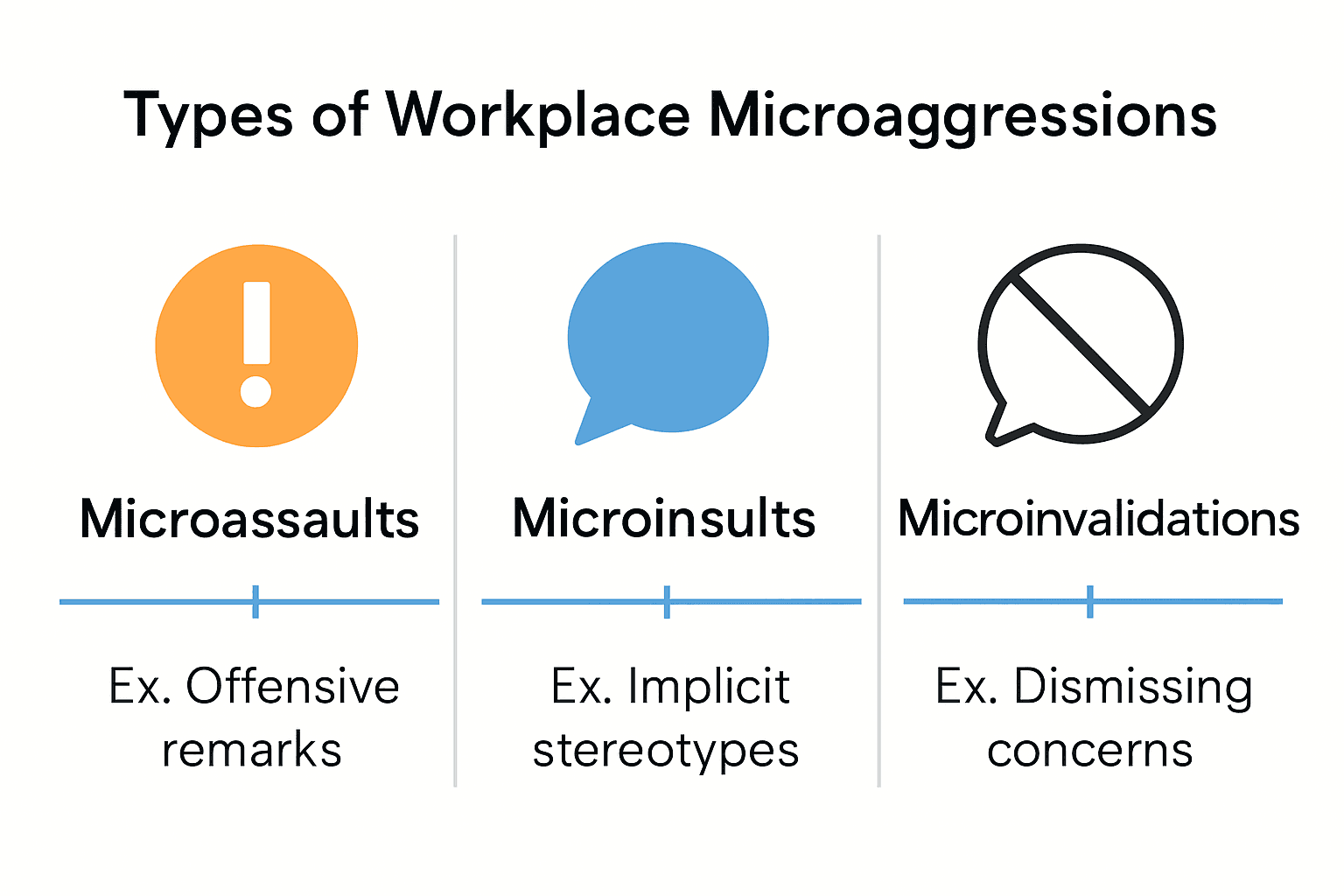
- Microassaults: Explicit, intentional discriminatory actions characterized by direct verbal or behavioral aggression. These are the most overt form of workplace microaggressions and often involve:
- Deliberate name-calling
- Using derogatory language
- Making overtly discriminatory remarks
- Microinsults: Indirect, subtle comments that communicate disrespect or negative attitudes toward an individual’s identity. These typically involve:
- Backhanded compliments
- Patronizing language
- Assumption-laden remarks that undermine professional competence
- Microinvalidations: Interactions that systematically dismiss or negate an individual’s lived experiences and identity. These can include:
- Minimizing personal experiences of discrimination
- Suggesting that racism or bias “doesn’t exist”
- Forcing marginalized individuals to “prove” their experiences
As insights from IMD emphasize, these microaggressions might seem innocuous individually, but their cumulative impact can create hostile work environments that significantly impede career advancement and psychological safety for marginalized professionals.
Recognizing the Effects on LGBTQ+ Individuals
Microaggressions create profound psychological challenges for LGBTQ+ professionals, extending far beyond momentary discomfort. These subtle yet persistent interactions systematically erode workplace confidence, mental health, and sense of professional belonging.
According to research from the National Career Development Association, LGBTQ+ individuals frequently encounter specific workplace microaggressions that deeply impact their emotional well-being:
- Misgendering: Intentionally or unintentionally using incorrect pronouns
- Tokenization: Being treated as a representative for entire LGBTQ+ community
- Exoticization: Objectifying or fetishizing sexual orientation or gender identity
- Heteronormative Erasure: Assuming heterosexuality as default
Peer-reviewed research highlights the intersectional psychological impacts, demonstrating that these microaggressions significantly predict elevated risks of depression, anxiety, and professional disengagement.
 Learn more about creating inclusive workspaces for LGBTQ+ professionals.
Particularly for LGBTQ+ professionals of color, these microaggressions compound existing challenges. Internalized LGBTQ-phobia, family rejection, and systemic biases create a multilayered psychological landscape where workplace interactions become potential minefields of emotional stress. The cumulative effect isn’t just momentary discomfort—it’s a persistent undermining of professional confidence and mental well-being.
Addressing Microaggressions: Strategies and Best Practices
Combating workplace microaggressions requires a comprehensive, multi-faceted approach that goes beyond traditional diversity training. Organizations must develop proactive, systemic strategies that create genuine cultural transformation and psychological safety for all employees.
According to research from WomenTech Network, effective organizational strategies include:
- Establishing Clear Reporting Mechanisms
- Create confidential reporting channels
- Ensure transparent investigation processes
- Provide multiple reporting options
- Implementing Comprehensive Training
- Develop mandatory unconscious bias workshops
- Create interactive learning experiences
- Provide scenario-based microaggression recognition training
- Enabling Bystander Intervention
- Train employees to recognize and safely interrupt microaggressions
- Develop supportive intervention scripts
- Foster a culture of collective accountability
As academic research from MDPI emphasizes, leadership plays a crucial role in reshaping workplace culture. Explore our commitment to inclusive workspaces and understand how strategic interventions can transform professional environments.
Ultimately, addressing microaggressions is not about policing language but creating environments where every professional feels respected, valued, and empowered to contribute their unique perspectives without fear of subtle discrimination or marginalization.
Employer Responsibilities and Legal Considerations
Legal liability for microaggressions extends far beyond moral obligations, presenting significant financial and reputational risks for organizations that fail to address subtle discriminatory behaviors. Employers are increasingly expected to proactively prevent and respond to these nuanced workplace interactions.
According to insights from Davidson Morris, employers must navigate complex legal landscapes by:
- Developing Comprehensive Policies
- Creating explicit anti-discrimination guidelines
- Establishing clear reporting mechanisms
- Implementing consequences for repeated microaggressive behaviors
- Providing Mandatory Training
- Conducting unconscious bias workshops
- Teaching recognition of subtle discriminatory behaviors
- Promoting inclusive communication strategies
Legal frameworks increasingly recognize that microaggressions can constitute actionable harassment, even when unintentional.
Research from Canadian HR Reporter emphasizes that tribunals are holding organizations accountable for systemic workplace cultures that permit subtle discriminatory behaviors. Learn more about creating inclusive professional environments that mitigate legal and ethical risks.
Effective employer responses require a proactive, multifaceted approach: monitoring workplace interactions, creating safe reporting channels, and demonstrating genuine commitment to dismantling systemic biases. The goal isn’t just legal compliance, but cultivating workplaces where every professional can thrive without experiencing subtle, corrosive discrimination.
Ready to Transform Your Workplace Experience?
If microaggressions at work have left you feeling isolated or undervalued, you are not alone. The article highlights how subtle but persistent behaviors like microinsults, misgendering, or tokenization can undermine both your confidence and career progress. Real change starts when you connect with a community that supports authenticity and inclusion every step of the way.
Join myGwork today and step into a network built for LGBTQ+ professionals who want safer, more inclusive teams. Discover employers committed to real diversity and access up-to-date resources that help you face workplace challenges with renewed support. Explore our platform to start building connections and accelerating your career growth now. Embrace a workplace where your experiences matter and your voice is heard.
Frequently Asked Questions
What are microaggressions in the workplace?
Microaggressions are subtle, often unintentional verbal or behavioral slights that communicate hostile or negative attitudes toward marginalized groups. These interactions can erode professional confidence and a sense of belonging.
What are the different types of microaggressions?
There are three main types of microaggressions in the workplace: microassaults (overt and intentional discriminatory actions), microinsults (subtle comments that convey disrespect), and microinvalidations (statements that negate an individual’s experiences).
How do microaggressions affect LGBTQ+ professionals?
Microaggressions can create significant psychological challenges for LGBTQ+ professionals, leading to decreased workplace confidence, increased anxiety, and a diminished sense of professional belonging. These effects can be compounded for LGBTQ+ individuals of color due to intersecting biases.
What strategies can organizations implement to address microaggressions?
Organizations should establish clear reporting mechanisms, implement comprehensive training on unconscious bias, and enable bystander intervention to foster a culture of accountability and psychological safety, ensuring a more inclusive workplace.