
More young people than ever choosing ‘queer’ label
May 31, 2024‘Business Insider’ partnered with YouGov to conduct a cross-generational poll of more than 1,800 American adults. More than 26% of the 18- to 26-year-olds, or Gen Zers, polled said their sexual identity was something other than straight, compared with 15% of millennials, 11% of Gen Xers, and 7% of boomers who said the same.
They also assembled a focus group of Gen Zers who spoke to them at their New York office about dating, sex, and relationships. While Gen Zers have grown up in an era with more LGBTQ+ representation than ever before, a growing number of them, experts said, are turning away from descriptors like gay and lesbian. Some have reclaimed what was once considered outdated or problematic terms, like queer and bisexual, while others have opted to layer labels or shed them altogether. At a time of unprecedented sexual openness, Gen Zers are questioning whether any one label can fully embody who they are and what they're attracted to in others.
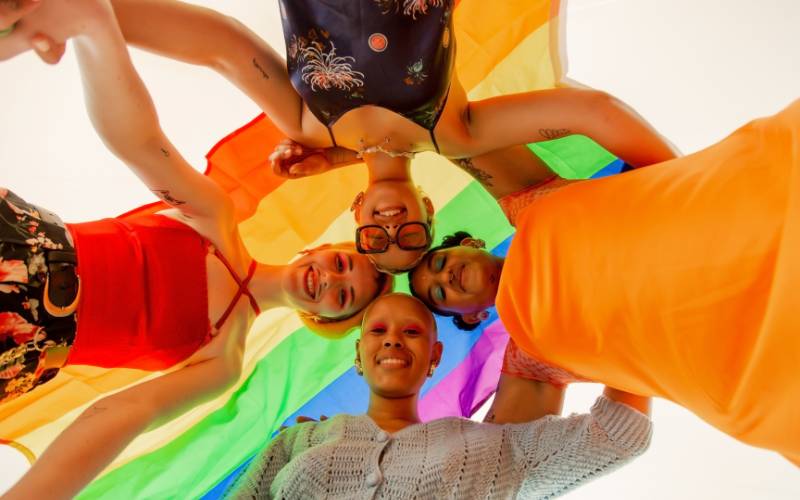
Image Credit: Canva
“It's not a totally new idea, but we've seen this generation show more willingness to say, 'Hey, sexuality is not this rigid, binary thing,’” Phillip Hammack, a professor of psychology and the director of the Sexual and Gender Diversity Laboratory at the University of California, Santa Cruz, told BI.
In interviews, Gen Zers told BI they thought deeply about how they described their sexual identities to others.
Frederic Chen, a 22-year-old content creator in Los Angeles, initially came out as gay when he was 13. Six years later, he said bisexual more accurately defined his sexuality, before landing on his current label of queer a year after that.
Chen said he noticed his former labels came with unwanted assumptions about how he should dress, behave, and who he should date.
“I kept seeing videos that were like, 'Lesbians do this, gays do this, and bisexuals do this,’” Chen said. “It looked like sexuality was being commodified, and people were assigning aesthetics to certain sexualities.” Turned off by the expectations these labels seemed to carry, Chen decided that ‘queer,’ formerly used derogatorily against LGBTQ+ people, would be the best way to explain how he viewed his sexual attraction and physical appearance.
Hammack said Chen’s move from “gay” to “queer” reflected a trend among young people. More people than ever before are ditching binary terms that suggest they like only one type of person. Instead, they're opting for descriptors like ‘queer,’ ‘bisexual,’ and ‘pansexual,’ because they suggest attraction to a variety of genders, he said.
In BI’s survey, 5% of Gen Zers identified as queer, compared with 1% of Gen Xers and millennials. Similarly, 13% of Gen Zers identified as bisexual, while 7% of millennials and 4% of Gen Xers said they used the label. Only 1% of boomers identified as bisexual, and less than 1% of boomers identified as queer.
Zoomers’ open approach to considering and assigning gender and sexuality labels has led to increased visibility for once maligned or marginalised identities, Hammack said.
“We don't really know from a social-science perspective if there really are more bisexual people, for example, in today's generation,” he said. “It could be that more people, in general, are more comfortable being out and open. I suspect actually the latter.”
He added that more and more young people are using several labels to illustrate how expansive, fluid, and inclusive their sexual attractions are.
Cobie-Ray Johnson, a 24-year-old bike courier and freelance writer who was part of Business Insider’s focus group, said she uses ‘lesbian’ and ‘queer’ interchangeably to make it clear she’s attracted to more than just women. “Usually I just use the term 'queer,' but I also think 'lesbian' has a political meaning, so I like that word as well,” Johnson said.
Similarly, Jayson Lorenzo, a 21-year-old who works odd jobs around New York City, primarily says he's gay, but will sometimes use ‘queer’ to avoid unwanted assumptions. “I put a blanket over gay because some people like to miscategorize it as excluding people, which I'm really not. So queer is just a better way to say my sexuality,” Lorenzo said.
To other generations, using multiple terms, especially ones that seem to be competing, could seem unnecessary or confusing. But Johnson said it helped her explain her sexual attraction and relationship expectations to others quickly and directly, especially while dating online.
"The strings of words that people use to identify themselves can look kind of funny,” she said. “Sometimes I'm like, 'OK, that's a lot of information right now.' But I think it does really help people figure out if they're on the same page.”
An increasing number of Gen Zers are losing the labels altogether.
In an era of greater acceptance for diverse sexual experiences, it seems young people are redefining ‘queer’ to mean welcome to all possibilities, Hammack said.
“Particularly among members of Generation Z, there's this opening up of queerness,” he added. “It's inclusive of basically anyone who is challenging cisgender, heterosexual, or heteronormative thinking.”
Johnson said she’d noticed more scrutiny about labels from older generations who grew up with fewer options and whose labels were often highly politicised. Still, she feels proud of Gen Z for finding and using more words to characterise their experiences.
"Other generations perceive Gen Z as so sensitive for using all these new labels,” Johnson said, adding that “change can be good too.”
Read related myGwork articles here:
Overwhelming Majority Of Generation Z Trans People Only Come Out Online
Two-Thirds of LGBTQ+ Gen Z Would Leave Their Job If They Can’t Be Out at Work, Reveals New Research
Mentoring the Future Generation of LGBT+ Leaders; An Interview with Chris Edwards
Keep up to date with the latest myGnews