
NFL star rails claims trans women are “anti-women”
June 2, 2025NFL quarterback Aaron Rodgers has voiced opposition to the inclusion of trans women in sports, asserting that they are inherently “anti-woman,”
according to ‘MSN’.
In an interview with right-wing podcaster Joe Rogan, Rodgers, who has played for both the Green Bay Packers and New York Jets, stated: “The trans-women movement is actually anti-woman, 100 percent.” He clarified that his comments specifically addressed the participation of trans women in sports.
“You’re not seeing trans men dominating anything,” he noted, adding: “No, because there’s a biological difference.”
“It’s not bigoted to say that,” Rogan concurred, commenting: “The idea that that’s bigoted is so crazy when there’s a demonstrable effect like you can clearly see that these people that are identifying as women but are actually biological males have massive advantage.”
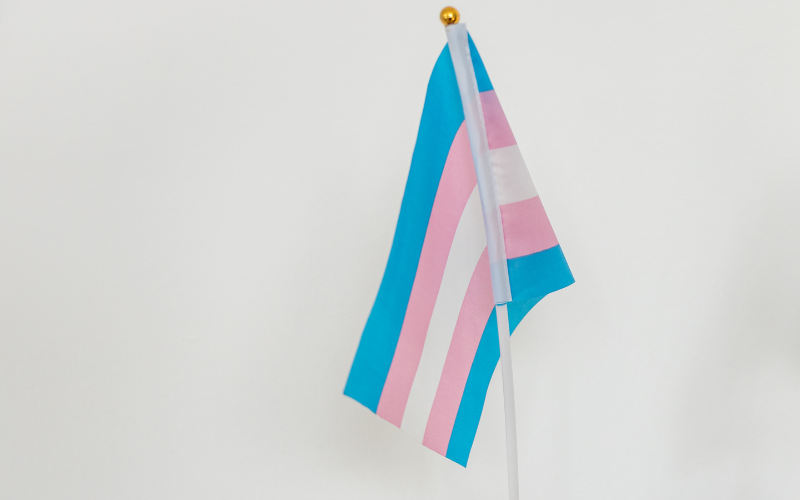
Trans inclusion in sports remains a divisive issue amid broader restrictions on trans rights in the United States of America, despite studies indicating that trans women athletes do not have a competitive edge in elite sports.
In February, U.S.A. President Trump signed an executive order banning trans women and girls from female sports.
This order followed other directives by the Republican leader stating the official U.S. policy acknowledges “only two sexes,” banning transgender individuals from military service, and restricting gender-affirming healthcare for trans youth under age 19. Additionally, initiatives for diversity, equity, and inclusion have been targeted for removal in government and military sectors.
The order, titled ‘Keeping Men Out of Women’s Sports,’ declared: “In recent years, many educational institutions and athletic associations have allowed men to compete in women’s sports. This is demeaning, unfair and dangerous to women and girls, and denies women and girls the equal opportunity to participate and excel in competitive sports.”
It further outlined that it would become the “policy of the United States to oppose male competitive participation in women’s sports more broadly, as a matter of safety, fairness, dignity and truth.”
The following day, the NCAA, which oversees collegiate athletics in the U.S.A., declared that female competition would now exclusively include those assigned female at birth.
Under the new NCAA policy, a student-athlete assigned male at birth—such as trans women and non-binary individuals—cannot compete on an NCAA women’s team, although they may continue to practice with the team and “receive all other benefits applicable to student-athletes.”
In contrast, if a student-athlete assigned female at birth begins hormone treatment—a trans man taking testosterone, for example—the NCAA states they can no longer compete on a women’s team. If they compete, the team becomes ineligible for NCAA women’s championships and falls under NCAA mixed-team rules. They may, however, continue practicing with the women’s team and “receive all other benefits applicable to student-athletes.”
For several years, the NCAA has faced controversy and criticism from right-wing and anti-trans commentators due to its past policies on trans inclusion, particularly following Lia Thomas’s swimming victory in 2022.
Thomas, a swimmer for the University of Pennsylvania’s women’s team, was the first trans athlete to win an NCAA swimming title by finishing first in the 500-yard freestyle.
During the NCAA championship, Thomas also tied for fifth place in the 200-yard NCAA freestyle with Riley Gaines of the University of Kentucky. Gaines has subsequently become a prominent anti-trans campaigner.