
Nicola Sturgeon expresses “pride” 10 years after same-sex marriage permitted in law
December 17, 2024Legislation that went into effect a decade ago permitting same-sex couples to marry in Scotland is regarded by former first minister Nicola Sturgeon as one of Holyrood’s top five achievements, ‘Independent’ reports.
While she was in office when the law was enacted, Ms. Sturgeon emphasised that she does “not claim it as a personal achievement,” instead viewing it as a “big part of this Parliament’s legacy”.
In an interview with the PA news agency, reflecting on the 10 years since the Marriage and Civil Partnership (Scotland) Act took effect, she stated, “It’s something I look back and take pride in.”
The law passed by a vote of 105 to 18 in February 2014, and Ms. Sturgeon remarked that at that time, it represented “the biggest parliamentary majority there had been of all the countries that had introduced equal marriage.”
She described the legislation as having sent “a powerful signal” and included it among the top five accomplishments of the Scottish Parliament’s history.
Effective December 16, 2014, the law allowed same-sex couples in civil partnerships to complete the necessary paperwork to convert their partnerships into marriages.
Wedding ceremonies began on December 31 of that year, with Ms. Sturgeon and Scottish Green co-leader Patrick Harvie even serving as witnesses for one couple that day.
When the law was introduced, religious leaders characterised it as an attack on traditional marriage, claiming that the legislation was “steam-rollered through” Holyrood.
As of the end of September 2024, there had been 10,138 same-sex marriages in Scotland, and Registrar General Alison Byrne, also the chief executive of National Records of Scotland, congratulated couples “who are shortly to celebrate their 10th anniversaries having been among the first to marry under the new law”.
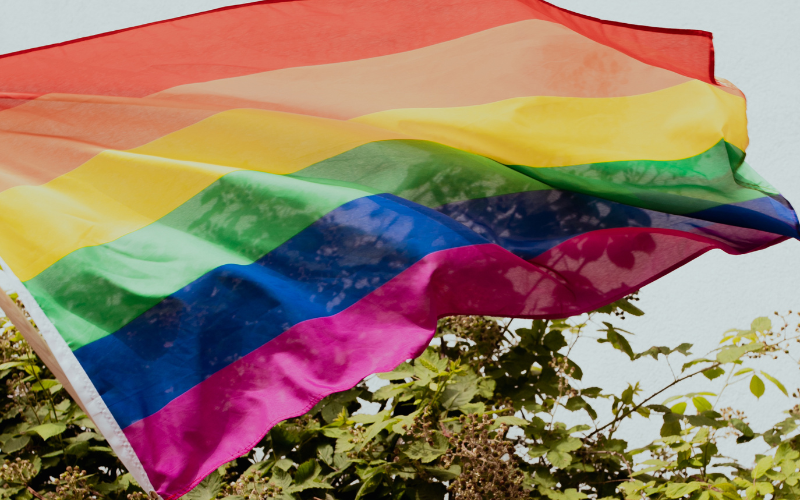
It was Ms. Sturgeon who announced the Scottish Government’s intention to change the law to allow same-sex marriage, with the then deputy first minister stating in 2012 that the government was “committed to a Scotland that is fair and equal”.
She acknowledged that the legislation was “controversial” at the time, noting that politicians anticipated a “pretty rancorous, divisive debate” on the subject.
Despite some opposition, including from a few SNP MSPs, she remarked that the debate had been “quite a civilised discussion”.
She noted that this debate “didn’t have the rancour and to be blunt the thinly veiled prejudice” that characterised the repeal of Section 28 in 2000, but also observed that it “didn’t have the kind of toxicity that characterizes almost all debates in modern political discourse”.
In passing the law, she noted that the Scottish Parliament “actually managed to take an issue that did divide opinion, that was controversial, debate it and decide it in quite a consensual and civilised way”.
She added, “Looking back at it now a decade on, I think there is lots to reflect about the substance of what was done. I think it made Scotland a better place, a more inclusive place with equality much more a reality, saying to gay couples that their love was as valid as anybody else’s and could be celebrated in the same way.”
However, she indicated that some countries, including Scotland, are now experiencing attempts to “push back” on certain rights, emphasising that “those of us who believe in equality” must “keep fighting”.
Ms. Sturgeon remarked, “We’re talking here of almost a global phenomenon where debate on all manner of issues has become much more divisive and toxic, and social media has a big part to play in that. But on the substance on this, on all manner of rights we are seeing pushback. That is true in LGBT rights, it’s true in some respects in women’s rights with abortion law in America just now. I do think we are living through a time when we are being reminded that progress is reversible and can’t ever be taken for granted.”
She concluded that supporters of equality, inclusion, and tolerance must continue to “keep fighting and almost re-fighting these battles,” acknowledging the somber nature of this reality.
Mr. Harvie stated that equal marriage “remains one of the greatest achievements for equality in the devolution era,” but he cautioned that Scotland must not regress on equality.
He expressed, “For most of my adult life it has felt like Scotland was moving in the right direction when it comes to LGBTQI+ rights and equality. But over the last few years there has been a noticeable regression; with a reactionary and dangerous culture war being waged against trans people in particular. We must not go backwards. Just as we overcame the prejudices of the past, I am confident that we can and will succeed again.”
Scottish Liberal Democrat leader Alex Cole-Hamilton MSP remarked, “Equal marriage was a landmark moment of progress for Scotland. On the day this Parliament voted for it, rights and freedoms were born that should never be taken for granted. Scottish Liberal Democrats were in the vanguard of delivering same-sex marriage and we will continue to fight for the rights of the LGBT+ community without hesitation.”