
One in 10 young adults in UK identify as lesbian, gay or bisexual
February 24, 2025According to data from the Office of National Statistics (ONS), about one in ten young adults in the UK now identify as lesbian, gay, or bisexual (LGB), which represents a doubling in this demographic over the past five years, ‘The Guardian’ reports.
In 2023, just over 10% of individuals aged 16 to 24 identified as LGB, an increase from 4.4% in 2018, as reported by the Annual Population Survey. The ONS attributes a significant part of this rise to a notable increase in young people identifying as bisexual, with 7.5% of 16- to 24-year-olds identifying as such in 2023, up from 2.8% in 2018. This figure was particularly high among young women, with 9.2% identifying as bisexual, compared to 5.9% of young men.
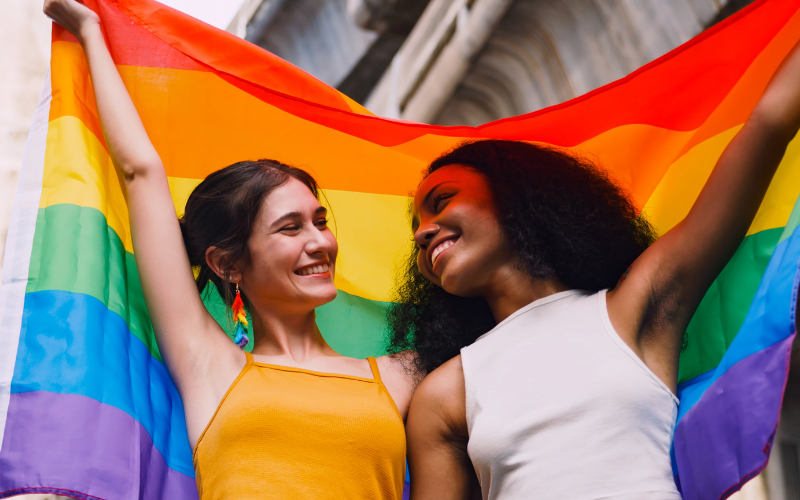
Simon Blake, CEO of the LGBTQ+ charity Stonewall, stated that this data should serve as “a wake-up call to organisations and governments who are rolling back on their commitments to LGBTQ+ rights and inclusion.” He emphasised that LGB individuals are a growing segment of UK society, noting, “More than one in 10 of 16-24 year-olds identifying as LGB will be a crucial part of our workplaces, politics and lives. They will have colleagues, friends and families who support them, and they will deserve – and demand – equal rights and opportunities.”
Overall, an estimated 2.1 million people (3.8%) across the UK identified as LGB in 2023, an increase from 1.2 million (2.2%) in 2018. Meanwhile, 93.6% of the UK population identified as heterosexual, down from 94.6% in 2018.
The data indicates that the proportion of adults identifying as LGB varies significantly across different age groups: about one in ten people under 25 identify as LGB, while this figure drops to around one in 100 for those over 65. For ages 25-34, 6.3% identify as LGB, compared to 2.9% for ages 35-49 and 2.4% for ages 50-64.
London recorded the highest proportion of adults identifying as LGB in 2023 at 5.2%, followed by the south-west of England at 4.4%. Northern Ireland reported the lowest proportion at 2.2%, with the West Midlands slightly higher at 2.8%.
ONS data also reveals that same-sex marriages, introduced in the UK in 2014, have surpassed civil partnerships as the most common form of legal union for those identifying as gay or lesbian. Meanwhile, the percentage of heterosexual individuals in opposite-sex marriages declined from 49.7% in 2018 to 46.2% in 2023.
The rise in people identifying as LGB, according to the ONS, may be “attributed to more people being more open to identifying their own sexual orientation as being LGB, together with changing societal attitudes meaning a greater acceptance of different sexual orientations.”
Supporting this view, the British Social Attitudes (BSA) survey of 2023 indicates that society is becoming increasingly open to diversity in sexual identity. This is reinforced by legal recognition through same-sex marriage and civil partnership legislation. Celebrating its 40th year, the BSA survey noted “a near revolution” in the liberalisation of attitudes toward issues such as same-sex relationships over the past four decades, with half of the respondents in 1983 deeming them "always wrong," compared to just 9% in 2022.