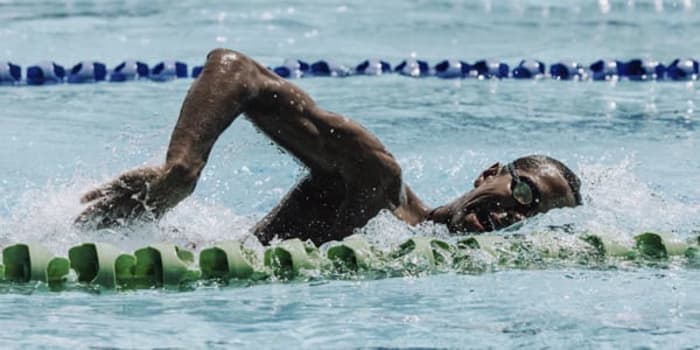
Out & Proud: An Interview With Swimming Champion Michael Gunning
February 28, 2022Michael Gunning, international swimming champion and UK Pride House Ambassador of the Commonwealth Games, shares the challenges of being an ‘out and proud’ Black athlete competing at a professional level. Holding dual Jamaican and British citizenship, he represented Team GB in the European LEN Cup, and after the Rio Olympic Games he changed alliances to represent his father’s heritage of Team Jamaica.
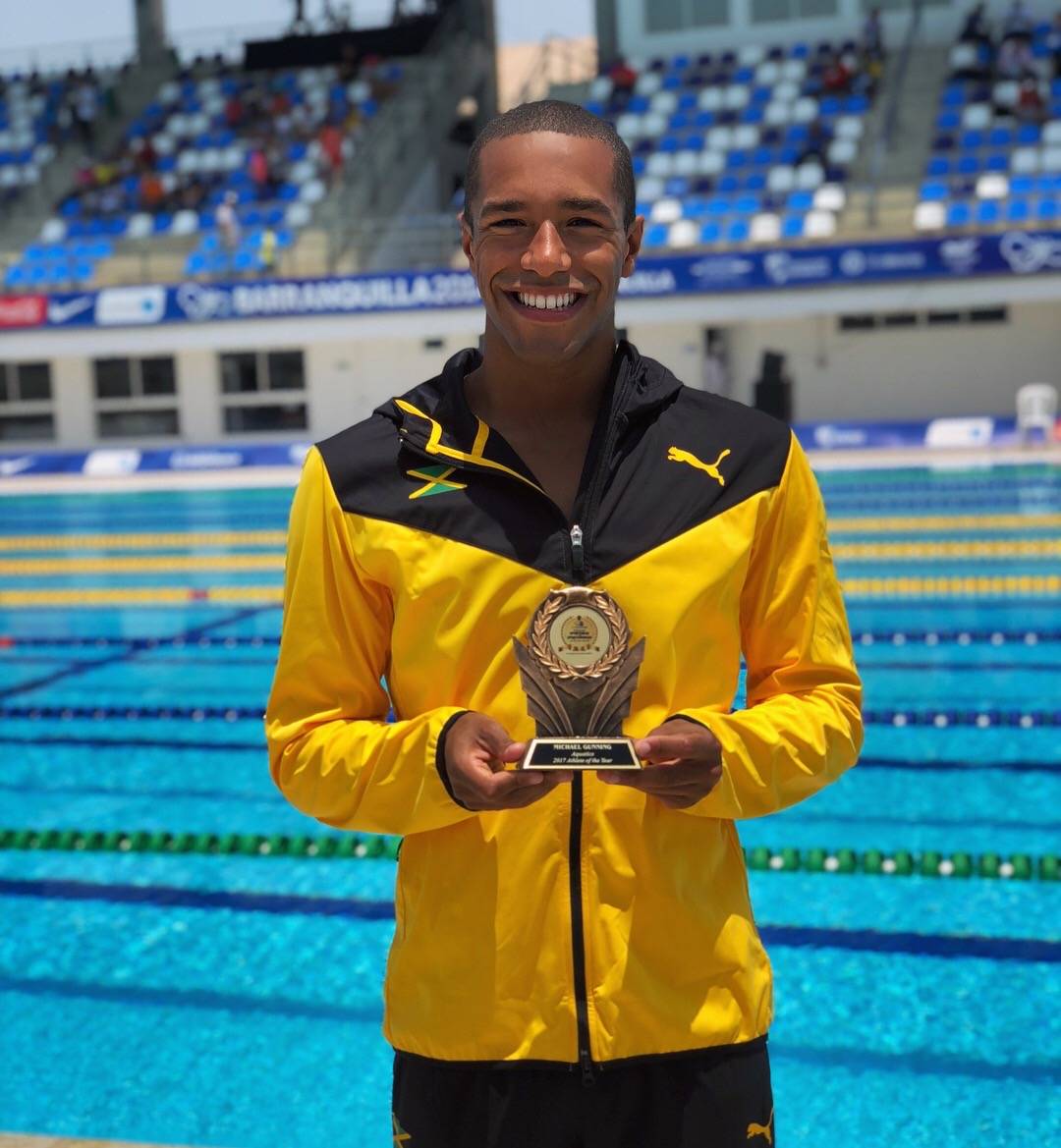
Hi Michael, why did you get into sports, and particularly swimming?
I had bundles of energy when I was younger, and my parents chose to put me into swimming lessons when I was four, as they really wanted my brother and I to learn water safety skills from an early age. Swimming is one of those sports where you have to fully commit mentally and physically to what you’re doing; every arm stroke, how you’re moving through the water, so I loved how swimming took your mind and body away from everything else in the world, and challenged me in ways I never knew were possible.
Do you engage in other sporting activities apart from swimming?
To be honest, I don’t really get the time because swimming is already such a big commitment, and I would never want to get injured doing another activities. I’ve been extremely lucky to have travelled the world with swimming, and represent both of my duel nationalities at the highest level, and the intense ‘elite’ training consists of strength and conditioning work, core stability, mobility and flexibility work, so it’s not just swimming up and down the pool.
Has sports always enabled you to be your authentic self?
No way. I supressed many aspects of my personal life growing up, and swimming became my identity for a long time because I didn’t truly understand who I was as a person. I surrounded myself with like-minded people, and loved being different and part of an elite group of athletes, but it was tough stepping out of that bubble and being ‘normal’ again, and sport soon became my safe space.
What are the barriers and pressures to being an ‘out’ athlete - do you think it's harder being Black and out?
Representation is so important in sport, and if we can’t see it, it’s often hard to walk confidently into the unknown and start the trend. I had no LGBTQ+ athletes to inspire me when I was younger, and felt very lonely because I was also the only mixed-race swimmer on the team, and in many ways, I do think it was harder. I was always told that I wasn’t strong enough and that I should try another sport, but I broke down those barriers because I always said to myself “If not me, who? If not now, when?” As the first openly gay Caribbean athlete competing at a professional level, I was really scared how I would be perceived and treated as an athlete; but it’s the same for everyone that tries something new.
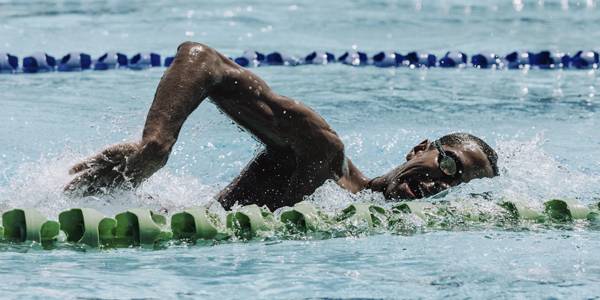
You now swim for Jamaica, how does this compare to the UK?
It’s very different, because there are so many pools around the UK with people learning to swim, but in Jamaica, the most common sport is athletics, and less than half of the population can swim. I’ve always been used to a big team environment, and I still sit with Team GB at competitions because they are like my family; but on the Jamaican team there are only a few senior swimmers, so I’d love to help grow the elite swimming population and help more swimmers identify their talent.
It’s LGBTQ+ History Month in the UK & Black History Month in the US, how important are these events for you?
I’ve always been so proud to be a role model for all the young black swimmers/athletes out there, and I think it’s so important to push for diversity and inclusion within our lifestyles everyday. One major turning point of lockdown 2020 has been the worldwide solidarity to challenge racism, inequality and injustice within our society; it really showed us the importance of sharing each other’s story (the good and the bad), as that sharing is educating. I’ve loved changing the stereotypes around the world, and these events help showcase stories like mine so I can act as a role model to many.
Can you share you coming out journey and the challenges you faced coming out in your journey to becoming a professional swimmer?
After not making the Commonwealth Games team in 2018, I was in a very low place and took some time out of the pool to work on myself and help find my identity outside of the pool. I always knew this meant my sexuality, and I decided to take part in The Bi Life on E! Entertainment where I could date for the first time, and ‘come out’ organically rather than sitting down with everyone to tell them I was gay. It was a wonderful learning experience for me, and when I went back to training I didn’t have any burden or anxieties anymore, I could just be myself and enjoy the sport for what it was.
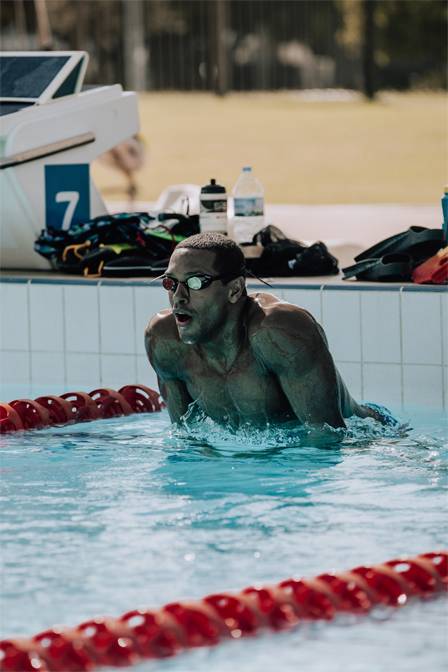
How are you personally trying to encourage greater LGBTQ+ inclusion in sports?
I’m extremely passionate about giving back to my sport, and really want to help athletes that are up and coming from supressing who they truly are, just like I did for many years. I’m a Stonewall Sports Ambassador, so I’ve been using my voice to help inspire and educate, but I also love visiting workplaces and supporting them to ensure their workspaces are diverse and inclusive; and that they are doing enough for LGBTQ+ voices internally.
Why do you think many LGBTQ+ sports people, especially men, are still not coming out?
It’s a hard question, because they and they alone know their true reasons, but in my experience, I was always scared of being seen as weak and vulnerable if I come out as gay, because among society there wasn’t many role models to make it ‘normalized’, so I think it’s just the fear of the unknown and being seen as different. You don’t want to give people a reason to be judged or stereotyped, so hopefully with more role models and athletes speaking out, it will encourage more people around the world to come out and be themselves on the international stage, and keep breaking down those attitudes. I’ve always had a passion for supporting and helping people along my journey; and I hoped that by me being my true authentic self, I could show others that they are not alone.
What advice do you have for a sports person who identifies as LGBTQ+, but is still wary of coming out?
I’ve learnt so much along my journey, but the biggest thing I’ve taken from sport is to never let anyone tell you it can’t be done. During my school years, people always used to say to me ‘Black people don’t swim’ but I’ve managed to smash that stereotype to pieces by competing in two World Championships and breaking four Jamaican Records! Of course, it’s always going to be daunting at the very beginning because the unknown is scary, but if you never try and live the best part of you, you’ll never be able to fully enjoy the sport. Since coming out, I’ve been living my best life in every shape and form. It’s down to us to break those stereotypes.
What’s next for you?
I’m a Pride House Ambassador at the Commonwealth Games this year, so I’m excited to have a ‘home’ Games again here in the UK and bring everyone together; but my real passion lies with communication and I really hope to flourish in the media/entertainment world by bringing my authenticity to the screens. Whether it’s in documentaries or chat shows, I’m excited to bring everyone together and talk about issues that aren’t commonly talked about.
You can contact Michael here on myGwork and follow him @MichaelGunning1 on social media.
Check out our interview with Gay Games’ Co-president, and former football player and coach Joanie Evans on creating an open and inclusive playing field in sports here. You can also check out how companies and sports individuals are working to make the sports world welcoming for everyone thanks to myGwork's latest event 'Stories from the Pitch' by clicking here.