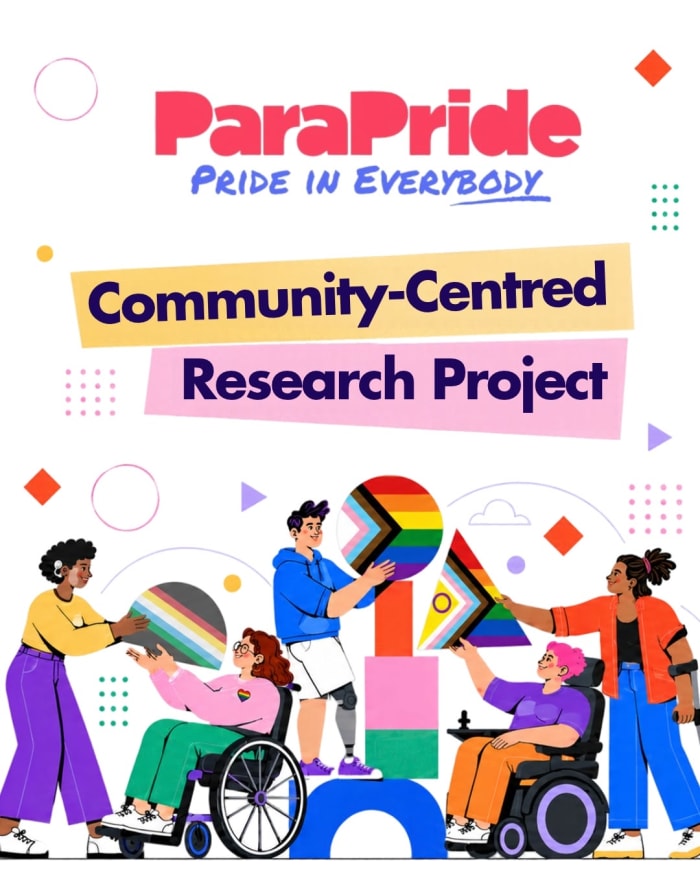
ParaPride is researching the lives of disabled LGBTQ+ people. They want your answers by 23 November
November 11, 2026If you are LGBTQ+ and disabled, neurodivergent, or living with a long-term health condition, you have probably noticed that nobody asks about both at once. Pride surveys ask about being queer. Disability surveys ask about being disabled. Hardly anyone asks what it is like to be both.
ParaPride, the UK charity for disabled LGBTQIA+ people, has started a study that does. It is called the Community-Centred Research Project and it is run by Dr Francesca Romana Ammaturo, who leads research at ParaPride and teaches sociology at London Metropolitan University.
What they want to know
The bad stuff, yes: barriers to getting into places, discrimination, being left out, and ableism inside LGBTQ+ spaces, which is something our own community is not great at admitting. But also the good stuff. Where do disabled LGBTQ+ people feel they belong? Where do they feel safe? Where is the joy?
The point is to end up with evidence that organisations can act on, instead of guesswork.
Who they want to hear from
Anyone in the UK who is LGBTQIA+ and disabled, neurodivergent, or has a long-term condition or impairment. ParaPride says there is no "right kind" of person for this. If that is you, it is you.
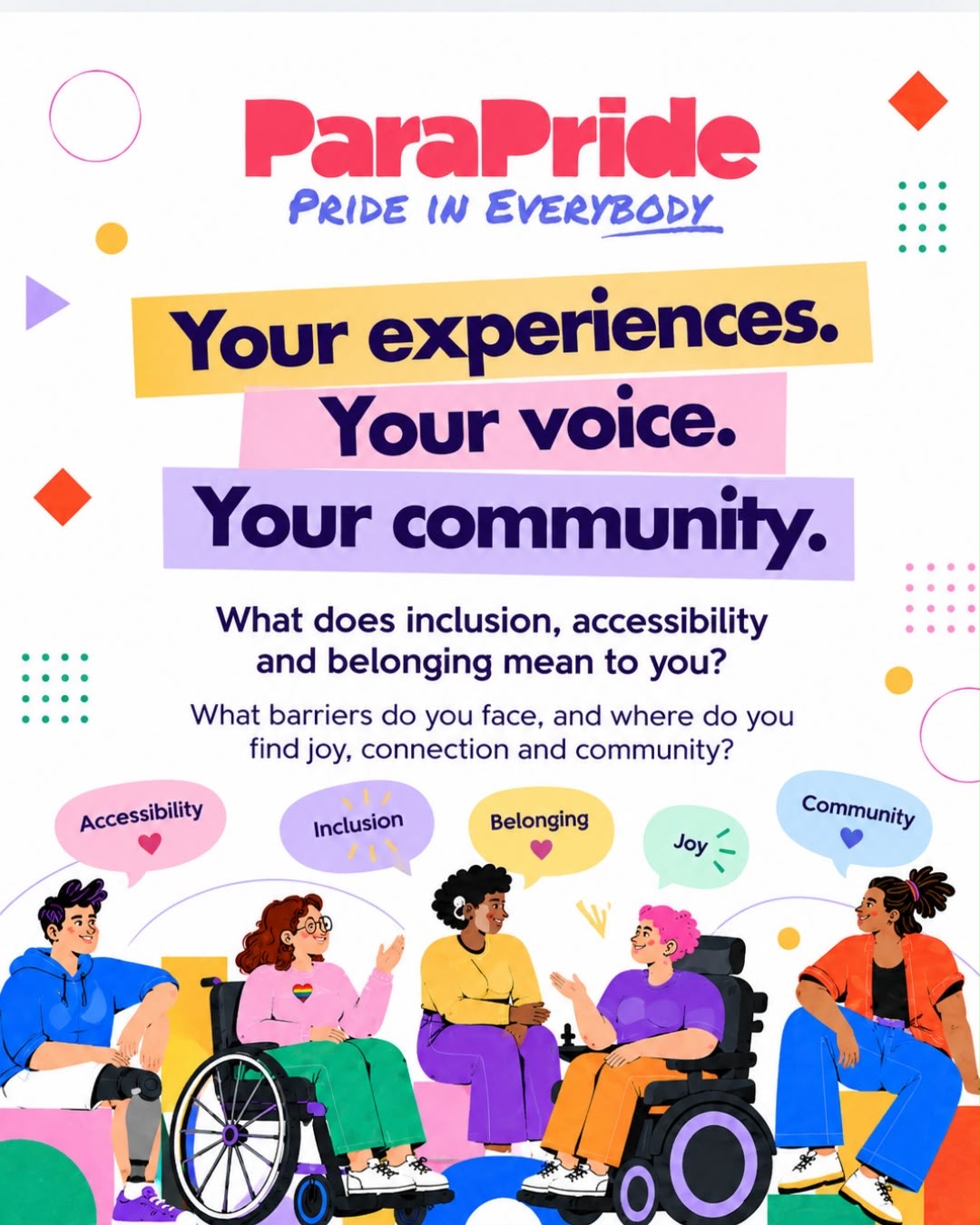
What taking part looks like
Right now there is a pilot survey. Two open questions. Answer in a word, a sentence or an essay, whatever you like. It takes a few minutes and it closes on 23 November. What people say in it will decide what the rest of the project looks at.
Later there will be a bigger survey, then interviews and focus groups online for anyone who wants to say more. You can do one bit or all of it. The results will be published as a free, accessible report in Pride season 2027.
Answers are anonymous, you can drop out whenever you want, and you only share what you are happy to share. The project follows the British Sociological Association's ethics code.
Why we are sharing it
Because this is a gap we see at work too. A disabled LGBTQ+ colleague decides twice whether to tell people about themselves. The LGBTQ+ network and the disability network are usually run by different people who have never been in the same room. Employers would do better with real evidence on what helps and what doesn't, and that is what this project is trying to produce.
Take the survey
Pilot survey, closes 23 November. More on ParaPride's website. Questions, or need it in a different format: [email protected].
Pass it on if you know someone it applies to.