
People Matter: an update on diversity at Bulb
July 6, 2020by Meera Patel,
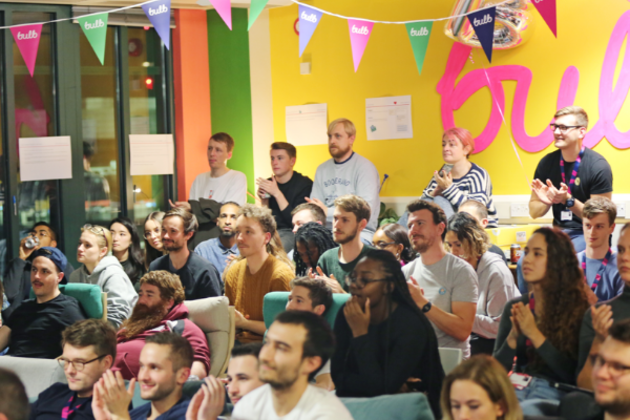
Since our last update, we’ve been using the feedback from all our team members to help build a more inclusive culture at Bulb. We still have more to do to be representative of the community we work in and believe improving the experiences for the different people working here will help us get there. Here we share the progress we’ve made so far, what’s coming next, and our full diversity statistics.
Building a diverse team is important to us. As we mentioned in our last update, we can’t achieve our mission of helping people to lower their bills and cut carbon emissions without it. In the last three months, we’ve focused on what we can do to make Bulb a more inclusive workplace. In that time, we’ve seen Team Bulb grow to 550 people. In this update, we’re sharing our full diversity statistics as of November. We’ll show how we’re doing compared to the UK as a whole, and where we can, we’ll show how the team’s diversity has changed over time.
Sharing our progress so far
By focusing on inclusion, we are able to attract a greater variety of people to join us on our mission and help them to succeed when they’re here. For this to work, it is important that everyone’s voice is represented. So we have brought people together from across all teams and levels at Bulb to champion and have input into the work we’re doing on diversity and inclusion (d+i for short). We also held a company-wide event exploring thoughts on inclusion. People want to see more educational and celebratory events, like Bulb at London Pride 2019, so we’ll focus on this in the coming months.
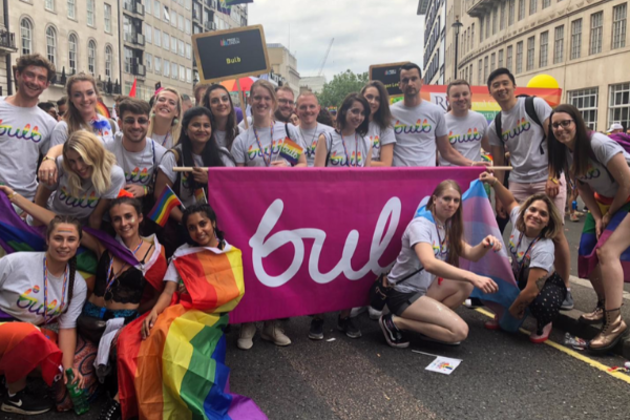
Team Bulb at London Pride 2019.
We also used the feedback from this event to define our d+i mission statement:
“We want Bulb to be an inclusive, fair and diverse workplace. And ensure employees are empowered through equal opportunities, representation and respect. Diverse means our employees reflect the wider society in which we live. Inclusive means providing the support everyone needs to take advantage of opportunities and creating a safe environment where you can be yourself. Fair means addressing needs on an individual basis.”
All d+i work we do is guided by this mission statement. We’ve created clear guidance so that team members with disabilities or health problems can get any tailored support they need to succeed in their roles at Bulb. Through this process, we can quickly put in place any workplace adjustments needed to create a workspace that works for them. For example temporarily reducing someone’s hours or providing them with equipment like standing desks or back rollers. We’re starting to tackle the lack of representation in tech with internships. Our first intern Ellie joined one of our product teams in October. Ellie has been working at Bulb since 2017, most recently as a team leader in our customer facing team. We hope to be bringing on more interns in 2020 from the most under-represented groups in tech; women, other gender minorities and ethnic minorities. To show our commitment to improving inclusion and representation in tech, we have pledged to the Tech Talent Charter. We are proud to be part of a growing movement to increase diversity in the tech sector, gaining access to best practices and bench-marking data, while sharing lessons we learn along the way.
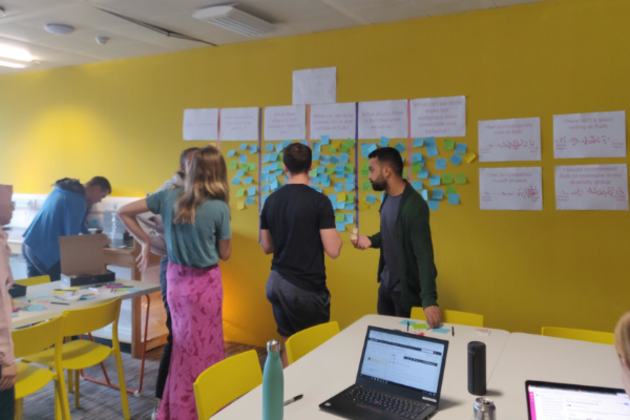
Some of our team sharing their thoughts on d+i.
What we’ve got planned
In the next few months we’ll continue to work on creating an inclusive workplace. We’ll make sure we’re set up to support all our team members, including those who might need more specific adjustments, for example parents. We’ll gather more feedback on inclusion through our existing team surveys, and by introducing a bi-annual survey specifically designed to gather feedback on this. To raise more awareness about inclusion, we’ll train managers and new joiners and provide guidance on communicating inclusively. And we’ll work with our Champions to introduce more educational and celebratory events.
Going forward, we’ll share our diversity data every 6 months through blog posts like this one. In between, we’ll give a more in-depth look at specific d+i projects we’re working on. By doing this, we feel we can be transparent about our data whilst providing more detail on what we’re doing to improve d+i at Bulb.
Bulb’s full diversity statistics - November 2019
Since our last update, we’ve changed how we collect diversity data. Collecting diversity data now happens in our HR system, Namely, rather than via a form. When new team members join, they complete their demographic details when setting up the rest of their account on Namely. In the long term, we think this will help us to have a more complete dataset, but we have noticed an increase in people opting out of responses.
As you’ll notice, in most areas we’ve seen only small changes to our diversity statistics. It takes time to create positive change in representation.
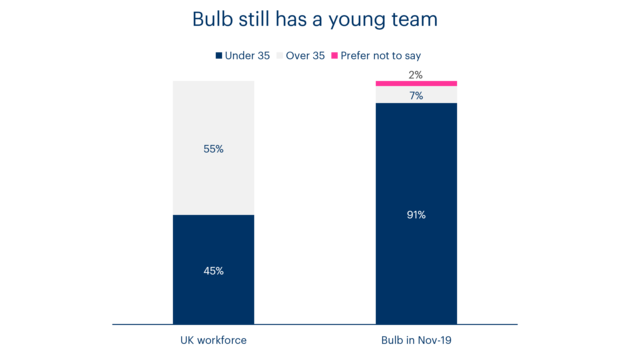
Bulb is a young team
The average age at Bulb is 25.8. This has fallen as we have grown our Experience team, who are responsible for Bulb’s member experience. A larger proportion of this team are recent graduates aged under 25. The proportion of under 35s appears to have decreased, but we’ve also seen an increase in people choosing not to provide data.
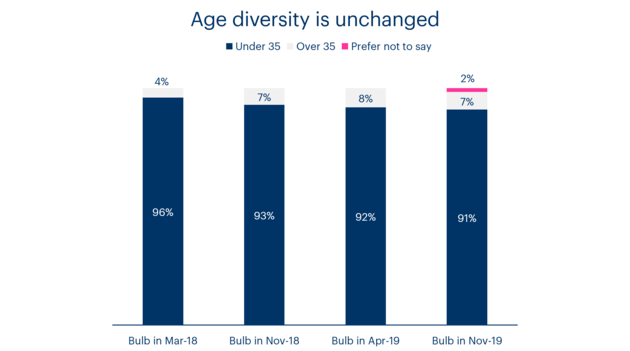
Notes: Age self reported . Source: 2011 London Census data, Bulb team diversity survey .
Notes: Age self reported . Source: 2011 London Census data, Bulb team diversity survey .
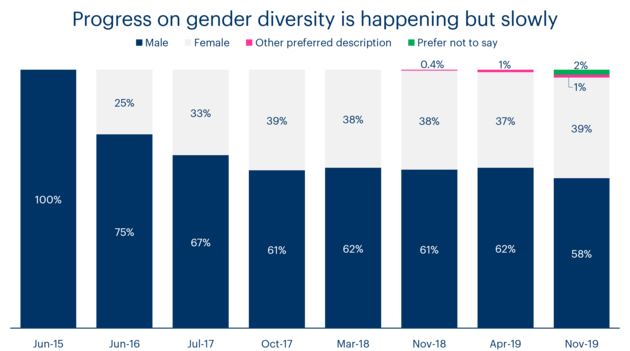
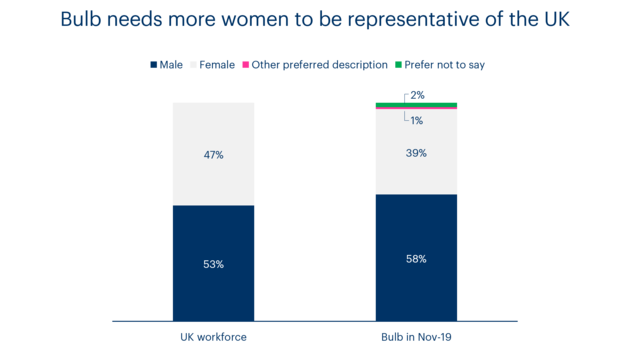
Bulb has more males than females
39% of team members identify as female, a slight increase from April 2019. In product and technology roles this decreases to 20%. 1% of the team identify as non-binary or with an other preferred description.
Notes: Gender self reported, respondents were able to answer ‘other preferred description’. Source: Bulb team diversity survey.
Notes: Gender self reported, respondents were able to answer ‘other preferred description’. Source: Bulb team diversity survey .
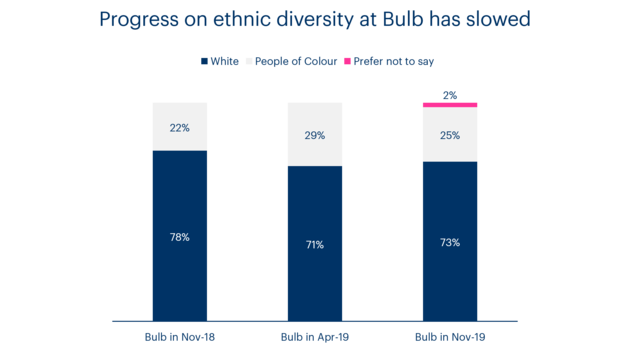
Bulb under-represents ethnic diversity
73% of the Bulb team identify as white, compared to 71% in April 2019. We’ve seen a significant increase in people choosing not to respond to this question in Namely. Compared to London, Bulb over-represents people with mixed or multiple ethnicities.
Notes: Ethnicity self reported . Source: London Census data 2011, Bulb team diversity survey .
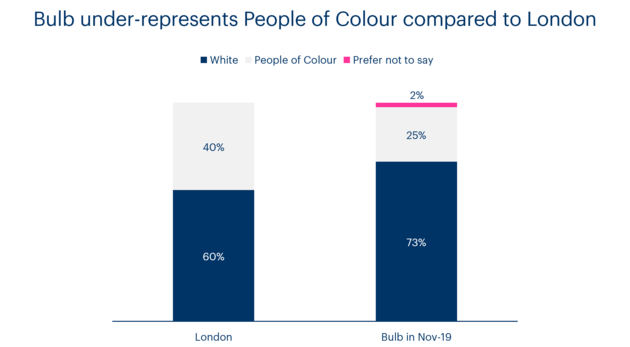
Notes: Ethnicity self reported . Source: London Census data 2011, Bulb team diversity survey .
Bulb has a large LGBTQIA community
16% of people identify as LGBTQIA, 3% higher than April 2019. However, again we’ve seen a marked increase in people choosing not to identify.
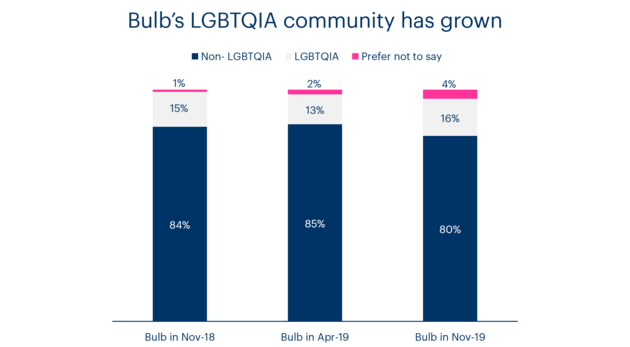
Notes: Sexuality self reported . Source: Office for National Statistics, Bulb team diversity survey .
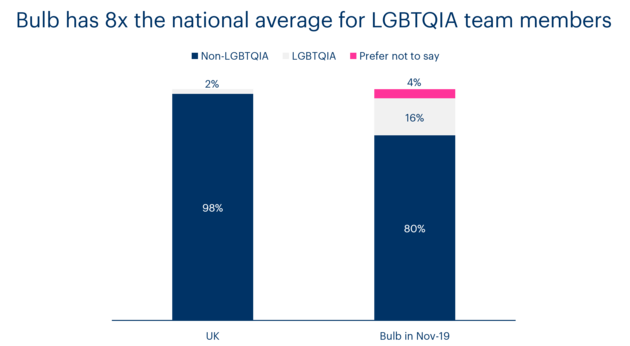
Notes: Sexuality self reported . Source: Office for National Statistics, Bulb team diversity survey .
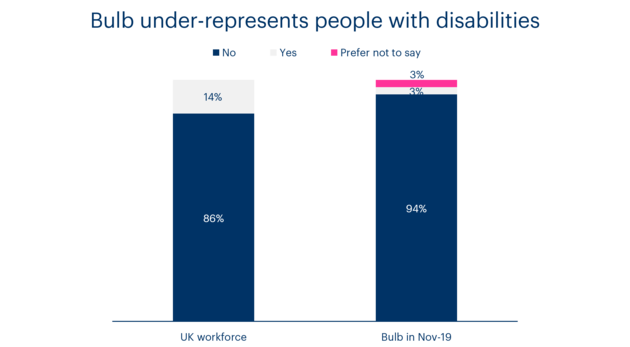
People with disabilities are currently under-represented at Bulb
3% of the Bulb team identify as having a disability, whilst 3% prefer not to say. This is much lower than the UK working population, where 16% have a disability. And a slight decrease from 4% in April 2019. One of the reasons behind this might be how we ask the question. Many people with chronic health conditions and mental health problems might not personally identify as having a disability. This can lead to variation in responses. We’re testing out a different way of asking the question in our bi-annual inclusion survey. If we see significant differences in responses, then we’ll change how we ask the question overall.
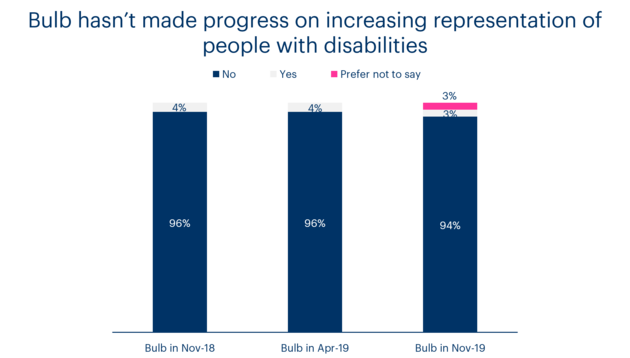
Notes: Disability self reported . Source: Office for National Statistics, Bulb team diversity survey .
Notes: Disability self reported . Source: Office for National Statistics, Bulb team diversity survey .
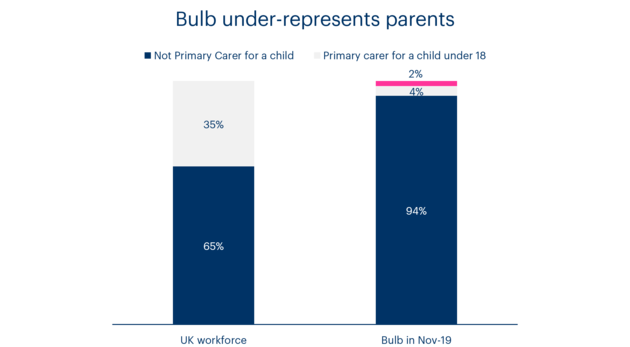
There aren’t many parents in Team Bulb
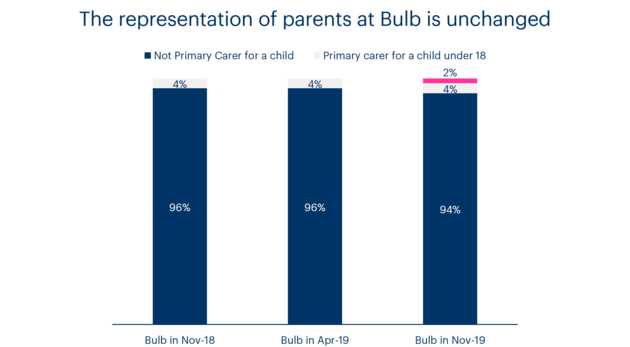
4% of the Bulb team are primary carers for children under the age of 18, compared to 35% of the UK. The low proportion of parents reflects our young team.
Notes: Family make-up self reported, a child is a person under the page of 18 . Source: Office for National Statistics, Bulb team diversity survey .
Notes: Family make-up self reported, a child is a person under the page of 18 . Source: Office for National Statistics, Bulb team diversity survey.
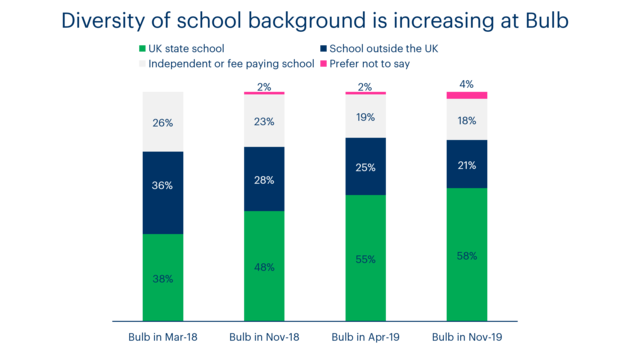
The Bulb team is becoming more educationally diverse
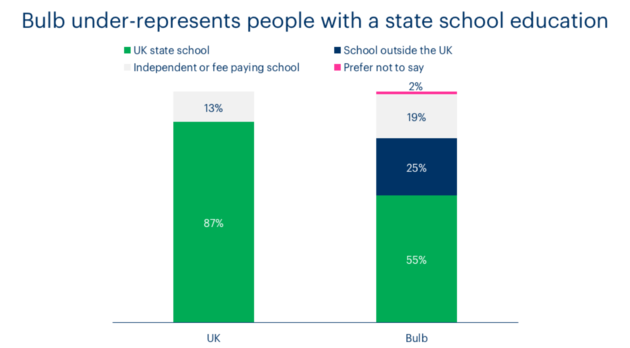
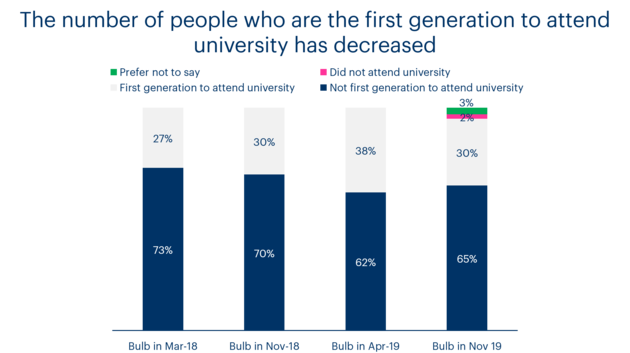
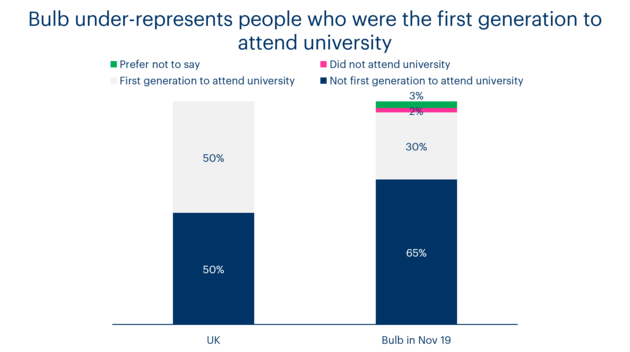
18% of the Bulb team is independently educated; this number is falling. However we still under-represent people with a state school education. 30% of the Bulb team are the first generation in their family to attend university; this number is decreasing. But we know that there are now more people at Bulb who didn’t attend university.
Notes: School background self reported . Source: Department of Education, Bulb team diversity survey .
Notes: School background self reported . Source: Department of Education, Bulb team diversity survey .
Notes: University education self reported . Source: Department of Education, Bulb team diversity survey .
Notes: University education self reported . Source: Department of Education, Bulb team diversity survey .
There is a variety of religious belief at Bulb
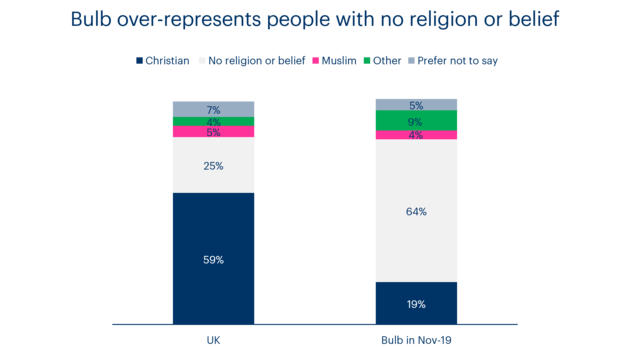
64% of people at Bulb identify as having no religious beliefs compared to only 25% in the UK. However we over-represent people who identify as ‘other’. We’ve mirrored how data is grouped in the census. So ‘other’ includes people who identify as Hindu, Jewish, Buddhist and other religious minorities.
Notes: religion self reported. Source: Census and Bulb data.