
Kenyan LGBTQ+ community launch petition demanding government to stop discrimination against queer asylum seekers
October 25, 2024The queer community in Kenya has criticised the government’s discriminatory policy against LGBTQ+ asylum seekers and initiated a petition in opposition.
Through an All Out petition drive, the community accuses Kenya’s Department of Refugee Services of increasing the risk of “persecution, violence, and exploitation” for queer asylum seekers by failing to recognise them as legitimate refugees.
This action responds to comments made by Refugee Affairs Commissioner John Burugu in an interview last month, where he stated that Kenya would not consider persecution based on sexual orientation or gender identity as automatic grounds for asylum.
In a telephone interview, Burugu said, “we are not interested in anyone’s sexual identity,” emphasising that his department is not persuaded that such persecution is enough reason for asylum seeker or refugee status.
The Kenya 2021 Refugees Act, which guides Burugu’s department in processing refugees and asylum seekers, does not specifically include queer individuals among those fleeing persecution. It defines eligible individuals as those persecuted based on race, religion, nationality, political opinion, or membership in a social group.
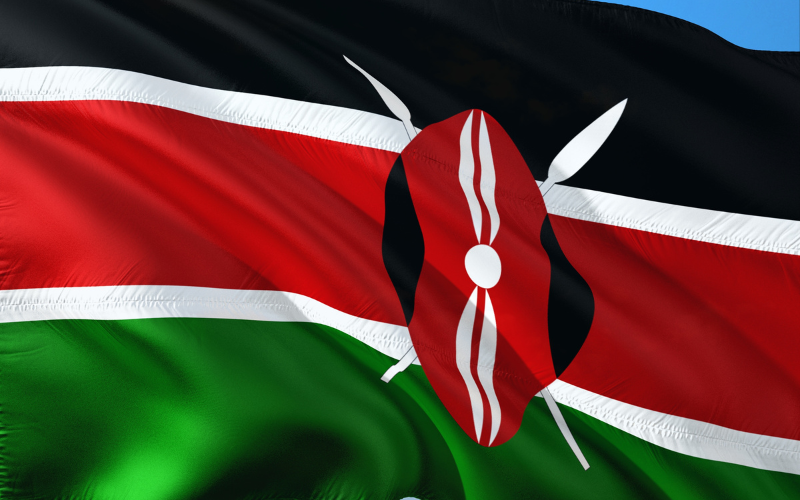
Opposition MP George Kaluma has proposed an anti-homosexuality law that would also seek the expulsion of LGBTQ+ refugees and asylum seekers from Kenya.
According to ‘Washington Blade’, the petition states that decision-makers, including the Department of Refugee Services and UNHCR Kenya, are failing to adhere to international human rights standards, while the media and major NGOs remain silent.
It highlights that excluding LGBTQ+ refugees leaves many of them vulnerable to further trauma and isolation.
These individuals can wait up to a decade for a decision on their asylum applications, even though it typically takes 12 months to process such applications in Kenya.
Petitioners note that this delay has led to increased violence, discrimination, and persecution of queer asylum seekers by the public and authorities, without legal protection.
The petition states that historically, Kenya provided refuge for LGBTQ+ individuals fleeing danger, but the situation has significantly deteriorated since 2017, when the government stopped processing LGBTQ+ asylum claims, leading over 400 people to flee to South Sudan for safety.
The change occurred because the U.N. Refugee Agency handed over the processing of asylum applications in Kenya to the government’s Department of Refugee Services in 2016.
UNHCR has acknowledged the slowdown in processing such applications since transferring the responsibility to the Kenyan government and urged the Department of Refugee Services to address the issue.
Over 200 people have signed the petition, which organisers intend to present to Kenyan and international human rights bodies such as UNHCR Kenya, the Department of Refugee Service, the Kenya Human Rights Commission, the National Gay and Lesbian Human Rights Commission, and the Refugee Consortium of Kenya. Other groups include the UNHCR High Commissioner in Geneva, U.N. Secretary-General António Guterres, Amnesty International, the International Organization for Migration, and Church World Service.
Petitioners urge these bodies to “take immediate action” to protect LGBTQ+ asylum seekers in Kenya from discrimination and exclusion, arguing that it violates fundamental human rights and disregards Nairobi’s international obligations, including those under the 1951 Refugee Convention.
“As key decision-makers, you have the power to reverse this exclusion and ensure that the LGBTQ+ asylum seekers are protected from harm and granted the rights they are due,” the petition states.
There are over an estimated 1,000 LGBTQ refugees in Kenya. Many queer individuals, particularly from Uganda, continue seeking refuge in Kenya following the enactment of Uganda’s Anti-Homosexuality Act in 2023.
The petitioners call for the recognition and expedited processing of queer asylum seekers' applications, similar to other refugees, and that their concerns about discrimination and violence be addressed.
The petition also demands that the Department of Refugee Services officially retract the discriminatory statement made by the DRS commissioner, which excluded LGBTQ+ individuals from protection under the refugee mandate.
Petitioners want LGBTQ+ representation in the Global Refugee Forum and the Refugee Working Groups to ensure their voices are heard and needs addressed in global decision-making processes.
The Center for Minority Rights and Strategic Litigation, a Kenyan LGBTQ rights group, described Burugu’s remarks as “deeply concerning, regrettable, and against the law.”
CMRSL Legal Manager Michael Kioko informed the Washington Blade that the organisation received numerous complaints from queer refugees and asylum seekers about homophobic discrimination and other violations, with no response from the Department of Refugee Services and UNHCR Kenya.
“The DRS commissioner is obligated under Section 21 of the Refugees Act to ensure measures are taken to protect asylum seekers who have been traumatized or require special protection. This includes LGBTIQ+ refugees in Kenya,” Kioko said.
He emphasised that this directive aligns with the 1951 Geneva Convention on the Status of Refugees, to which Kenya is a signatory, and is applicable under Article 2(6) of the constitution.
“It is imperative that the Department of Refugee Services adheres to its obligations under the Refugees Act and the Constitution to protect LGBTIQ+ refugees,” Kioko added. “Their safety must be prioritized, especially in light of the increasing violence and discrimination that LGBTIQ+ persons in Kenya are facing.”
He also mentioned that Kenyan courts have ruled that queer individuals are considered part of a social group eligible for refugee admission when facing persecution, and thus, LGBTQ+ asylum seekers should not be excluded.