
Pride in London draws tens of thousands in powerful show of LGBTQ+ solidarity
July 6, 2026Tens of thousands of people filled central London on Saturday for the annual Pride in London parade, transforming the heart of the capital into a vast display of LGBTQ+ visibility and activism.
Organisers reported that more than 35,000 participants from around 600 organisations and community groups marched from Hyde Park Corner along Piccadilly to Whitehall, many carrying rainbow flags, trans flags and banners calling for equality and renewed political action.
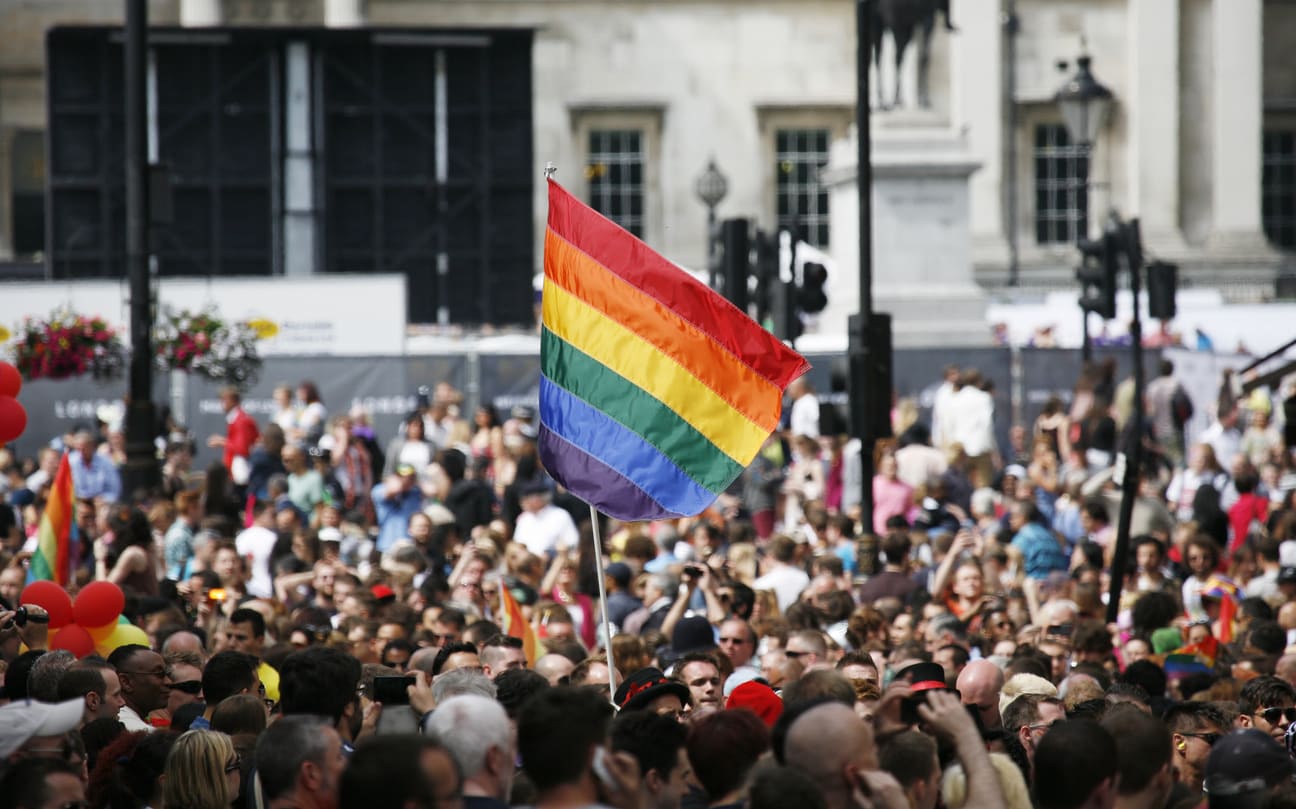
London’s mayor, Sadiq Khan, joined the procession, walking alongside campaigners, community organisations and allies as the march moved through key central streets on Saturday afternoon.
Veteran activist Julian Hows, 70, who helped lead the parade, emphasised the event’s political core. “Pride matters because it must always carry a thread of protest,” he said, as reported by The Guardian. “Freedoms that exist today can be stripped away tomorrow. Progress requires constant pressure, particularly when LGBTQ+ rights are rolled back in any part of the world.”
Speculation that Madonna would appear during the celebrations circulated in the lead-up to the event, but organisers firmly dismissed the rumours. A statement from Pride in London said: “In response to the rumours, we can confirm that Madonna will not be appearing or performing at Pride in London. We have two fantastic headliners at Trafalgar Square to conclude a day of protest and celebration.”
Ahead of the march, Pride in London highlighted serious ongoing challenges for LGBTQ+ communities across the UK. A spokesperson said the scale of need is stark: NHS waiting lists for gender-affirming healthcare stretch beyond four years in some areas, while a fully trans-inclusive ban on conversion practices remains absent from statute, despite a commitment first made by the UK government in 2018.
At the same time, key social spaces for LGBTQ+ people are under pressure. Since 2006, London has lost 58% of its LGBTQ+ venues, reducing places where queer and trans communities can connect, organise and feel safe. This erosion comes amid continued hostility: Home Office data shows that police recorded more than 18,000 hate crimes motivated by sexual orientation in 2025, with thousands more targeting trans and non-binary people.
Pride in London’s roots stretch back over five decades. Britain’s first official Pride march took place in London in July 1972, inspired directly by the Stonewall uprising in New York in 1969. That landmark rebellion began when police raided the Stonewall Inn, a gay bar in Greenwich Village, triggering days of demonstrations against harassment, criminalisation and discrimination. The spirit of that resistance continues to shape Pride events worldwide.
This year’s parade was led by interim chief executive Rebecca Paisis, who said she aimed to deliver “the most inclusive Pride in London event yet”. She stressed the collective strength of LGBTQ+ communities across generations.
“Our movement is built on many voices joining together as one,” she said. “From those who marched in 1972 to those stepping out for Pride for the very first time this year, that shared presence creates our power. LGBTQ+ people live with adversity in many forms, and we also carry a deep tradition of collective action. This year’s campaign is a reminder that isolation weakens us, and coming together changes history.”
Pride in London has also been a site of internal debate. In recent years, some LGBTQ+ activists have accused the organisation of allowing corporations to benefit from Pride branding while failing to demonstrate sustained commitment to LGBTQ+ equality in their workplaces and supply chains. Others within the community have questioned whether the event sufficiently reflects London’s racial, trans, disabled, migrant and working-class LGBTQ+ communities.
These critiques continue to influence discussions about the future of Pride in London: who it represents, how it is funded and the balance between celebration, protest and commercial involvement.
Across the day, however, the central message from participants remained clear: LGBTQ+ rights require continued vigilance, solidarity and political will—on the streets, in workplaces and within institutions.
For many, that collective effort extends beyond a single day. Those seeking to support or connect with inclusive employers, expand their professional networks and strengthen LGBTQ+ representation in the world of work can take a further step by signing up to myGwork, the global LGBTQ+ business community and talent platform.