Queer Britons still don’t feel safe in public, confirms national poll
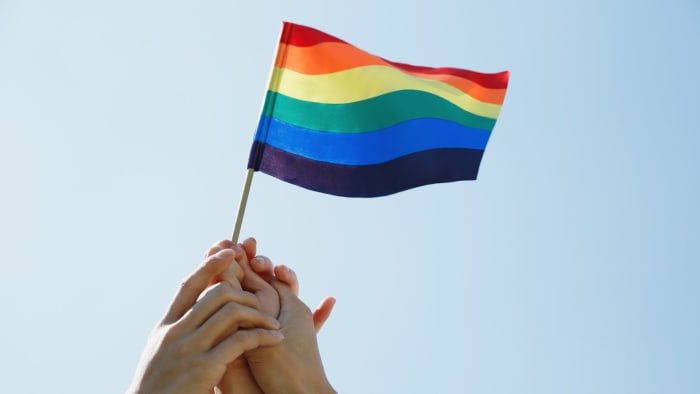
July 23, 2025The Pride flag may be a symbol of progress, but for many LGBTQ+ Britons, it’s still one of the few signs of safety in public spaces. Yet, for many it doesn't guarantee safety.
A new national YouGov poll shows that two in three LGBTQ+ people (67%) feel safer in areas where the Pride flag is visible, with that sense of security stronger among queer women (75%) and nonbinary people (79%). However, the reassurance the flag offers is fragile, as the same survey reveals that many queer Britons still routinely hide affection and anticipate abuse in public.
In fact, seven in ten gay men and two-thirds of lesbian women admit they hold back from showing affection for fear of harassment. Additionally, nearly half of LGBTQ+ Britons say they’ve been subjected to homophobic discrimination while being affectionate with a partner in the past five years.
Among gay men, 63% say they’re uncomfortable kissing their partner in public, and 56% feel uneasy simply holding hands. By contrast, just 9% of straight Britons feel any discomfort holding hands, and a mere 12–16% say the same about kissing their partner in public.
While the Pride flag is increasingly visible year-round, safety remains elusive, particularly for lesbians and transgender people. The survey also revealed that:
- Only 36% of lesbian women say they “never” feel unsafe walking with a partner in the daytime.
- At night, that figure plunges to 10%.
- Just 35% of trans Britons say they feel consistently safe walking with a partner during the day, compared to 63% of cis straight people.
These disparities underline a stark national reality: public affection remains a calculated risk for many queer people, even in 2025. “It’s heartbreaking,” says one respondent. “You learn to scan every street before reaching for your partner’s hand.”
And yet, symbols matter. In fact, 63% of LGBTQ+ respondents say the Pride flag is important to them, with the number jumping to 72% among trans Britons and 77% among nonbinary people.
“Seeing a rainbow in the window tells us we’re welcome,” says a queer Londoner. “But no flag can stop abuse. That takes action.”
In short, the YouGov findings paint a sobering picture of queer life in Britain. Pride flags may offer pockets of reassurance, but real safety remains unevenly distributed. As public spaces grow more visible with LGBTQ+ support, the challenge now is to match symbolism with protection, and ensure queer Britons don’t just feel seen, but safe. Check out the full report here.