
Queerness and the climate movement: in conversation with PermaQueer
April 22, 2022Today marks Earth Day, a day to highlight the ongoing catastrophic damage to our planet and empower billions worldwide to join the climate crisis movement. However, after over half a century of Earth Days, climate protests, scientific work, and the battle to protect our home still feels despairing.
Part of this is because it is a movement that still too often lacks nuances around privilege and intersectionality. Marginalised people around the world are already feeling the impacts of the climate crisis, yet their voices are silenced.
Enter PermaQueer, which takes permaculture – an innovative framework for sustainable living – and utilises it as a tool to empower and support the LGBTQIA+ and BIPOC community. Founded in Australia, where – like in many other parts of the world – the majority of people live on stolen land, their work prioritizes the needs of the Aboriginal community and how permaculture can be reworked to break down barriers faced by marginalised communities, with their needs at the centre.
Zoe Schulz from myGwork spoke to their co-founder, Guy Ritani, about the intersectionality of LGBTQIA+ identities and the climate crisis, how environmental spaces can lead with inclusion and the importance of joy within a topic that can often feel dooming.
Hi Guy! Thanks for chatting with me. Can you tell share a bit about yourself and PermaQueer?
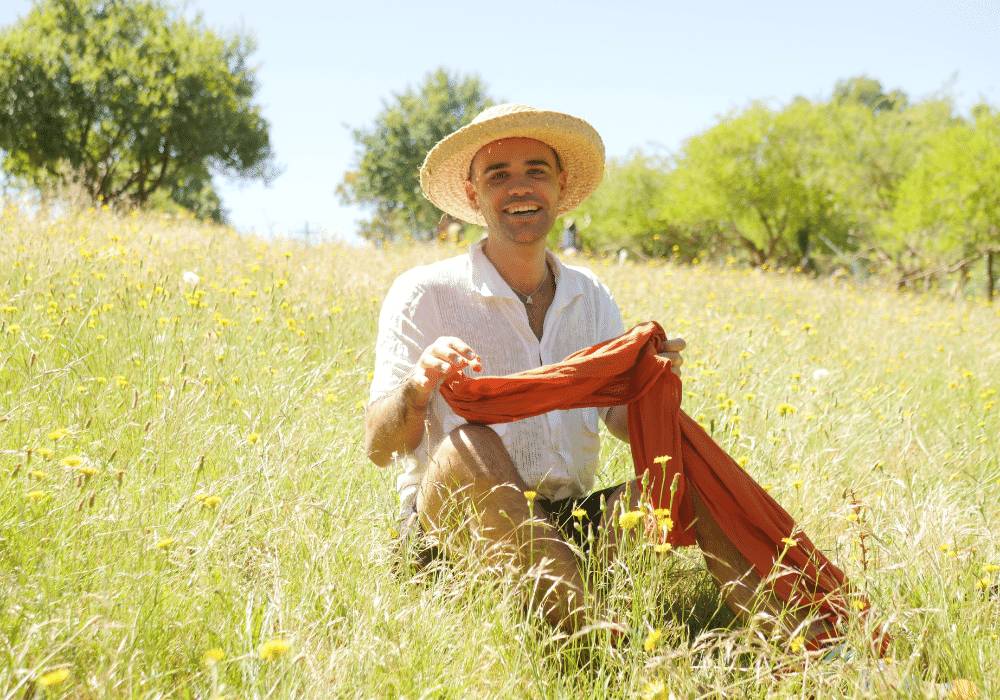
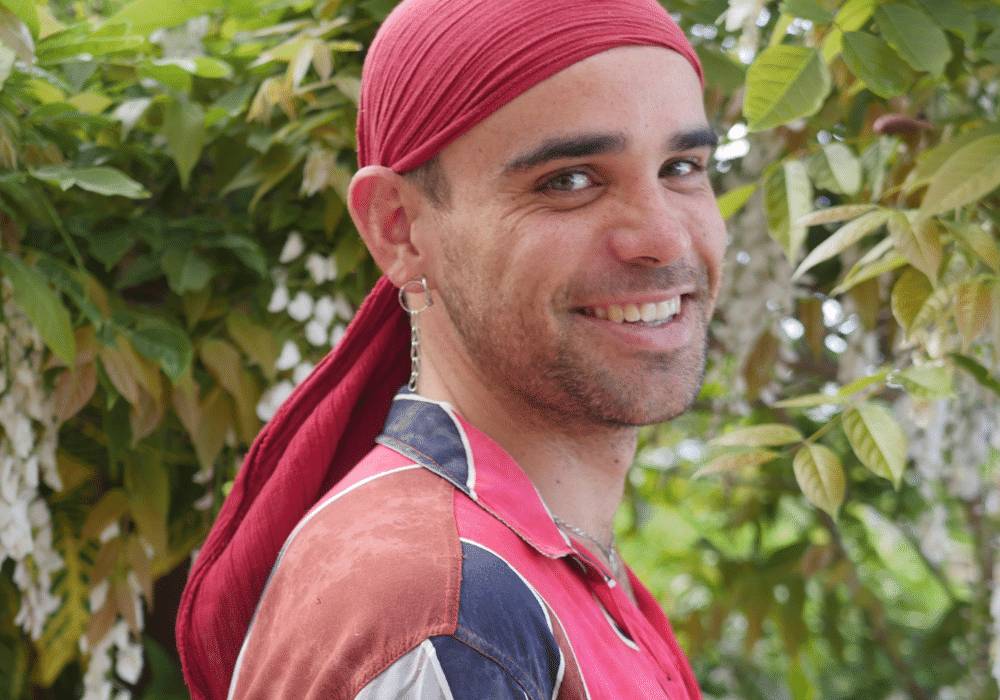
My name is Guy Ritani (Ia/they/them). I’m a takatāpui (queer) Māori artist, activist, educator, and permaculture designer based in Wangerriburras Rainforest Country in the Gold Coast hinterlands of Australia. I run PermaQueer with my partner Toad Dell (they/them/its), an ecological education platform born of queer theory and permaculture that focuses on access to LGBTQIA+ and BIPOC communities. We use an ecological systems approach, among many other approaches, to resource, educate and systemically uplift our communities.
What is Permaculture, and why is this key to your work?
Permaculture is a design methodology. It is a way that we can approach building systems, solutions and communities from an ethical perspective that includes all parts of our wonderful world. The ethics of permaculture - earth care, people care and fair share - make up the foundation of our work. A huge deal of time and consideration has gone into these three ethics; they are not lip service nor virtue-signal, but rather a living, everyday feature woven into what we do.
We use a ‘systems-thinking’ set of goggles from this ethical foundation to look at the world. This identifies that everything is in a complex relationship with all the things around it, and thus we must be informed of how these systems work to make solutions. Lastly, we use permaculture principles to carry out the designs we come up with.
These three aspects: ethical approach, systems-thinking vision and the use of principles, revolve together and become what we call good permaculture design. The foundation of these principles has been drawn from deep observation of our natural environment to best mimic systems that thrive just by existing. What better way to do it than that?
Your work focuses on focusing accessibility to traditionally marginalised communities – what does this look like?
PermaQueer was born out of Covid-19 lockdown in Naarm or so-called Melbourne. We lived in a permaculture transition house, and I lost my job. I had no income and was not eligible for government support.
Many of our friends were in this situation across the globe: Queer, unemployed, financially insecure and in a pandemic. The difference was that I lived within permaculture systems.
Our community had embedded resilient food systems, housing exchange bartering, community economy and shared resources and infrastructure. Versus my friends in the same situation, just not in this community, they either fell on tough times or had to scrounge to get a ticket home back into a country where the government would care for them. Not everyone can do that. Not everyone can access a system where someone will care for your well-being. This is what being marginalised looks like.
Thus, we set off to create a permaculture course that was culturally safe and appropriate for LGBTQIA+ and BIPOC communities. From here, we wanted to start building more communities like the one we were in.
Since then, we have taught all over the globe about building resilient food systems, reclaiming housing systems and how we can model alternative housing systems. We’ve hosted two international TEDxPermaQueer summits: community responses to climate change and cultural responses to climate change, and advocated for systemic inclusion and development for marginalised communities.
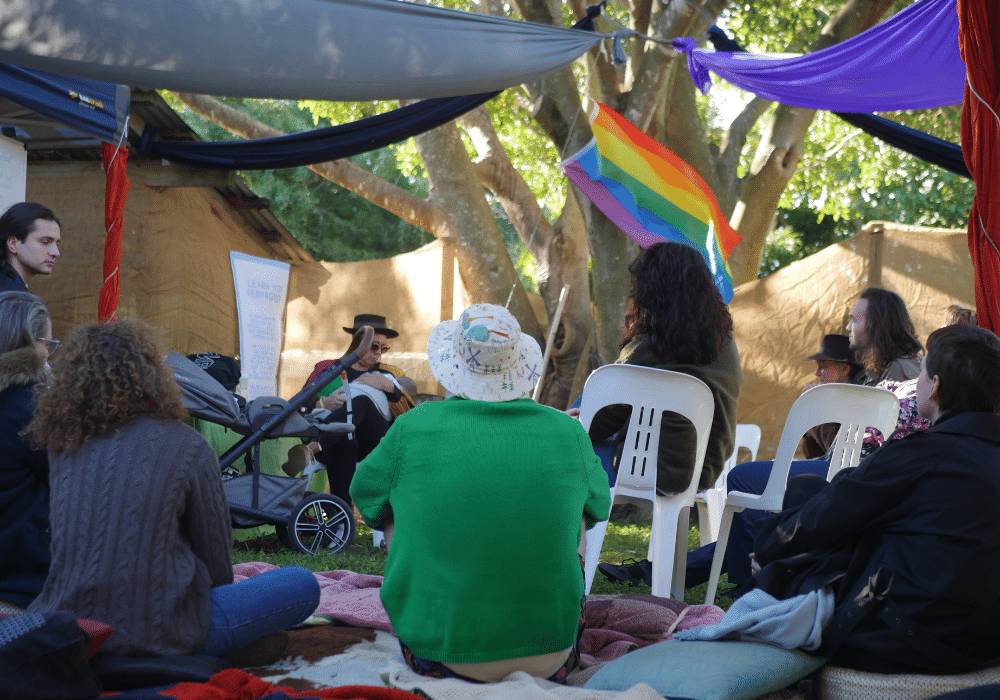
Centralising our work on the reality that most of us live on stolen land, we must build these systems with indigenous sovereignty at the centre. Many of the barriers to learning and building these systems are financial, so we volunteer a lot of our teaching and offer many scholarships to marginalised folx. Beyond this, the permaculture movement is a predominantly white, heterosexual and colonial movement that frankly can be stressful, inappropriate and even abusive to minority communities. We have set our vision to build up new spaces where the strengths of permaculture can best flourish within these communities, and the joys and expression of these communities can thrive.
How do LGBTQIA+ identities and the climate crisis overlap?
Climate change is a deeply personal affair that is intrinsically tethered to our identity. Many of the systems that perpetuate ecological destruction, deforestation and our changing climate stem from the ideas and tropes of how we should live and the kind of people we should be. These are systems of white supremacy, toxic masculinity, patriarchy, heteronormativity and many more. If we continue as normal, bolstering up these damaging systems, we know the kind of destruction coming our way. This means we have to have a response that goes against social norms. A response led by people who are already accustomed to being different and have decided to exist in different ways because it’s what they feel most comfortable and natural doing.
Queerness is a life experience that can facilitate the societal change we need because queer people themselves have already done it. They’ve faced discrimination, they’ve faced stigmatisation, and they have faced ostracization for being different. Climate change beckons us to step into this space again. To dare to live differently and pioneer new cultures that exist that fit within radical love of our ecosystem. We’ve done it before, and we can do it again!
Do you think climate activists can learn anything from the fight for LGBTQIA+ equality?
Civil rights movements and climate justice movements are not separate beasts. There’s a small group of intensely privileged people who make the majority of decisions that impact the environment, women’s healthcare, laws protecting LGBTIQA+ folks and policy that affects first nations people.
When I think of queer liberation, I think of those who pioneer these spaces; I also think about how in the fight for equal marriage, many cis gay men and women turned their backs on the trans folks who carved the way. The harm from that is still felt in our movements today. The places where queer liberation stayed strong and maintained its radical edge are the places solidarity was held in LGBTIQA+ communities.
Many people think that we need to present as one uniform mass under a single ideal when the reality is that we have many faces, genders and experiences of our queerness in very unique ways. If we’re able to hold our diversity as a complex ecosystem or a polyculture, we can understand that while we all move and act differently, it can be in solidarity towards liberation towards climate justice, and the fact that our activism may look different is a strength, not a weakness.
Do you think there is enough LGBTQIA+ and BIPOC representation within the environmental movement?
Sadly, no. Many areas of the environmental movement are not intersectional and are very vulnerable to the systems of violence they fail to acknowledge. People in environmental activism don’t often understand how racism, heteropatriarchy, colonisation, and other patterns of violence were used to build the infrastructure that created the problem we’re in. Our oil export industry wouldn’t be possible here in so-called Australia without the ongoing land theft and genocide committed toward Aboriginal peoples.
The climate movement needs to centre the voices of those most disproportionately affected by climate change, especially first nations voices. We must have a more intersectional approach from the beginning to include a just environmental recovery.
How can we encourage more inclusion and accessibility within the climate crisis movement?
We must approach the climate movement with regeneration and care. This is a colossal marathon and not a sprint. Thus, we have to find ways that this can be enjoyable, easy, pleasant and have as much care and rest as possible along the way.
We have to feel safe, held and comfortable so that we are not fearful we will be cancelled, punished or excluded when we make inevitable mistakes. We see these aggressive punitive responses in the climate action space, which leads to burnout, resentment and rejection of the social spaces and the movement itself.
We have to start asking the questions ‘How do I enjoy this process’, ‘Is this important and valuable to me?’, ‘Do I want to be here?’ and reflect on how we can have enthusiastic joy from the process.
Yes, there are times when it is tough to feel joy, like when an oil company bombs a sacred site, and these battles will never be joyous. But it’s the spaces around these we need to build delight into. If we want to be inclusive and bring more people, we have to allow them to enjoy it, feel a part of it and set them up with a resilient approach to effective activism.
What this joy, safety, and inclusion stem from is understanding the needs of our diverse community deeply. Making our activism spaces culturally safe, emotionally aware, physically accessible, financially accessible and committed to unpacking overarching systems of violence. If we cannot do this, we will not provide safe environments for potential climate activists.
You mention the importance of joy in your work. How do you manage climate anxiety?
Climate anxiety can be crippling at times. We all feel it. This is the reality. Self-care is at the core of this one. We must treat the earth with respect, and we are an extension of the earth herself. We must treat ourselves with love, respect and with care. We are allowing ourselves to have enough rest and space to meet the work that needs to be done. We are uncompromising in taking this rest and space because it is what drives the work itself.
The core of addressing our climate anxiety is with climate action. This is not rallying every day, and this is not organising campaigns and petitions day in, day out. This is understanding that we’re doing little things every day to transition towards a way of living that has less and less negative impacts on our world and more and more good ones. These things take time; they feel overwhelming and can make us cry our eyes out. And they do. But knowing that we’re doing what we can is enough for me to feel agency and power against this anxiety.
An important thing to note here is that this feeling is a valid response. Climate change is a very real threat, and it is entirely natural to feel stressed and anxious in response to this. We come to our activism from a trauma-informed lens, so we ask ourselves, how do we meet this global trauma without losing agency? For us, it’s important that we know we’re doing what we can: being critical of the industries and economies we support with our money, the government and policies we support with our votes and the people and movements we support with our actions. While also understanding we’re all human and in this imperfect climate transition together, so we need to have love for ourselves and others.
What is the biggest thing you see as needing to change within the climate movement for it to be successful?
We need to reframe deficit language, we always speak in terms of impending doom and disaster, and this has been important to highlight the severity, but it’s also left people feeling powerless, isolated and depressed.
What would a climate movement look like if it also focused on joy, connection, and abundance instead of just shame, rage and grief?
Rage has an important place in our movement, but we know that cultures that centre on shame and rage rarely design good sustainable patterns and ways of relating. I’d say that the culture that got us into this mess relies on those patterns to perpetuate itself.
This always brings to mind a quote by Audre Lorde, “The master’s tools will never dismantle the master’s house”, and I always think about how that can relate to queer liberation or climate justice movements. Are we moving into a new space or are we using the language of liberation to enact the same systems and patterns of violence onto each other?
It will be a cultural shift that celebrates community, the connection of people to the land, and the regeneration of the ecosystems that will create a stable climate. Rage and climate grief might have prepared us for the reality, but I don’t believe they can be the bedrock of a healthy, diverse culture. A huge note here is that many of our regional and contextual solutions to climate change have existed for time immemorial within indigenous cultural ways of being and doing. The climate movement needs to further uplift the voices of indigenous people and centre them into positions of influence and decision making power.
What would you like to do next with PermaQueer?
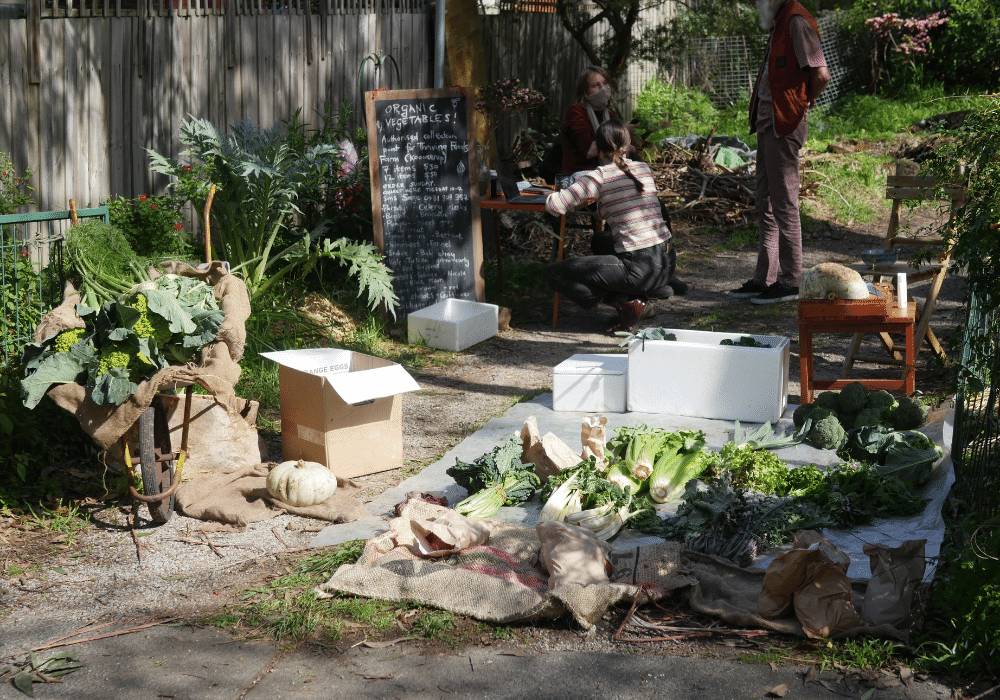
I’d love to see PermaQueer expand outwards, start becoming a network, working, and supporting even more diverse people through micro-community food systems, housing systems, social enterprises and more. Queerness exists at the fringes and is an ever-changing, shifting thing. I want to see PermaQueer evolve with that and take on even more ambitious and strange projects that empower people to build abundance in their lives and step out of systems of violence and exploitation. I would love to see more teachers emerging from PermaQueer and teaching permaculture in new and novel ways, pushing the boundaries of what we know permaculture to be. We are committed to evolving forward and being a voice of radical love and change, whatever this might look like.
Despite such monumental challenges with the climate – are you still hopeful for the future?
Yes, I am hopeful. I believe I always will be. If there’s one thing I know about life, it’s that it always finds a way. I have worked in some of the most damaged ecosystems and seen impressive feats of how the ecosystem is built to repair itself. I have complete faith in our natural environment, which is a huge source of hope.
I fear the reality for those who will be most impacted by climate change. Our ecosystem will survive, but many communities, people and even cultures may not. The way we have structured our society is completely unprepared for the reality of what is to come if we do not act. The most privileged, powerful, and influential people in the world have created food systems and welfare infrastructure that won’t care for them in the event of a global ecosystem collapse. Furthermore, they perpetuate a culture of endless consumption that requires enormous energy and labour inputs that cannot be upheld in the event of ecological collapse.
So what does it mean if the most privileged of our system isn’t even close to being resilient in the shift that needs to come? My major fear is for all those without access to land, finance, resources and with little privilege. People who will face mass migration, cultural displacement, war, hunger, and famine because authorities have not taken appropriate care to protect the vulnerable. I am hopeful for our environment, but I worry dearly for underprivileged and marginalised communities.
Find PermaQueer: