
Revealed: Top 10 Soft Skills Wanted in New Recruits by Today's Employers
September 5, 2023A new survey has revealed the top 10 in-demand skills wanted in new hires by today’s employers. According to The Future of Soft Skills in the Workplace report, which surveyed over 1,000 US workers, employers are seeking new hires with soft skills that support working remotely and new trends in tech.
Image credit: Pexels
The research carried out by Business Name Generator (BNG), revealed that 84% of employees and managers believe that it’s necessary for new recruits to possess soft skills, and demonstrate this in the hiring process. This figure was the highest in companies with over 500 employees, with 90% saying that soft skills were essential. Soft skills such as communication, problem-solving and time management remain valuable traits for new team members, confirmed the report.
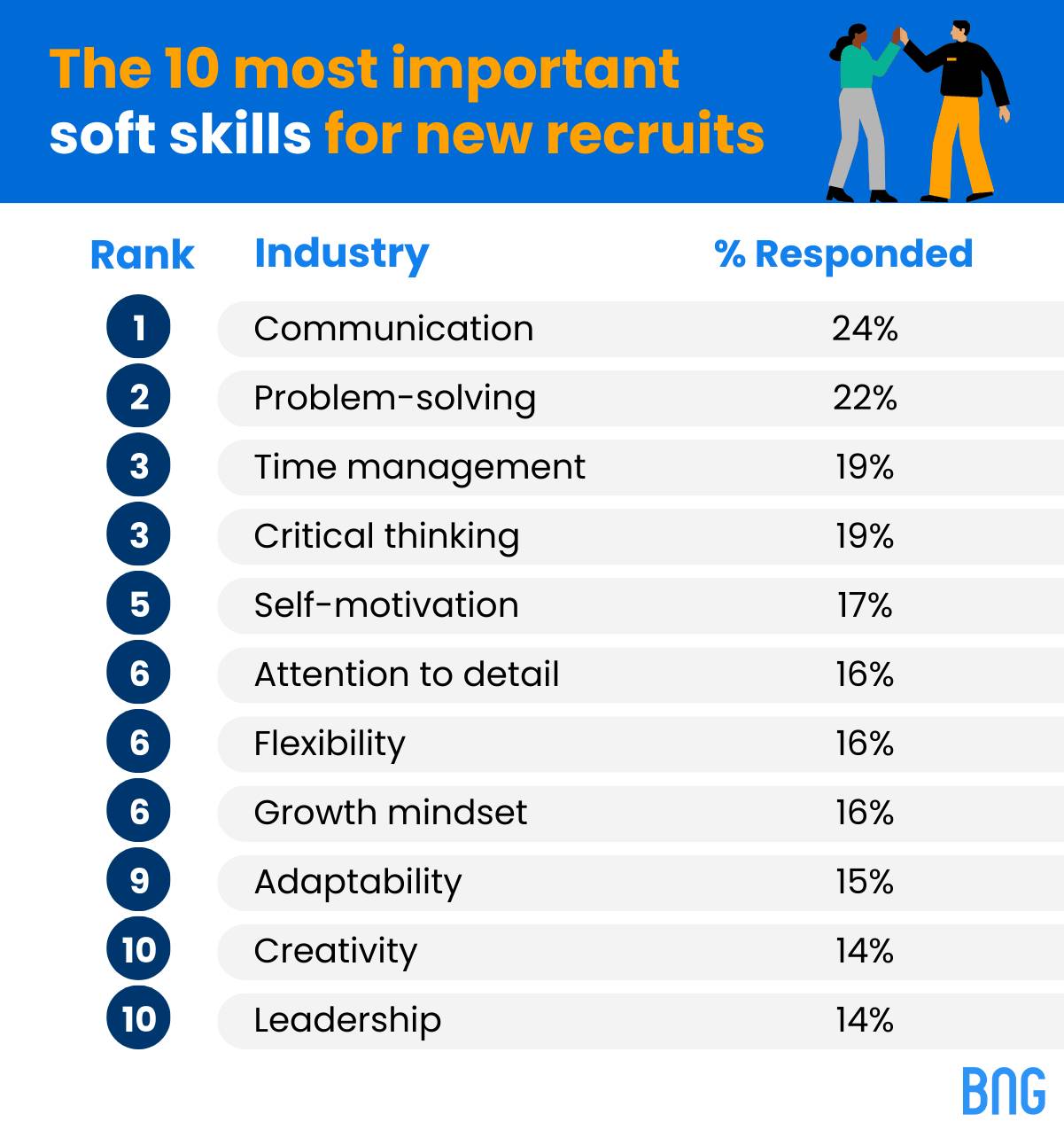
When employers were asked which core soft skills are deemed the most important for a recruit joining the company, communication was regarded as the most important by around a quarter of respondents, followed by problem-solving (21%) and time management (19%). Many C-level executives and senior management, however, said creativity was the most essential skill, at 23% and 26%, respectively. In fact, only 16% of C-suite executives thought communication was one of the most important skills, with seven other skills ranking higher. In comparison, only 5% of entry-level employees thought creativity was an important soft skill, which highlights a “missed potential to upskill in this area and land an entry-level role”, noted the study.
The perceived importance of soft skills also varied with educational level. Those with Bachelor’s degrees (91%), Master’s degrees (91%) and Doctorates (95%) found soft skills more important than those with a high school (74%) or college diploma (78%). What about the most important skills for existing employees to advance in their careers? As employees advance up the career ladder, the demand for specific skills changes, noted the study. The skill most respondents identified as ‘essential’ for an existing employee to demonstrate to advance in their career was leadership (21%). However, only 14% of respondents thought this skill was very important for new joiners, highlighting that the skills demanded will change throughout the course of an employee’s careers.
When asked how important soft skills will be in the future of work, 71% of respondents said it would be just as or more important. Just 3% believed that AI will replace the need for soft skills in the workplace, although they are vastly outnumbered.
“The introduction of new technologies like AI has catalyzed the shift in demand for specific skills, requiring employees to deepen their existing skill sets or acquire new ones. Many of these will be soft skills, the personal attributes and non-technical skills that describe how people work and interact with others,” said BNG’s spokesperson Katrina Haggarty.
According to Haggarty, growing companies are looking to recruit staff with in-demand skills to ensure they address their changing business needs. “We discovered that, despite challenging economic times over the past few years, 70% of companies are still actively looking to hire new employees and almost half are looking to expand skill sets, so there’s a strong incentive for prospective employees and jobseekers to upskill. Even though there is talk of AI and automation taking over jobs, the study goes to show that human skills are still invaluable in the eyes of employers,” concluded Haggarty.
Click here to find out more about the study.
WORKFAIR 2023
myGwork’s upcoming WorkFair – on October 18th – a free global virtual careers fair for LGBTQ+ students and recent graduates, not only empowers jobseekers by helping them to identify organisations that are going above and beyond to create inclusive workplaces, but also offers access to webinars and workshops offering valuable guidance and coaching to help hone their job search and interviewing skills to land their dream role. Click here to find out more and sign up.