
Role of Diversity Statements: Impact on LGBTQ+ Careers
December 29, 2025More than 50 percent of American workplaces now feature diversity statements, yet there is growing debate about their true influence on LGBTQ+ inclusion. For many mid-career professionals in tech, especially those who identify as LGBTQ+, understanding the real impact of these public commitments can shape career decisions worldwide. This guide breaks down common myths and reveals practical insights, helping professionals spot which statements drive genuine progress rather than just offering superficial promises.

Defining Diversity Statements and Common Myths
Diversity statements are public commitments organizations make to promote inclusivity and representation within their workplace environments. These strategic documents signal organizational values while establishing clear expectations for creating equitable professional spaces for LGBTQ+ employees.
At their core, diversity statements outline an organization’s dedication to creating environments where individuals from all backgrounds can thrive. Academic research reveals these statements often focus on individual-level interventions rather than systemic transformations, which means they can become performative if not backed by substantive actions. Common myths surrounding diversity statements include misconceptions about their actual impact and implementation.
Key myths about diversity statements include:
- They automatically guarantee workplace inclusivity
- Statements are sufficient without concrete policy changes
- All diversity statements have equal depth and commitment
- LGBTQ+ representation is uniformly addressed across different organizations
Understanding these nuances helps LGBTQ+ professionals evaluate potential employers more critically and recognize the difference between genuine commitment and superficial declarations. Effective diversity statements go beyond generic language, providing specific strategies for recruitment, retention, and advancement of marginalized professionals.
Pro tip: When reviewing a company’s diversity statement, look for specific metrics, accountability mechanisms, and clear language about supporting LGBTQ+ career development.
Variations: Identity-Conscious vs. Identity-Blind
Identity-conscious and identity-blind approaches represent two fundamentally different strategies for addressing diversity and inclusion within professional environments, each with distinct implications for LGBTQ+ professionals navigating workplace dynamics.
In an identity-conscious approach, organizations explicitly recognize and value individual differences, acknowledging that diverse experiences shape professional perspectives. This method proactively creates space for marginalized identities, understanding that systemic barriers require intentional recognition and targeted support. Identity-blind approaches, by contrast, aim to treat all employees identically, theoretically suggesting that individual differences should not impact professional opportunities.
Key differences between these approaches include:
- Recognition of unique experiences
- Approach to representation
- Strategies for addressing systemic inequities
- Methods of supporting professional development
For LGBTQ+ professionals, identity-conscious frameworks often provide more meaningful opportunities for advancement. These approaches recognize that workplace equality requires more than neutral policies - they demand active engagement with the specific challenges faced by marginalized communities. Understanding these nuanced approaches empowers professionals to identify workplaces genuinely committed to substantive inclusion.
Here’s a concise comparison of identity-conscious and identity-blind diversity strategies for workplace inclusion:
Pro tip: During job interviews, ask specific questions about how the organization implements diversity strategies to distinguish between performative statements and meaningful identity-conscious practices.
Key Elements of Effective Diversity Statements
Effective diversity statements are strategic documents that go far beyond simple rhetoric, requiring comprehensive frameworks for genuine institutional transformation. They represent organizational commitments to creating inclusive environments that actively support and elevate marginalized professionals, particularly within the LGBTQ+ community.
Research highlights that meaningful diversity statements must incorporate explicit goals, transparent mechanisms, and concrete strategies for addressing systemic barriers. These statements are not merely performative documents but comprehensive roadmaps for organizational change, requiring leadership commitment and ongoing accountability.
Key elements of robust diversity statements include:
- Explicit, measurable representation goals
- Transparent recruitment and advancement strategies
- Mechanisms for addressing unconscious bias
- Commitment to continuous learning and improvement
- Accountability metrics for leadership
- Specific support systems for marginalized groups
For LGBTQ+ professionals, an effective diversity statement should demonstrate a nuanced understanding of intersectionality, recognizing that workplace inclusion requires more than generic language. The most powerful statements articulate specific initiatives, show tangible investment in professional development, and provide clear pathways for advancement across different identity spectrums.
Pro tip: When evaluating a diversity statement, look beyond surface-level language and assess the specificity of proposed actions, measurable goals, and demonstrated commitment to systemic change.
The table below outlines effective diversity statement features and their business impact:
How Diversity Statements Drive LGBTQ+ Inclusion
Diversity statements serve as critical navigational tools for LGBTQ+ professionals, transforming workplace cultures from passive tolerance to active support. Institutional research demonstrates that comprehensive diversity strategies can fundamentally reshape professional environments by addressing systemic barriers and promoting genuine inclusivity.

Effective diversity statements go beyond performative language by establishing concrete mechanisms for removing professional obstacles and encouraging diverse participation. They represent organizational commitments to creating environments where LGBTQ+ professionals can thrive, not just survive, by explicitly acknowledging and addressing unique workplace challenges.
Key mechanisms through which diversity statements drive LGBTQ+ inclusion include:
- Creating visibility for marginalized identities
- Establishing clear pathways for professional advancement
- Developing targeted mentorship and support programs
- Implementing comprehensive anti-discrimination policies
- Providing resources for professional development
- Fostering workplace cultures of genuine respect and understanding
For LGBTQ+ professionals, these statements are more than bureaucratic documents. They represent tangible evidence of an organization’s commitment to creating equitable, supportive work environments that recognize and celebrate diverse professional experiences and perspectives.
Pro tip: When evaluating a potential employer, scrutinize their diversity statement for specific, actionable language that demonstrates a genuine understanding of LGBTQ+ professional challenges.
Signals of Safety: Recruiting and Retention Impact
Psychological safety represents a critical foundation for LGBTQ+ professionals evaluating potential workplace environments. Research demonstrates that identity-conscious diversity approaches significantly impact recruitment and retention by creating tangible signals of organizational acceptance.
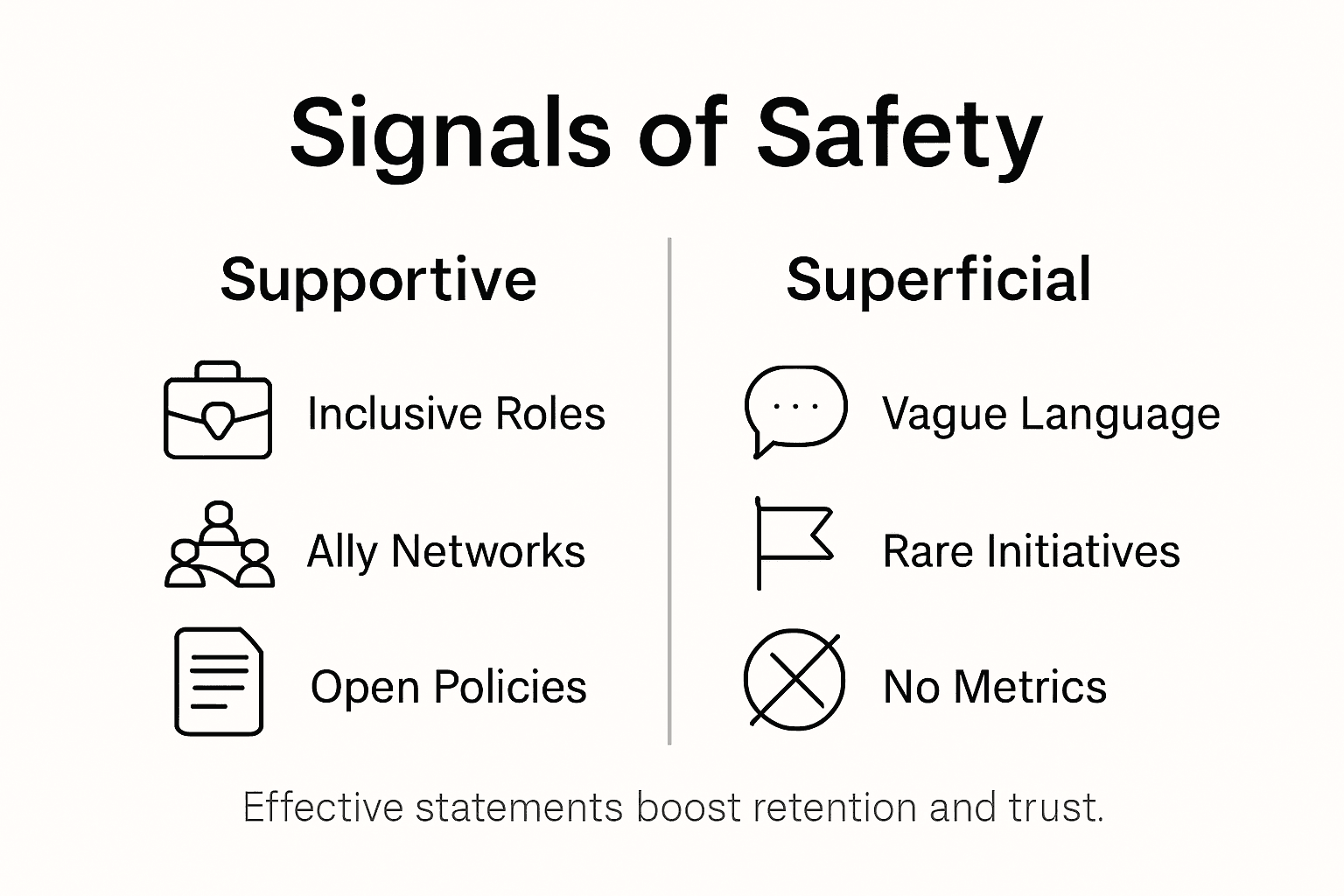
National surveys reveal that LGBTQ+ professionals consistently prioritize workplace environments where they can authentically express their identities without fear of professional repercussions. These safety signals extend far beyond simple non-discrimination policies, encompassing comprehensive support systems, visible representation, and genuine commitment to inclusive workplace cultures.
Key signals of safety that directly influence LGBTQ+ recruiting and retention include:
- Explicit recognition of diverse gender and sexual identities
- Leadership representation and accountability
- Robust anti-discrimination protections
- Active employee resource groups
- Transparent career advancement pathways
- Comprehensive healthcare and benefits coverage for LGBTQ+ employees
For LGBTQ+ professionals, these signals represent more than bureaucratic checkboxes. They are critical indicators of an organization’s authentic commitment to creating environments where individuals can bring their full, authentic selves to work without compromising their professional aspirations or personal dignity.
Pro tip: During job interviews, ask specific questions about the organization’s support mechanisms and track record of promoting LGBTQ+ professionals to leadership roles.
Risks of Tokenism and Avoiding Superficiality
Tokenism represents a significant threat to genuine workplace diversity, creating an illusion of inclusion while perpetuating systemic exclusion. Organizational efforts that focus on symbolic representation without meaningful structural changes can deeply damage employee morale and professional experiences.
Authentic inclusion demands more than surface-level representation, requiring comprehensive strategies that embed diversity into organizational culture and decision-making processes. For LGBTQ+ professionals, tokenistic approaches can create environments that feel performative and emotionally exhausting, undermining the very principles of workplace equity.
Key indicators of potential tokenism include:
- Highlighting diverse employees only during specific celebrations
- Lack of substantive leadership representation
- Limited career advancement opportunities
- Absence of meaningful policy changes
- Performative diversity statement language
- Minimal investment in employee resource groups
Professionals must critically evaluate organizational commitments, recognizing that true inclusion requires systemic transformation, not merely cosmetic adjustments. Genuine diversity embraces the complexity of individual experiences, creating environments where all employees can authentically contribute and advance.
Pro tip: Assess potential employers by examining their diversity statement’s specificity, leadership composition, and tangible support mechanisms for marginalized professionals.
Empower Your Career with Authentic LGBTQ+ Inclusion
The article highlights the critical need for identity-conscious diversity statements that go beyond performative words and truly support LGBTQ+ professionals. Many organizations struggle with superficial commitments that fail to create real opportunities for career advancement and psychological safety. If you seek a workplace that values measurable goals, leadership accountability, and meaningful inclusion, you deserve a community where these principles are lived every day.
Discover a platform designed to connect you with employers who prioritize genuine equity and have validated diversity statements supporting LGBTQ+ career growth. At mygwork.com, you can build your professional profile, access exclusive job listings, and engage with resources and events that emphasize workplace safety, mentorship, and advancement. Start navigating your career with clarity and confidence by joining a network committed to turning diversity statements into real-world success. Explore how mygwork.com can open doors to authentic inclusion and lasting impact today.
Frequently Asked Questions
What are diversity statements and their importance for LGBTQ+ professionals?
Diversity statements are public commitments by organizations to promote inclusivity and representation, particularly for LGBTQ+ professionals. They express organizational values and outline strategies to create equitable work environments where diverse individuals can thrive.
How can I evaluate the effectiveness of a company’s diversity statement?
To evaluate a company’s diversity statement, look for specific metrics, accountability mechanisms, and clear language about supporting LGBTQ+ career development. Ensure the statement goes beyond generic language and includes actionable strategies for recruitment and advancement.
What is the difference between identity-conscious and identity-blind diversity approaches?
Identity-conscious diversity approaches acknowledge and value individual differences, actively supporting marginalized identities. In contrast, identity-blind approaches treat all employees equally, which can overlook unique experiences and systemic barriers critical for LGBTQ+ professionals’ advancement.
What risks are associated with tokenism in diversity initiatives?
Tokenism can create an illusion of inclusion without meaningful changes, damaging employee morale and professional experiences. Key indicators of tokenism include highlighting diverse employees only during specific events and lacking substantive leadership representation or career advancement opportunities.