
Role of Mentors for LGBTQ+: advancing workplace inclusion
January 1, 2026Most advice about corporate mentorship misses a key point for American workplaces. Nearly 50 percent of LGBTQ+ professionals say mentorship is crucial for navigating career challenges, yet many remain underserved. Prioritizing thoughtful mentorship delivers real results, from higher workplace engagement to better talent retention. Discover how effective LGBTQ+ mentoring paves the way for greater inclusion, professional growth, and stronger organizational culture in competitive American industries.

Defining LGBTQ+ Mentorship in the Workplace
LGBTQ+ mentorship represents a strategic professional relationship designed to support, guide, and empower individuals within diverse workplace environments. At its core, this form of mentorship goes beyond traditional professional development by addressing unique challenges and systemic barriers experienced by LGBTQ+ professionals. Targeted mentoring approaches can significantly enhance career optimism and workplace engagement for individuals navigating complex professional landscapes.
Successful LGBTQ+ workplace mentorship involves creating intentional connections that provide both professional guidance and emotional support. Mentors serve as critical advocates who help mentees navigate organizational cultures, develop leadership skills, and build resilient professional networks. These relationships are particularly important because LGBTQ+ professionals often encounter additional workplace challenges related to identity, inclusion, and career advancement.
Key characteristics of effective LGBTQ+ mentorship include:
- Psychological safety and trust
- Active listening and empathetic understanding
- Strategic career guidance tailored to individual experiences
- Advocacy and sponsorship within professional networks
- Skill development focused on both professional competence and personal resilience
Research investigating mentoring relationships for LGBTQ+ professionals highlights the critical importance of creating supportive, nuanced mentorship models that recognize individual experiences and systemic workplace dynamics. By fostering meaningful connections, mentors can help transform workplace cultures and create more inclusive professional environments that celebrate diversity and individual potential.

Types of Mentoring Relationships for LGBTQ+
LGBTQ+ workplace mentoring encompasses diverse relationship models that address the unique professional development needs of LGBTQ+ individuals. These relationships can be categorized into several strategic approaches, each designed to provide targeted support and professional growth. Cross-cultural mentoring experiences reveal complex dynamics that extend beyond traditional one-size-fits-all frameworks, highlighting the importance of nuanced mentorship strategies.
The primary types of LGBTQ+ mentoring relationships include:
- Peer Mentorship: Connections between professionals at similar career stages who share comparable experiences and challenges
- Senior Leadership Mentorship: Guidance from established professionals who can provide strategic career advancement insights
- Identity-Affirming Mentorship: Relationships specifically focused on supporting professional growth while validating personal identity
- Cross-Generational Mentorship: Connections that bridge different generational experiences within the LGBTQ+ professional community
- Intersectional Mentorship: Mentoring relationships that recognize and support multiple aspects of identity beyond sexual orientation or gender identity
Research demonstrates that mentorship preferences are often influenced by shared experiences and identities. Studies analyzing mentorship dynamics reveal a significant tendency for individuals to seek mentors who share similar racial or professional backgrounds, underscoring the importance of creating diverse and inclusive mentoring opportunities. Successful LGBTQ+ mentorship transcends traditional professional guidance, offering emotional support, network expansion, and critical advocacy within workplace environments.
Effective mentoring relationships require mutual commitment, open communication, and a genuine understanding of the unique challenges faced by LGBTQ+ professionals. By embracing flexible and personalized mentorship models, organizations can create supportive ecosystems that empower LGBTQ+ talent to thrive, develop leadership skills, and contribute meaningfully to workplace innovation and cultural transformation.
Benefits for LGBTQ+ Professionals and Employers
Workplace mentorship delivers transformative advantages for both LGBTQ+ professionals and forward-thinking organizations. Developing specialized mentor training curricula can significantly enhance mentees’ sense of belonging, self-efficacy, and overall career satisfaction, creating mutual benefits that extend beyond traditional professional development models.
Benefits for LGBTQ+ Professionals include:
- Accelerated career progression
- Enhanced professional networking opportunities
- Increased workplace confidence
- Personal and professional identity validation
- Strategic career guidance from experienced professionals
- Emotional support during challenging professional transitions
For employers, LGBTQ+ mentorship programs generate substantial organizational advantages. Implementing inclusive workplace practices and mentorship strategies can dramatically improve employee engagement and organizational culture, creating environments where diverse talent can truly thrive. These programs demonstrate a commitment to equity, attract top talent, and foster innovation through diverse perspectives.
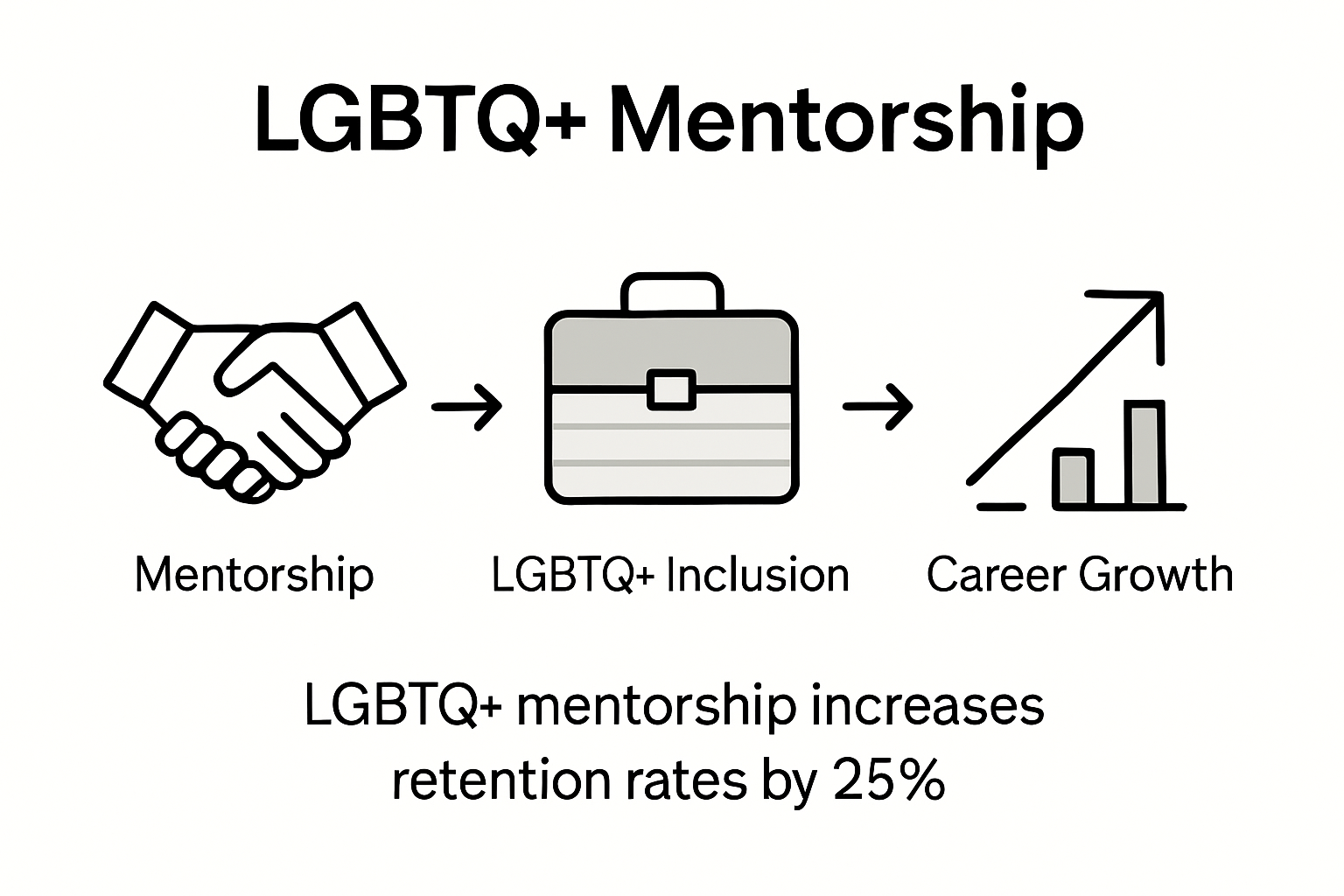
Ultimately, effective LGBTQ+ mentorship represents a powerful strategy for professional growth and organizational transformation. By creating structured support systems that recognize individual experiences and potential, companies can build more resilient, inclusive, and dynamic workplace ecosystems that benefit everyone involved.
Overcoming Barriers and Common Challenges
LGBTQ+ workplace mentorship encounters significant obstacles that require strategic, nuanced approaches to address effectively. Research exploring mentoring dynamics reveals complex challenges in creating meaningful connections, particularly when discussing sensitive topics and navigating professional environments, highlighting the need for sophisticated support strategies.
Common barriers in LGBTQ+ mentorship include:
- Psychological Safety: Fear of discrimination or professional repercussions
- Communication Gaps: Difficulty discussing identity-related professional challenges
- Representation Limitations: Scarcity of senior LGBTQ+ leaders in leadership roles
- Unconscious Bias: Subtle workplace microaggressions and systemic barriers
- Intersectional Complexity: Addressing multiple layers of professional identity
Innovative mentoring approaches increasingly recognize unacknowledged mentoring efforts that extend beyond traditional structured programs, suggesting that effective support requires flexible, adaptive strategies. Successful interventions must create safe spaces that validate professional experiences while providing tangible career development opportunities.
Overcoming these challenges demands a comprehensive approach that combines organizational commitment, individual empowerment, and systematic cultural transformation. By implementing intentional mentorship programs that prioritize psychological safety, skill development, and genuine allyship, organizations can create environments where LGBTQ+ professionals can authentically pursue their career aspirations without compromising their personal identities.
Employer Responsibilities and Best Practices
Workplace inclusion requires deliberate and comprehensive strategies that go far beyond surface-level diversity initiatives. Proactive policies and targeted practices are essential for creating genuinely supportive environments for LGBTQ+ employees, demanding a holistic approach to organizational transformation.
Key employer responsibilities include:
- Developing robust anti-discrimination policies
- Implementing comprehensive LGBTQ+ mentorship programs
- Creating safe reporting mechanisms for workplace harassment
- Providing diversity and inclusion training
- Establishing employee resource groups
- Ensuring equitable promotion and leadership opportunities
Professional support networks play a critical role in advancing career opportunities for LGBTQ+ professionals across different sectors, highlighting the importance of strategic organizational interventions. Successful employers recognize that meaningful inclusion requires ongoing commitment, transparent communication, and a genuine culture of respect and belonging.
Effective LGBTQ+ workplace strategies demand more than symbolic gestures. Organizations must actively cultivate environments where diverse talents can thrive, professional identities are respected, and individual potential is fully recognized. By embedding inclusive practices into core organizational values, employers can create dynamic, innovative workplaces that celebrate individual differences while driving collective success.
Empower LGBTQ+ Mentorship and Advance Workplace Inclusion Today
The challenge of creating safe and supportive LGBTQ+ mentorship in the workplace requires clear solutions that empower professionals and promote authentic inclusion. This article highlights pain points like psychological safety, representation gaps, and the need for identity-affirming mentorship that fosters career growth and emotional support. You deserve a platform that understands these unique challenges and helps you build meaningful connections tailored to your experience.
Discover the power of community and career advancement on mygwork.com, a dedicated space for LGBTQ+ professionals focused on diversity and inclusion in employment. Connect with mentors, explore specialized job opportunities, and access critical resources designed to overcome workplace barriers. Take the step now to join a vibrant network that champions your identity and career aspirations. Visit mygwork.com and start building the mentoring relationships that will help you thrive.
Frequently Asked Questions
What is LGBTQ+ mentorship in the workplace?
LGBTQ+ mentorship in the workplace is a professional relationship aimed at supporting and empowering LGBTQ+ individuals by addressing unique challenges and systemic barriers they face. It encompasses both professional guidance and emotional support to help navigate organizational cultures and develop leadership skills.
What are the types of mentoring relationships available for LGBTQ+ professionals?
The primary types of LGBTQ+ mentoring relationships include peer mentorship, senior leadership mentorship, identity-affirming mentorship, cross-generational mentorship, and intersectional mentorship. Each type caters to different professional development needs and focuses on supportive connections.
How can LGBTQ+ mentorship benefit employers?
Employers can benefit from LGBTQ+ mentorship programs through improved employee engagement, enhanced organizational culture, and the attraction of top talent. These programs foster a commitment to equity and diversity, ultimately driving innovation through varied perspectives.
What challenges exist in LGBTQ+ mentorship?
Common challenges in LGBTQ+ mentorship include psychological safety concerns, communication gaps, limited representation in leadership roles, unconscious bias, and intersectional complexities. Addressing these barriers requires strategic and inclusive approaches to foster effective mentoring relationships.