Role of Recruitment in Diversity: Complete Guide
October 1, 2026
Did you know that companies with diverse workforces are 35 percent more likely to outperform their peers? Attracting talent from a range of backgrounds shapes not just who gets hired, but the culture and innovation at the heart of every organization. Understanding the true function of recruitment goes beyond filling roles, shining a spotlight on how fair and intentional hiring drives meaningful representation, equity, and long-term business success.
Key Takeaways
| Point | Details |
|---|---|
| Strategic Role of Recruitment | Recruitment shapes organizational culture and should prioritize diversity as a core objective. |
| Inclusive Practices | Organizations need to implement multifaceted strategies, including policy auditing and bias-awareness training to enhance diversity. |
| Challenges in Representation | Systemic barriers continue to hinder meaningful workforce diversity, necessitating holistic approaches to overcome these obstacles. |
| Legal Frameworks | Adapting to evolving legal standards is critical for ensuring accountable and equitable recruitment practices that support diversity initiatives. |
Table of Contents
- Defining Recruitment’s Role In Workforce Diversity
- Inclusive Recruitment Practices And Strategies
- Challenges In Achieving Diverse Representation
- Legal Considerations And Global Diversity Standards
- Impact Of Recruitment On Lgbtq+ Inclusion
Defining Recruitment’s Role in Workforce Diversity
Recruitment isn’t just about filling positions. It’s a strategic process that shapes organizational culture, drives innovation, and creates pathways for equitable professional opportunities. At its core, recruitment plays a pivotal role in building diverse workforces that reflect the rich tapestry of human talent and perspectives.
According to a multidisciplinary academic survey examining algorithmic hiring, recruitment processes have significant implications for workforce inclusivity. The research highlights critical considerations in hiring systems, emphasizing the need to:
- Review potential algorithmic biases
- Implement fair candidate evaluation strategies
- Develop legal and ethical hiring frameworks
- Prioritize diversity as a fundamental recruitment objective
Research from cybersecurity graduate recruitment provides fascinating insights into how diversity impacts candidate selection. The study revealed that recruiter demographics themselves influence evaluation processes, demonstrating that diverse recruitment teams are more likely to recognize and appreciate varied candidate strengths. When recruiters represent different backgrounds, they inherently bring broader perspectives that challenge traditional hiring assumptions and reduce unconscious biases.
Ultimately, effective recruitment transcends simple candidate matching. It requires a holistic approach that sees diversity not as a checkbox, but as a strategic advantage. By intentionally designing inclusive recruitment processes, organizations can create environments where every professional has genuine opportunities to contribute, grow, and succeed.
Inclusive Recruitment Practices and Strategies
Inclusive recruitment transforms traditional hiring approaches from transactional processes into strategic opportunities for building diverse, dynamic workforces. By intentionally designing recruitment strategies that welcome talent from all backgrounds, organizations create environments where diverse perspectives can genuinely thrive.
According to professional HR research, implementing effective inclusive recruitment requires a multifaceted approach. Key strategies include:
Here’s a comparison of strategies for inclusive recruitment:
| Strategy | Description | Example Implementation |
|---|---|---|
| Policy Auditing | Review hiring practices for bias | Annual recruitment audits |
| Language Inclusivity | Use gender-neutral, inclusive wording | Neutral job descriptions |
| Channel Diversification | Reach talent via varied platforms | Community job boards Career fairs |
| Bias-Awareness Training | Educate hiring teams on unconscious bias | DEI workshops for recruiters |
| Structured Interviews | Use standardized, fair evaluation formats | Consistent question sets |
| Targeted Internships | Create access for underrepresented groups | Diversity internship programs |
| Ongoing Diversity Metrics | Track recruitment outcomes for equity | Quarterly diversity reporting |
- Auditing existing recruitment policies
- Using gender-neutral language in job advertisements
- Diversifying recruitment channels
- Conducting bias-awareness training for hiring teams
- Developing structured interview processes
- Creating targeted internship programmes
- Establishing ongoing diversity metrics and evaluation
Commercial research highlights that modern candidates actively seek employers who demonstrate genuine commitment to diversity, equity, and inclusion (DEI). As the insights suggest, successful inclusive recruitment goes beyond simple representation. It involves communicating DEI commitments transparently, promoting a ‘culture add’ philosophy that values unique individual contributions over traditional ‘culture fit’ models, and standardizing evaluation processes to minimize unconscious biases.
Ultimately, inclusive recruitment is an ongoing journey of reflection, learning, and intentional transformation. By consistently refining hiring practices, organizations can build workforces that not only represent diverse talent but also create environments where every professional feels genuinely valued, heard, and empowered to contribute their best work.
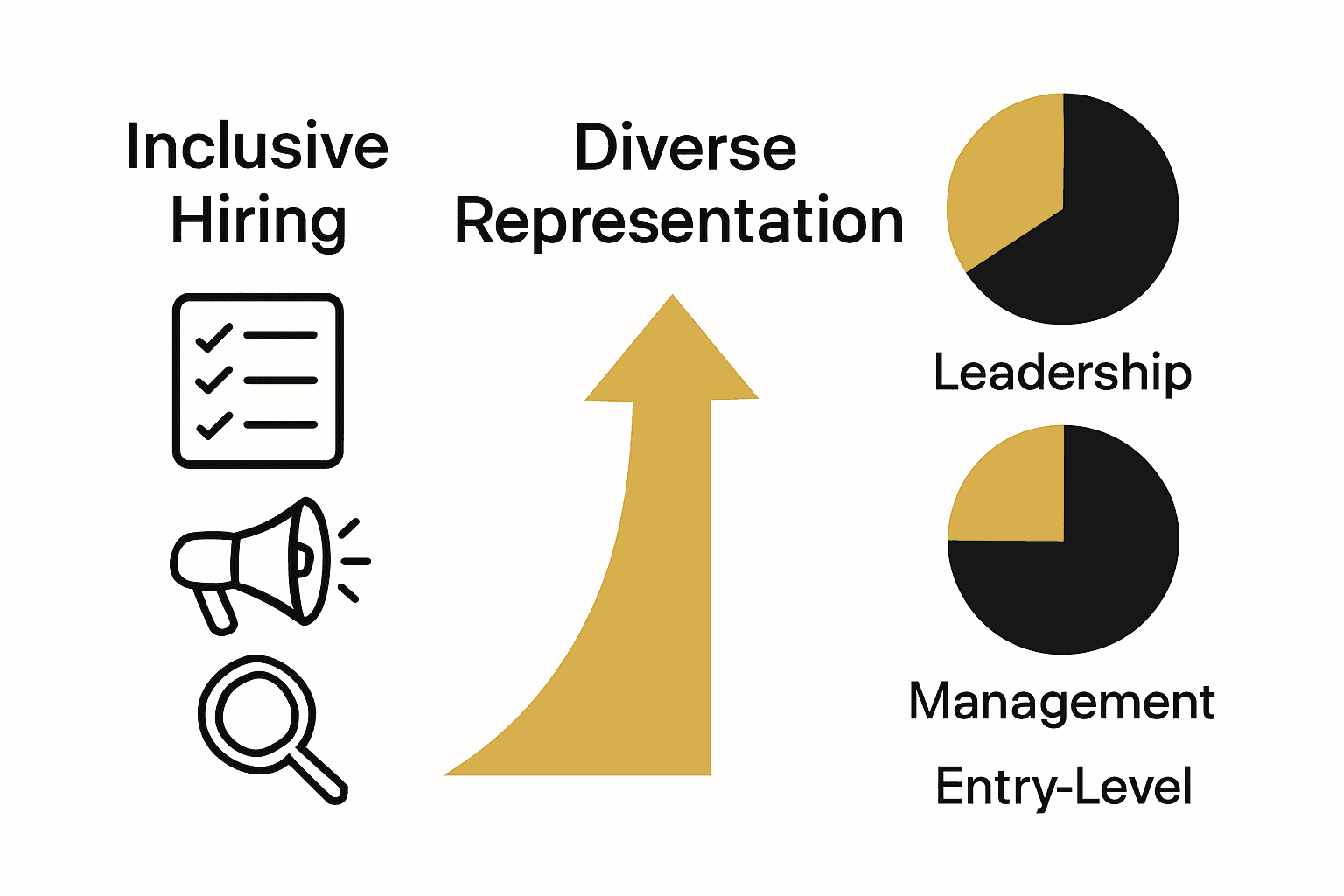 Learn more about our commitment to inclusive hiring and how we’re helping organizations build more equitable workplaces.
Challenges in Achieving Diverse Representation
Workplace diversity remains a complex challenge, with systemic barriers persistently hindering meaningful representation across industries. Organizations face multifaceted obstacles that require strategic, comprehensive approaches to overcome deeply entrenched structural inequities.
Recent industry reporting reveals stark representation gaps. According to research, women comprise only about 13% of fund managers globally, with minimal progress observed over the past decade. This stagnation highlights significant structural barriers preventing equitable leadership opportunities. For instance, in professional sectors like finance and law, diversity initiatives face substantial external challenges.
The landscape of diversity recruitment is particularly complex. Financial data demonstrates troubling trends:
- Dramatic reductions in ethnically diverse lateral hiring
- Legal and political pushback against DEI initiatives
- Persistent demographic imbalances in leadership roles
- Systemic barriers blocking professional advancement
Beyond numerical representation, the challenge extends to creating genuinely inclusive environments that support and retain diverse talent. Organizations must move beyond surface-level diversity metrics to address underlying cultural and structural impediments. This requires comprehensive strategies that encompass recruitment, professional development, mentorship, and organizational culture transformation. By recognizing these challenges and implementing holistic approaches, companies can begin dismantling barriers and creating workplaces where every professional has authentic opportunities for growth and success.
Legal Considerations and Global Diversity Standards
Legal frameworks play a critical role in shaping organizational approaches to diversity and inclusion, providing both guidance and accountability for equitable workplace practices. As global standards evolve, companies must navigate complex regulatory landscapes that demand proactive, strategic approaches to representation and fair employment.
Recent developments highlight the intricate relationship between legal mandates and diversity initiatives. According to multinational corporate reports, major companies like Roche and Novartis are recalibrating global diversity programs in response to shifting legal environments. These organizations are carefully adjusting recruitment strategies to comply with executive orders and mitigate potential legal risks, demonstrating the dynamic nature of diversity legislation.
Key legal considerations for organizations include:
- Proactive recruitment practices
- Transparent hiring methodologies
- Comprehensive equity provisions
- Expanding protections for marginalized groups
- Accountability mechanisms for diversity goals
In Canada, the Employment Equity Act provides a compelling example of progressive legal frameworks. The act mandates proactive recruitment and retention practices for designated groups, including:
- Women
- Visible minorities
- Indigenous peoples
- People with disabilities
Recent recommendations propose further expanding these provisions to explicitly include Black persons and 2SLGBTQI+ workers, signaling a commitment to increasingly comprehensive and nuanced legal protections. This approach underscores the importance of continually evolving legal standards to reflect the complex realities of workplace diversity and inclusion.

Impact of Recruitment on LGBTQ+ Inclusion
Recruitment practices serve as the critical first touchpoint in creating inclusive workplace environments for LGBTQ+ professionals, fundamentally shaping organizational culture and signaling commitment to genuine diversity. These initial interactions are far more than transactional processes - they represent powerful opportunities to demonstrate authentic inclusivity.
According to a global study, the recruitment landscape for LGBTQ+ talent is profoundly influenced by organizational practices. Remarkably, 64% of LGBTQ+ professionals and 55% of allies are more likely to apply to organizations with demonstrated LGBTQ+ inclusion strategies. Even more telling, 63% of candidates feel significantly more comfortable when hiring panels include visibly LGBTQ+ individuals who are trained in diversity, equity, and inclusion (DE&I) principles.
Critical recruitment signals that impact LGBTQ+ candidate perception include:
- Using inclusive and gender-neutral language
- Displaying diverse visual representations
- Offering flexible application options
- Highlighting organizational LGBTQ+ support
- Creating safe and welcoming interview environments
Research indicates that LGBTQ+ employees - particularly transgender individuals - face substantial workplace inclusion challenges, including microaggressions and elevated turnover risks. These experiences begin during recruitment, making every interaction a potential gateway or barrier to professional opportunities. Explore our LGBTQ+ talent solutions to understand how strategic recruitment can transform workplace inclusivity. By intentionally designing recruitment processes that genuinely welcome and celebrate LGBTQ+ talent, organizations can create environments of true belonging, respect, and professional empowerment.
Ready to Transform Inclusive Recruitment for True Workforce Diversity?
Are you struggling to break through barriers in your diversity recruitment journey? The article highlighted how biased hiring processes, lack of inclusive strategies, and gaps in LGBTQ+ representation can hold organizations back from real culture change. With challenges like hidden bias and underrepresentation at the top, the need for a dedicated ally is clear. At mygwork.com, we’re the destination where inclusive recruitment becomes reality. Discover hiring solutions, job postings, and a supportive community designed specifically for LGBTQ+ professionals and organizations determined to drive meaningful change.
Empower your diversity strategy today. Join mygwork.com and tap into specialized LGBTQ+ talent solutions. Explore how partnership, tailored hiring tools, and ongoing advocacy can help you meet your goals—no more waiting for representation to happen by chance. Act now to create the workforce you want to see.
Frequently Asked Questions
What is the role of recruitment in promoting workplace diversity?
Recruitment plays a crucial role in shaping organizational culture and driving innovation by ensuring a diverse workforce that reflects various backgrounds, experiences, and perspectives.
How can organizations implement inclusive recruitment practices?
Organizations can adopt inclusive recruitment strategies by auditing hiring practices, using gender-neutral language, diversifying recruitment channels, conducting bias-awareness training, and structuring interviews to ensure fairness.
What challenges do organizations face in achieving workforce diversity?
Organizations encounter systemic barriers, including structural inequities and lack of representation in leadership roles, that hinder meaningful diversity. Addressing these challenges requires comprehensive strategies beyond surface-level metrics.
How do legal considerations impact recruitment diversity initiatives?
Legal frameworks shape recruitment practices by mandating fair employment and proactive strategies for underrepresented groups. Businesses must adapt to evolving legal standards to ensure compliance and accountability in their diversity initiatives.