
Searching for a Grad Job in 2026: LGBTQ+ success strategies
January 6, 2026Over 70 percent of American employers now list digital skills as a top requirement for new graduates, marking a major shift in what it takes to land a job after college. The job market in 2026 will challenge traditional ideas about career paths and force graduates to stay sharp and adaptable. Whether you are just starting or planning your next steps, understanding these rapid changes is key to finding real opportunity and building a strong, future-ready career.

Defining the Grad Job Search in 2026
The graduate job market is transforming at an unprecedented pace, driven by technological advancements and shifting workplace dynamics. By 2026, professionals entering the workforce will encounter a landscape dramatically different from just a few years ago. According to emerging recruitment trends, over 70% of employers now prioritize digital skills across industries, signaling a fundamental shift in hiring expectations.
Key characteristics of the 2026 job market include a significant emphasis on technological proficiency, remote work capabilities, and adaptive skill sets. The traditional linear career path has been replaced by a more fluid, project-based approach where professionals must demonstrate agility and continuous learning. Recent recruitment surveys reveal a complex hiring environment: 42% of employers are reducing graduate recruitment, while 33% are actively expanding their talent pipelines.
Successful job seekers in 2026 will need to develop a multifaceted strategy that goes beyond traditional application methods. This means building a robust digital portfolio, understanding emerging technologies, and cultivating cross-disciplinary skills that demonstrate value across multiple domains. The most competitive candidates will show:
- Proficiency in digital tools and platforms
- Adaptability to hybrid work environments
- Strong communication skills in virtual and in-person settings
- Continuous learning mindset
- Ability to work effectively in diverse, globally distributed teams
Understanding these market dynamics is crucial for LGBTQ+ professionals navigating their early career journey. The evolving job market presents both challenges and unprecedented opportunities for those prepared to invest in their professional development and leverage their unique perspectives.
Unique Challenges LGBTQ+ Graduates Face
The professional landscape for LGBTQ+ graduates remains fraught with systemic challenges that extend far beyond traditional job search obstacles. Recruitment processes often contain inherent biases that create significant barriers for LGBTQ+ professionals seeking meaningful employment opportunities. These challenges manifest through subtle discrimination, unconscious stereotyping, and structural inequities that can undermine a graduate’s confidence and career potential.
Recruitment environments frequently present complex emotional and professional navigation requirements for LGBTQ+ graduates. Job advertisements and interview processes frequently lack inclusive language, creating environments where candidates feel compelled to manage their authentic identities strategically. This dynamic forces many talented professionals to make difficult decisions about personal disclosure, potentially compromising their ability to present their most genuine professional selves.
The key challenges LGBTQ+ graduates encounter include:
- Systemic Discrimination: Persistent biases in hiring practices
- Representation Gaps: Limited visibility of LGBTQ+ role models in leadership
- Professional Authenticity: Navigating potential workplace microaggressions
- Identity Disclosure: Weighing personal safety against professional advancement
- Intersectional Barriers: Compounded challenges for those with multiple marginalized identities
Navigating these challenges requires resilience, strategic networking, and a commitment to personal empowerment. By understanding these systemic obstacles, LGBTQ+ graduates can develop proactive strategies that transform potential barriers into opportunities for meaningful professional growth and authentic self-representation.

Emerging Job Market and Inclusion Trends
The professional landscape in 2026 is undergoing a transformative shift, with employers reimagining recruitment strategies to create more equitable and dynamic workplaces. Global hiring trends are increasingly focusing on skills-based assessment, moving beyond traditional educational credentials to evaluate candidates based on their actual competencies and potential. This approach particularly benefits LGBTQ+ graduates by creating more objective evaluation frameworks that minimize unconscious biases.
Inclusive recruitment practices are becoming a strategic priority for forward-thinking organizations. Employers are implementing comprehensive strategies that go beyond simple diversity statements, actively transforming their hiring processes to support underrepresented professionals. These strategies include using gender-neutral language, offering inclusive application options, and developing benefits packages that genuinely support diverse workforce needs.
Key emerging trends in inclusive job market development include:
- Skills-First Hiring: Competency evaluation over traditional credentials
- Flexible Work Structures: Remote and hybrid models supporting diverse workforce needs
- Comprehensive Inclusion Programs: Proactive diversity and equity initiatives
- Technology-Enabled Recruitment: AI and data-driven tools reducing human bias
- Transparent Career Pathways: Clear advancement opportunities for all professionals
For LGBTQ+ graduates, these evolving trends represent more than employment opportunities. They signal a fundamental reimagining of professional spaces that prioritize individual talent, authentic self-expression, and meaningful career development across diverse identities.
Essential Skills, Networks, and Resources Needed
Successful LGBTQ+ graduates must develop a multifaceted approach to professional development that goes beyond traditional career preparation. Campus resources and support groups play a critical role in building professional resilience, offering targeted guidance that helps professionals navigate complex workplace dynamics. Understanding how to leverage these support systems can transform potential challenges into strategic career opportunities.
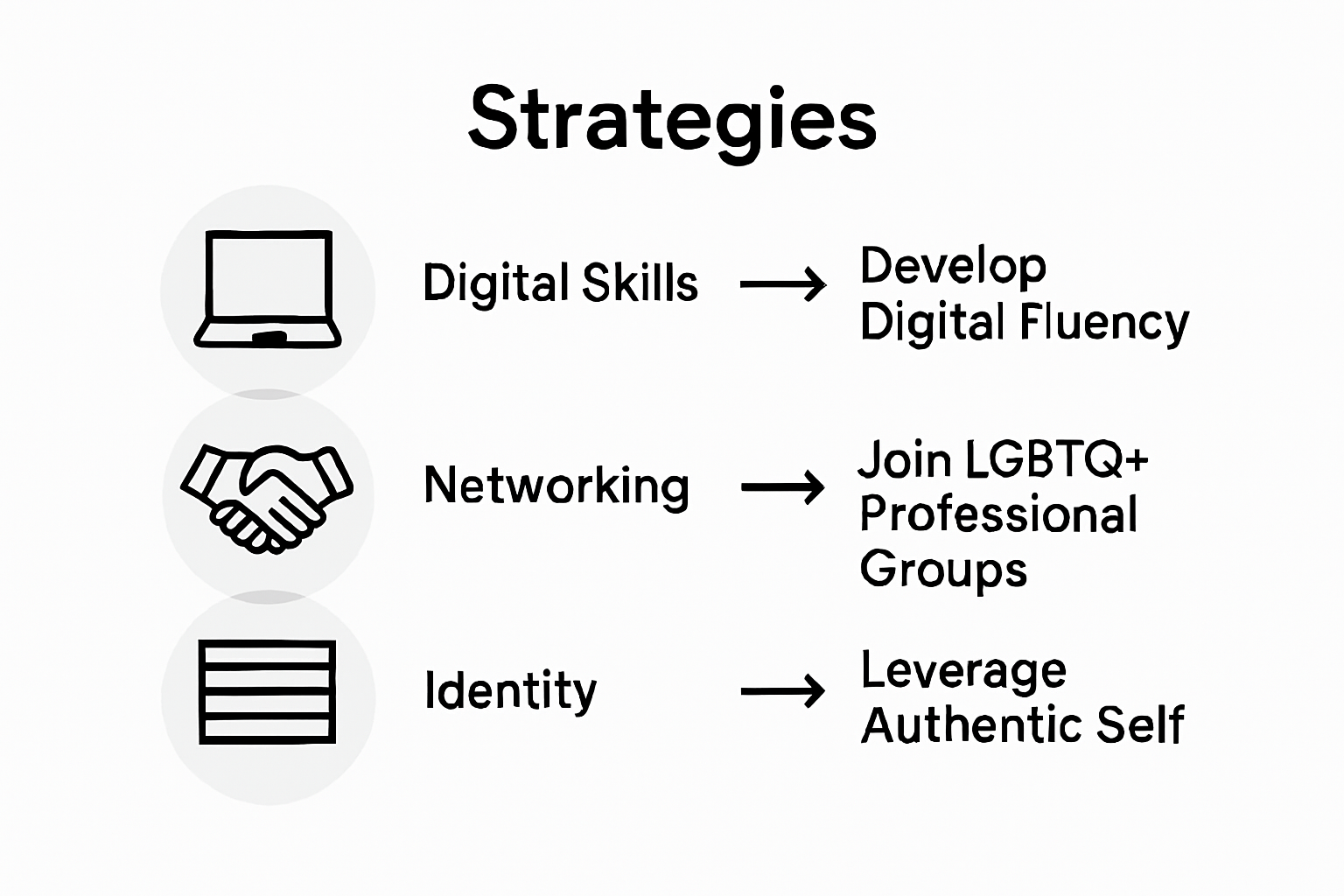
Building a robust professional network requires intentional community engagement, with mentorship and resource groups providing invaluable insights into workplace inclusion. By connecting with professionals who share similar experiences, LGBTQ+ graduates can gain nuanced strategies for professional advancement, workplace authenticity, and personal empowerment.
Key skills and resources for LGBTQ+ graduates include:
- Networking Capabilities: Developing genuine professional connections
- Digital Literacy: Advanced technological and communication skills
- Emotional Intelligence: Understanding workplace dynamics and interpersonal interactions
- Personal Branding: Crafting an authentic professional narrative
- Mental Health Awareness: Strategies for maintaining professional wellness
- Intersectional Understanding: Recognizing diverse professional experiences
Navigating the professional landscape requires more than technical skills. It demands courage, strategic thinking, and a commitment to personal authenticity. By cultivating these capabilities, LGBTQ+ graduates can transform potential barriers into pathways for meaningful career growth and personal fulfillment.
Evaluating Inclusive Employers and Safe Workplaces
Identifying truly inclusive employers requires a nuanced and strategic approach that goes beyond surface-level diversity statements. Employers committed to genuine inclusion demonstrate their values through specific recruitment practices, such as using gender-neutral language, offering comprehensive benefits, and creating transparent application processes. These concrete actions signal a deeper organizational commitment to workplace equity and support.
Comprehensive workplace evaluation involves analyzing multiple indicators of organizational inclusivity, extending far beyond traditional diversity metrics. LGBTQ+ graduates must carefully assess potential employers by examining leadership representation, employee resource group structures, and the authenticity of corporate diversity initiatives.
Key indicators of a genuinely inclusive workplace include:
- Visible LGBTQ+ Leadership: Representation at executive and management levels
- Comprehensive Benefits: Inclusive healthcare and family support policies
- Employee Resource Groups: Active and empowered LGBTQ+ professional networks
- Non-Discrimination Policies: Clear, enforceable protections
- Training and Education: Ongoing diversity and inclusion programming
- Cultural Accountability: Transparent mechanisms for addressing workplace bias
Successful LGBTQ+ professionals understand that workplace safety extends beyond physical protection. It encompasses psychological safety, professional respect, and the ability to bring one’s authentic self to work without fear of marginalization or career limitations.
Common Pitfalls and Navigating Discrimination Risks
Discrimination risks remain a significant challenge for LGBTQ+ graduates, requiring strategic awareness and proactive preparation. The professional landscape can present complex obstacles that demand nuanced navigation, particularly for individuals from marginalized communities seeking to establish their careers with authenticity and confidence. Understanding these potential barriers is the first step toward developing resilient professional strategies.
LGBTQ+ candidates must be prepared to address subtle and overt forms of workplace discrimination, ranging from non-inclusive job advertisements to potential interview biases. This preparation involves developing keen emotional intelligence, recognizing potential red flags in workplace culture, and maintaining a strong support network that can provide guidance and perspective during challenging professional interactions.
Common discrimination pitfalls include:
- Microaggressions: Subtle discriminatory comments or behaviors
- Interview Bias: Potential discrimination during recruitment processes
- Unequal Professional Opportunities: Limited career advancement paths
- Toxic Workplace Cultures: Environments that discourage authentic self-expression
- Legal Complexity: Navigating employment protection regulations
- Emotional Labor: Managing professional interactions while maintaining personal dignity
Effective navigation of these challenges requires a combination of self-awareness, strategic networking, and a commitment to personal and professional integrity. By developing robust support systems, understanding legal protections, and maintaining unwavering confidence, LGBTQ+ graduates can transform potential obstacles into opportunities for meaningful professional growth.
Empower Your Grad Job Search with a Supportive LGBTQ+ Network
Navigating the evolving job market in 2026 poses unique challenges for LGBTQ+ graduates who face systemic discrimination and the need to showcase adaptable, digital-ready skills. The struggle to find truly inclusive employers and safe workplaces can feel overwhelming but you do not have to face it alone. Building authentic connections and accessing targeted resources are critical steps toward overcoming barriers such as microaggressions and interview bias.
Take control of your career journey by joining mygwork.com a professional platform designed specifically for LGBTQ+ professionals seeking inclusive employment and community support. On mygwork.com you can explore job opportunities that prioritize diversity, strengthen your network with like-minded mentors, and showcase your skills in a safe space that values your authentic self. Start building resilience with resources that empower your personal branding and mental wellbeing so you can confidently pursue meaningful career growth in a marketplace that is rapidly changing. Visit mygwork.com today and turn challenges into opportunities.
Frequently Asked Questions
What skills are essential for LGBTQ+ graduates seeking jobs in 2026?
LGBTQ+ graduates should focus on digital literacy, emotional intelligence, networking capabilities, personal branding, and maintaining mental health awareness to navigate the job market effectively.
How can LGBTQ+ graduates find inclusive employers?
To find inclusive employers, look for companies that demonstrate genuine commitment to diversity through specific recruitment practices, visible LGBTQ+ leadership, comprehensive benefits, and active employee resource groups.
What are common challenges LGBTQ+ graduates face in the job market?
Common challenges include systemic discrimination, representation gaps in leadership roles, microaggressions in the workplace, and difficulties in managing the disclosure of personal identities during the job search process.
What are effective networking strategies for LGBTQ+ graduates?
Effective networking strategies include engaging with campus support groups, seeking mentorship from professionals in the LGBTQ+ community, and building genuine connections that provide insights and support for career advancement.