Supreme Court Could Side With Anti-LGBTQ+ Web Designer In Civil Rights Case
December 5, 2022The Supreme Court heard arguments in the 303 Creative LLC v. Elenis case yesterday, December 5, in a case that could stop states banning anti-LGBTQ+ discrimination.
Lorie Smith of Denver, Colorado owns 303 Creative, a web design business, and she sued the state preemptively to get a religious exemption to the state’s anti-discrimination law because she doesn’t want to make websites for same-sex couples’ weddings.
She “believes that God is calling her to promote and celebrate His design for marriage… between one man and one woman only.” Her initial complaint, which was filed in 2016, cited Bible passages as well as legal arguments. Her case is backed by the anti-LGBTQ+ hate group Alliance Defending Freedom.
This is the same law that Masterpiece Cakeshop owner Jack Phillips was sued over after he refused to sell a cake to a same-sex couple because they were going to serve it at their wedding. In that case, the Supreme Court gave him a very narrow victory on procedural grounds without dealing with the question of whether Christians have to follow the law if doing so would require them to treat LGBTQ+ people as equal.
Smith said that her case is more compelling than other Christian businesses’ because she would have to post text to the internet, meaning Colorado’s anti-discrimination law is compelling speech in contradiction to the First Amendment.
But Olson countered that if Smith was willing to make a website for an opposite-sex couple named Alex and Taylor but not for a same-sex couple with those two names, the text would be the same and free speech isn’t implicated. The real issue, he argued, is Smith’s homophobia.
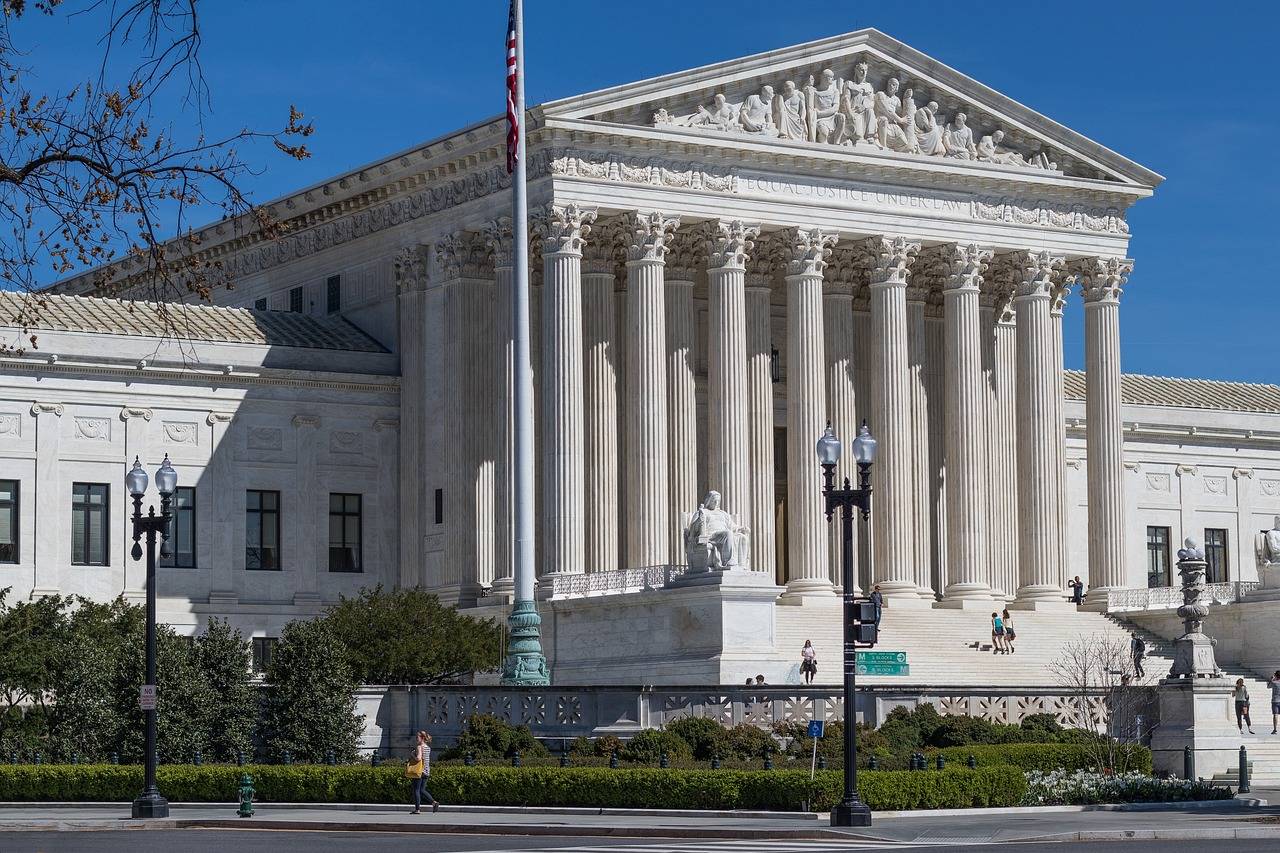
Image Credit: Pixabay
Yesterday’s arguments could be cause for concern for LGBTQ+ advocates as the conservative majority questioned the strength of the state’s case.
Justice Neil Gorsuch reportedly criticized the arguments of Colorado Solicitor General Eric Olson, saying, “That’s not going to persuade me. Work on something that might.” Justice Samuel Alito said the state had made a “sliver of an argument” and that it was trying to force businesses to “espouse things they loath.”
Justice Alito made a joke about Black children wearing Ku Klux Klan outfits during the discussion.
According to LGBTQ Nation, after Justice Ketanji Brown Jackson offered a hypothetical scenario suggesting a mall Santa Claus could not refuse to take photos with children who were not white, Alito asked if that would mean a Black mall Santa would have to be photographed with a child wearing a KKK outfit.
Olsen answered, “No, because Ku Klux Klan outfits are not protected characteristics under public accommodation laws.”
At that point, Justice Elana Kagan stepped in to explain that any child wearing a KKK outfit could be refused, regardless of whether they were Black or white.
Alito then sarcastically stated, “You do see a lot of Black children in Ku Klux Klan outfits, right? All the time.”
Liberal Justice Sonia Sotomayor noted that if the court does side with Smith, it would be the first time in history the Supreme Court would permit a public business to “refuse to serve a customer based on race, sex, religion, or sexual orientation.”
Last year, Smith’s case was dismissed by a federal court, which an appeals court refused to overturn. The district court said that she didn’t have standing to challenge the law since she hadn’t actually been investigated for refusing to serve LGBTQ+ people yet.
“We must also consider the grave harms caused when public accommodations discriminate on the basis of race, religion, sex, or sexual orientation,” Judge Mark Beck Briscoe wrote for the majority of a three-judge panel of the Tenth US Circuit Court of Appeals in Denver. “Combatting such discrimination is, like individual autonomy, ‘essential’ to our democratic ideals.”
After Smith lost her appeal, her case would have gone no further but the Supreme Court picked it up earlier this year. This potentially spells disaster for the LGBTQ+ community as the Supreme Court has moved further to the right since 2016. Donald Trump placed conservative Justices Neil Gorsuch, Brett Kavanaugh, and Amy Coney Barrett on the Court in the intervening years.
The Supreme Court only agreed to hear her free speech argument but not her freedom of religion argument, which could reduce the scope of an eventual decision should she win. For example, during oral arguments, Justices on both sides of the debate did agree that even if they do side with Smith, the same accommodations shouldn’t necessarily be given to all wedding vendors.
LGBTQ+ campaigners have said that the case could curtail equality.
“This contrived idea that making custom goods, or offering a custom service, somehow tacitly conveys an endorsement of the person – if that were to be accepted, that would be a profound change in the law,” Jennifer Pizer of Lambda Legal said earlier this year.
“And the stakes are very high because there are no practical, obvious, principled ways to limit that kind of an exception, and if the law isn’t clear in this regard, then the people who are at risk of experiencing discrimination have no security, no effective protection by having non-discrimination laws, because at any moment, as one makes their way through the commercial marketplace, you don’t know whether a particular business person is going to refuse to serve you,” she added.
“It’s not too much to say an immeasurably huge amount is at stake.”
Read related myGwork articles here:
Biden Administration Issues Strong Statement Urging Passage Of LGBT+ Civil Rights Bill
US Supreme Court Allows Jewish University to Deny LGBTQ+ Group
Yeshiva University Must Recognize Student LGBTQ+ Group, Supreme Court Rules
US House of Representatives To Make LGBT+ Civil Rights Decision Soon
Keep up to date with the latest myGnews