
Supreme Court majority poised to uphold bans on transgender athletes, highlighting risks to equal protection
January 14, 2026A majority of justices on the U.S. Supreme Court appear poised to validate state legislation barring transgender women and girls from female scholastic sports, a potential ruling that advocates warn could significantly erode transgender rights across the country.
During Tuesday's extensive arguments, the High Court scrutinized legal challenges filed by students in Idaho and West Virginia against laws mandating that participation in public school and collegiate sports be determined strictly by sex assigned at birth. Both plaintiffs contend that these mandates unlawfully deprive transgender girls and women of the same opportunities afforded to their cisgender peers.
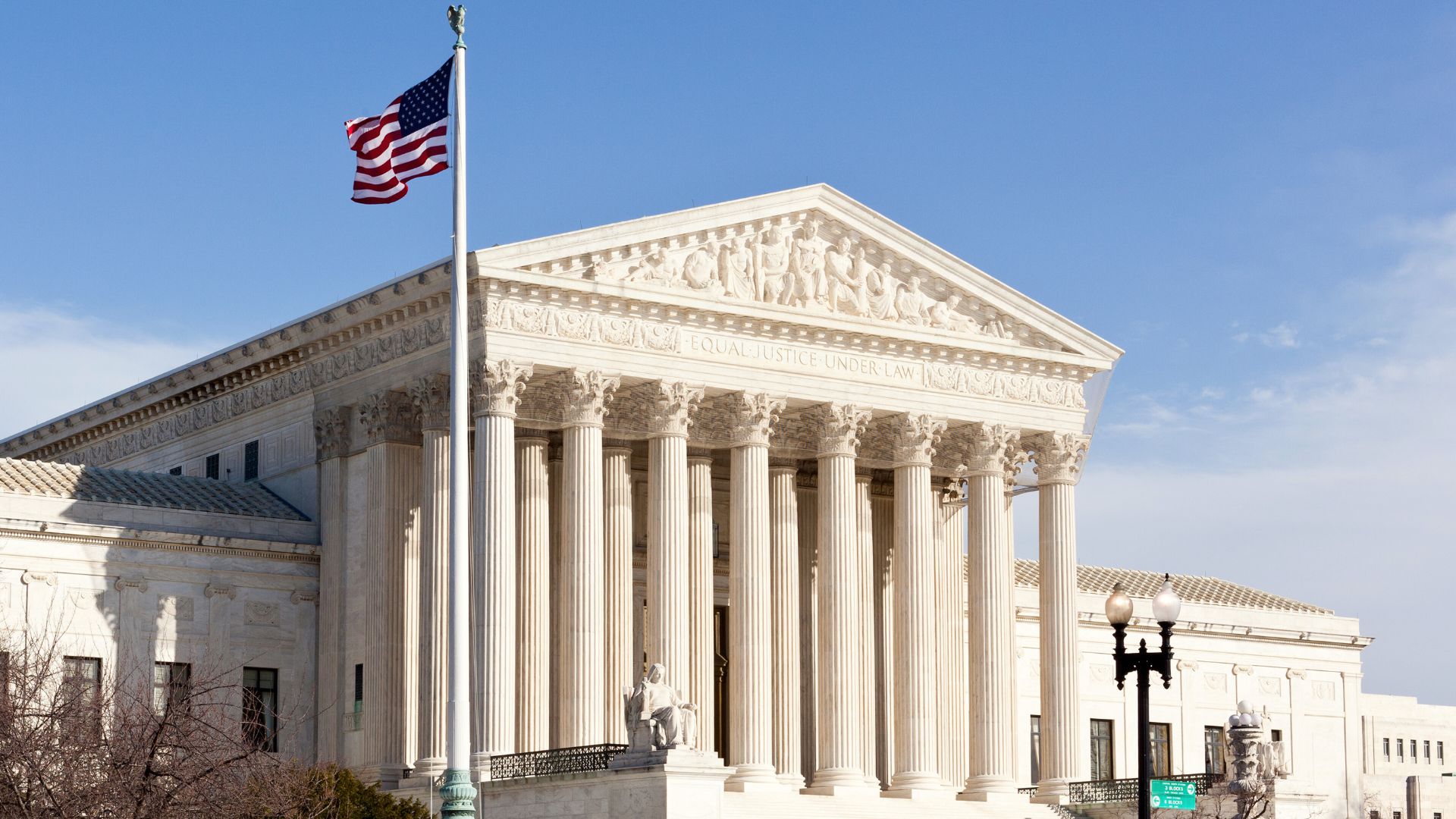
The legal battle centers on constitutional and statutory rights, the BBC reports. In Idaho, a transgender college student argues that the state's exclusionary policy violates the Constitution's guarantee of equal protection. Meanwhile, a West Virginia high school student asserts that her state’s legislation contravenes federal civil rights statutes prohibiting sex-based discrimination.
Over the course of three hours, at least five of the nine justices signaled sympathy toward the state-imposed bans. The Court’s 6–3 conservative majority has frequently adopted a restrictive interpretation of LGBTQ+ protections in recent terms, raising concerns among civil rights advocates.
Idaho initiated this legislative trend in 2020 by becoming the first state to statutory ban transgender athletes from women’s and girls’ sports. Since then, over two dozen states have enacted comparable measures, reflecting a broader, concerted political effort to curtail transgender participation and recognition in the public sphere.
Idaho Solicitor General Alan Hurst defended the exclusion, stating, “Idaho’s law classifies on the basis of sex, because sex is what matters in sports.” Hurst argued that biological factors linked to sex assigned at birth—such as bone density and muscle mass—justify the categorical exclusion of transgender women and girls.
Justice Brett Kavanaugh, a conservative appointee, suggested judicial restraint, questioning the necessity of a uniform constitutional ruling while public policy remains unsettled. “When half the states are allowing transgender athletes to participate, half are not, why would we jump in and try to constitutionalize a rule while there is still… uncertainty and debate?” Kavanaugh asked.
Facing a bench heavily weighted with Republican appointees likely to favor state legislatures, the Court’s three liberal justices, alongside attorneys for the athletes, advocated for a narrow ruling. They urged the Court to consider the evolving scientific landscape and the minimal number of students actually affected by these policies, or to avoid a broad decision entirely.
Procedural questions also arose regarding the standing of Lindsay Hecox, the Boise State University senior challenging the Idaho law. Hecox has indicated she no longer intends to compete in university athletics and has attempted to withdraw her suit, prompting Justice Ketanji Brown Jackson to question why the case had not been dismissed.
Hecox’s counsel, Kathleen Hartnett, argued that should the Court address the core of the claim, it must distinguish between transgender athletes who undergo medical transition—such as testosterone suppression—and those who do not. Hartnett emphasized that fairness in sports can be maintained without the total erasure of transgender athletes.
Addressing concerns raised by Justice Kavanaugh regarding women's sports, Hartnett clarified that she was not advocating for competition involving an “unfair biological advantage.”
“That would undermine the entire point of separate sports in the first place, which was to allow women to have a place to thrive, to be strong, to win,” Hartnett stated. However, she maintained that once any potential physiological advantages are mitigated, transgender athletes deserve the opportunity to participate, provided they can demonstrate such mitigation.
The rarity of these cases was acknowledged by both parties. In West Virginia, plaintiff Becky Pepper-Jackson remains the sole student attempting to join a girls' team under the disputed law. Her family filed suit in 2021 when she was an 11-year-old hoping to join her middle school track team.
The hearing also probed the foundational status of transgender individuals under U.S. civil rights law. Justice Neil Gorsuch questioned whether transgender people have faced a history of discrimination sufficient to warrant heightened constitutional scrutiny.
While conceding that transgender people have suffered “significant discrimination,” Idaho’s representative attempted to distinguish this history from the systemic disenfranchisement of Black Americans and women regarding voting and property rights. He characterized past discrimination against transgender people as stemming largely from general laws, such as cross-dressing bans, rather than targeted legislative attacks - a distinction seemingly at odds with the current wave of specific anti-transgender legislation.
Public opinion remains polarized. A January New York Times/Ipsos poll indicated significant opposition among both Republicans and Democrats regarding the inclusion of transgender women in female sports categories, highlighting the intense partisan nature of the issue.
Legal analysts point to the Court’s decision last year upholding Tennessee’s ban on gender-affirming care for minors as a significant indicator of the current bench's stance. This ruling is widely viewed as more predictive of the outcome in these sports cases than the 2020 Bostock decision, which affirmed that employment discrimination against transgender workers is illegal.
The Court may soon address this issue further, as the Trump administration is currently challenging California’s inclusive policy that allows athletes to compete consistent with their gender identity.