
Supreme Court to weigh -pre-school funding rules affecting same-sex parents
April 21, 2026The Supreme Court has agreed to hear a challenge to Colorado’s requirement that publicly funded preschools accept children from same-sex families, setting up a significant First Amendment clash between claimed religious exemptions and protections for LGBTQ families.
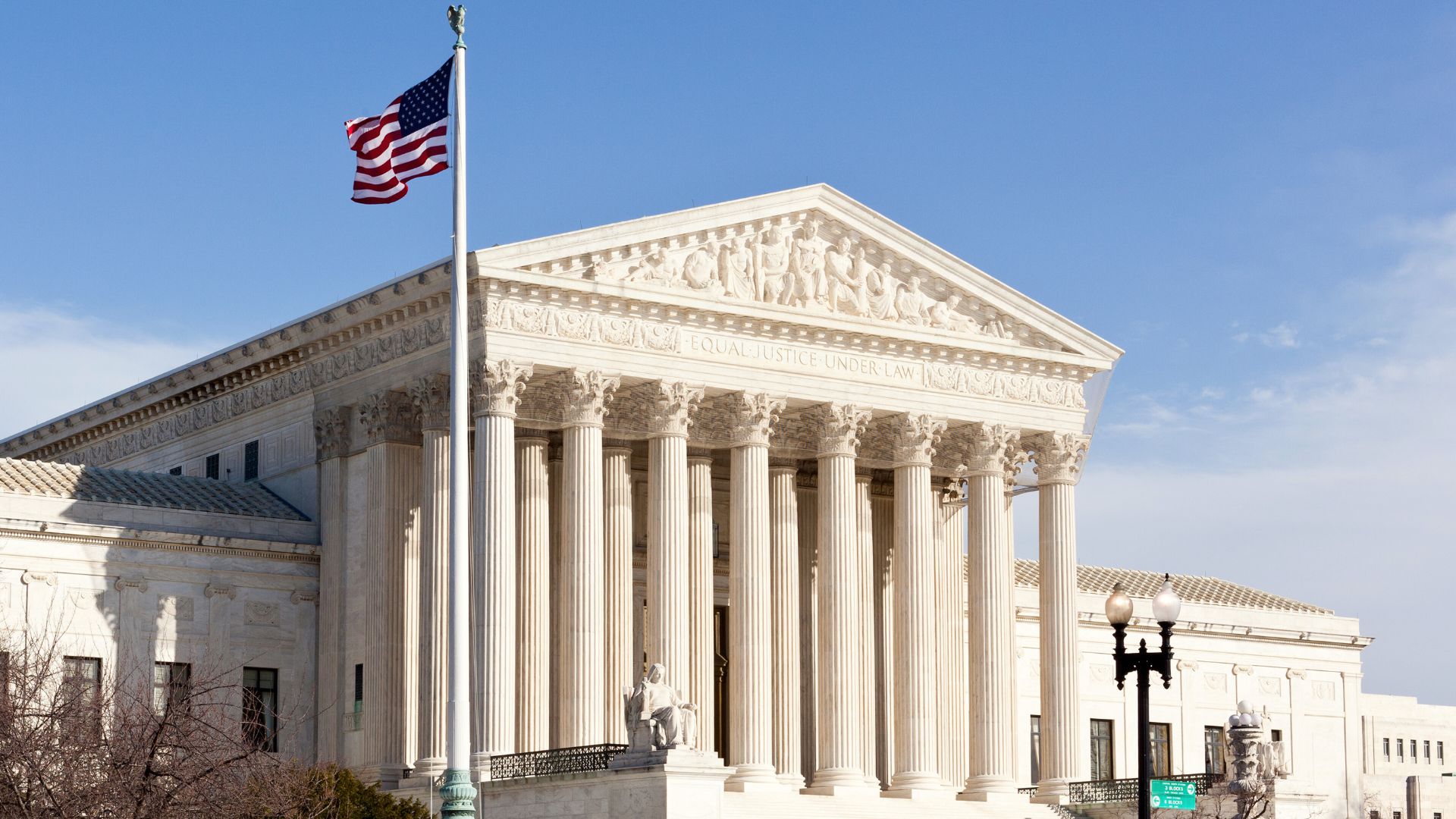
The case arises from Colorado’s universal preschool program, created by a 2020 ballot measure that opened state-funded slots to both public and private providers. Participating schools must comply with a nondiscrimination rule that guarantees eligible children equal access regardless of race, religion, sexual orientation, gender identity, and other protected categories, CNN reports.
Two Catholic parishes and a family with children at one of the parish schools, represented by the religious advocacy firm Becket, sued the state. They argue that being required to enroll children of same-sex couples conflicts with their religious doctrines and violates the Constitution’s free exercise clause.
“This court promised in Obergefell that religious groups would be protected when they dissent from secular orthodoxies about marriage and sexuality,” the parishes told the justices, citing the 2015 ruling that established nationwide marriage equality. They contend that the free exercise clause cannot function properly if laws they say burden religious practice are upheld as “generally applicable” while still containing exceptions.
Lower federal courts, including the 10th US Circuit Court of Appeals, rejected the challenge and upheld Colorado’s rules. The Supreme Court will now review that decision, with arguments expected in the fall and a ruling likely in 2025.
The dispute comes after a series of Supreme Court decisions that have expanded access to public funding for religious schools. The conservative majority has previously held that once a state offers aid to private education, it may not exclude schools solely because they are religious. The new case raises the further question of whether religious providers can accept public funds while refusing to comply with LGBTQ-inclusive nondiscrimination standards that are central to equal access for same-sex parents and their children.
The religious plaintiffs also urged the court to overturn a 1990 precedent that allows governments to enforce neutral, generally applicable laws even if they incidentally burden religious exercise. In recent years, the justices have narrowed what qualifies as “generally applicable,” focusing on statutory exceptions. In the Colorado matter, the challengers argue that allowances for prioritizing low-income students and children with disabilities show the law is not truly uniform, and thus should face heightened scrutiny when invoked to protect LGBTQ families.
In a separate action, the justices declined to hear a parental rights case from Massachusetts involving a middle school student who identified as genderqueer. Parents Stephen Foote and Marissa Silvestri sued their district, alleging that school officials began using a new name for their then-11-year-old child and permitted access to boys’, girls’, or gender-neutral bathrooms without informing them.
The case centered on whether parents can demand control over how schools respond to a child’s gender identity when their objections are framed not in religious terms, but as “moral and scientific” concerns. The court’s decision to turn the case away leaves in place lower court rulings against the parents.
The student, referred to in court papers as “B.F.,” emailed teachers and administrators in 2021 to explain a genderqueer identity and requested the use of a new name and multiple pronouns, including she/her, he/him, they/them, and several neopronouns. B.F. asked staff to use she/her pronouns in communications with parents, reflecting a reality many transgender and gender-diverse young people face: fear of rejection or lack of safety at home.
Relying on state guidance and laws prohibiting discrimination based on gender identity, the school honored the student’s request on campus. Massachusetts policy acknowledges that some LGBTQ and gender-nonconforming students are not ready or able to come out to their families and that schools play a crucial role in protecting their dignity and well-being.