
Sustainable and Inclusive Fashion: An Interview with femme forte
June 25, 2021myGwork spoke to Zoe Schulz, the founder of slow fashion brand femme forte (and also journalist at myGwork), discussing the importance of sustainability and inclusion within fashion.
Can you tell us a bit about yourself and femme forte?
Hello, I’m Zoe! The founder of femme forte, a sustainable and ethical fashion brand that launched two years ago. I initially started the brand after learning more about fast fashion and feeling frustrated at the catastrophic impact it has on the planet, as well as their constant lack of inclusivity.
So, I started femme forte as a way of educating people about sustainable fashion and to raise money to help create an LGBTQ+ Community Center in London – a project that means a lot to me.
And ever since it’s been vital that everything created is cruelty-free, that everyone at every stage of the supply chain is paid properly, and that sustainability is ingrained in everything femme forte does. On top of this, all items are gender-neutral and we strive for inclusive sizes.
Since the beginning, the brand has grown and evolved, with orders across the world. But community has remained central to what we do, with each collection raising money for a different cause, including trans young people (Mermaids), period poverty (Bloody Good Period), and LGBTQ+ homeless youth (akt).
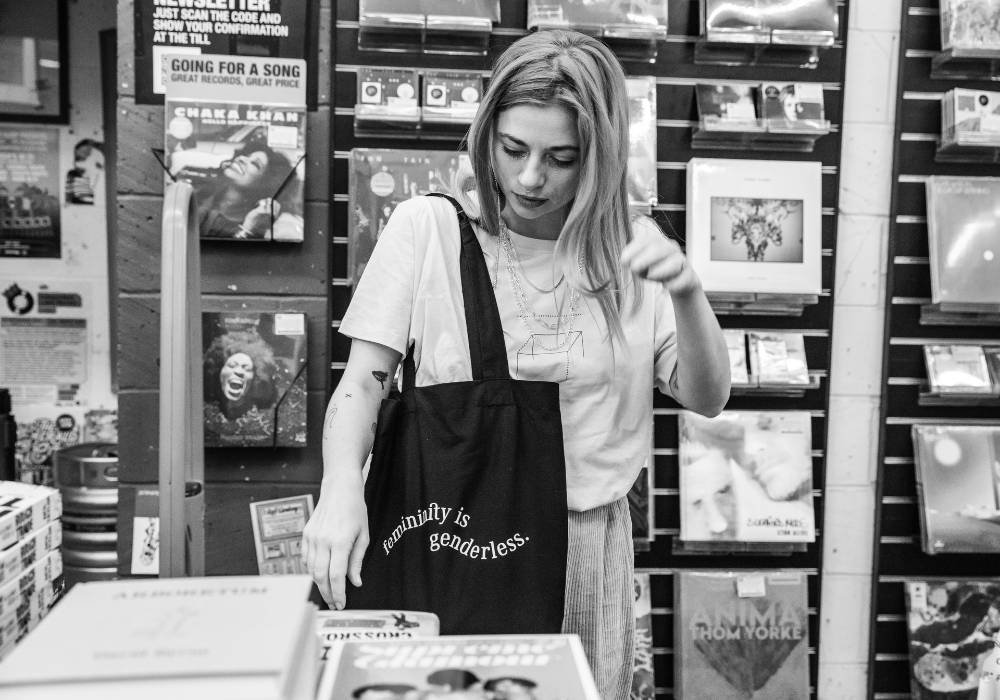
Zoe, London 2019, shot by Laurine Payet.
Why is ethical fashion important during Pride?
We are seeing more and more brands celebrate Pride – which, in part, is a good thing, especially when it uplifts LGBTQ+ voices and raises money for vital charities.
However, we are also seeing a trend of Pride merchandise that is created under unethical conditions – fast fashion giants barely pay their garment works, with 98% of workers earning under a living wage.
Even worse than that is the fact that the majority of fast fashion brands have been accused of using slave labor, such as the Xinjiang internment camps in China, which is said to contain up to one million Uighur people. It’s estimated that one in five fast fashion cotton garments have been created by people in this camp, who are working and being kept against their will.
This creates a heart-breaking irony where the person who created your Pride t-shirt is likely being exploited – and there is no pride in that, especially considering, statistically, a portion of those exploited workers will be LGBTQ+ themselves.
On top of this, fashion is the second biggest polluting industry in the world – yes, that’s more pollution than transport, energy, or even food production. A single pair of jeans takes over 7,500 gallons of water to create. That’s equivalent to the water that the average person uses in seven years.
Equality is vital. But so is a habitable planet. We must simultaneously be fighting the climate crisis as we oppose inequality.
Lastly, I’m conscious of brands jumping on the Pride bandwagon, almost as a tick-box exercise as part of their marketing strategy – then jumping right off on the 1st of July. We are queer all year round, and we need authentic allyship every day of the year both when it’s trending and you can make money out of it, but also – and more importantly – when you can’t.
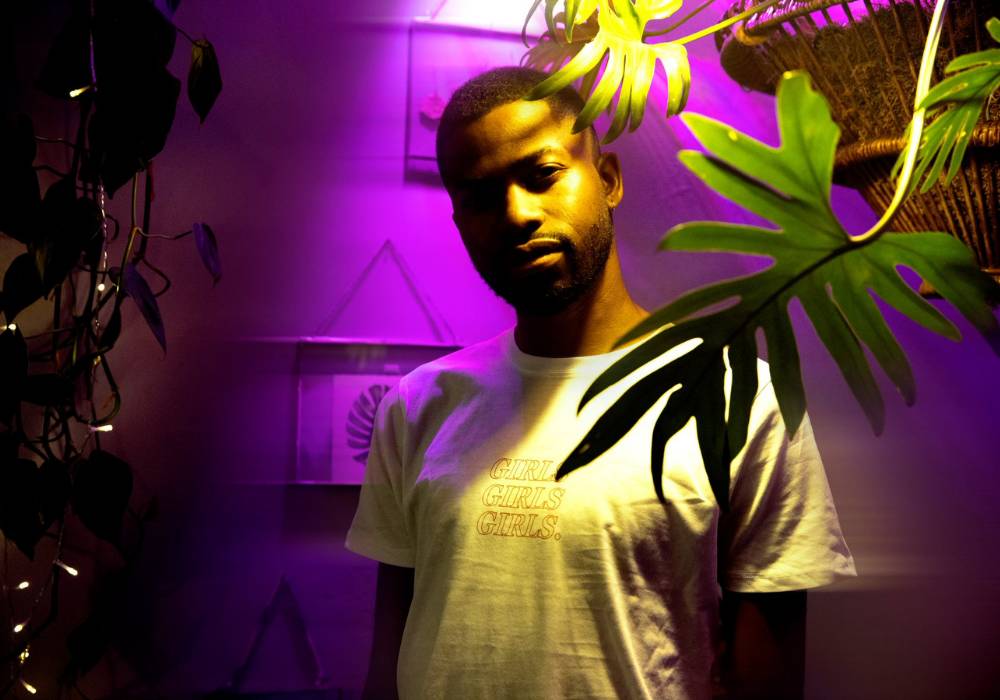
Gabby wearing femme forte's grrrls t-shirt, shot by Laurine Payet.
Why is supporting the LGBTQ+ community important to you and femme forte?
femme forte was born from an idea I had to support the queer community, to raise money to help create an LGBTQ+ community in London. And no matter how much changes, supporting queer-led community projects will always be a part of femme forte.
As a queer person, I’ve also consistently seen the fast fashion industry fall short when it comes to the inclusion of the LGBTQ+ community. Perhaps we may be included in a Pride campaign, or as a concept to look ‘edgy’ or ‘non-conforming’ – but even then, it’s only a certain type of LGBTQ+ person. Where is the representation of queer people of color, disabled queer people, or fat queer people? Fashion is for everyone and we all deserve to see ourselves represented within it.
We talk so much about representation because it impacts our society so deeply. Our unconscious biases and presumptions are all influenced by what we see in the media and fashion. And when a certain group is constantly left out, or misrepresented, it does matter.
So, I want to make sure femme forte is doing the opposite of that – that queer people aren’t an afterthought or used for a Pride campaign and forgotten shortly after.
What can people do to learn more about sustainable fashion?
I think it’s always best to approach sustainable fashion with curiosity. It’s easy to become overwhelmed, especially when we’re discussing the climate crisis. But when we start by growing our knowledge, it’s hard not to become empowered to create change.
There is also an amazing community of people in the sustainable fashion space – learn from them and reach out to them.
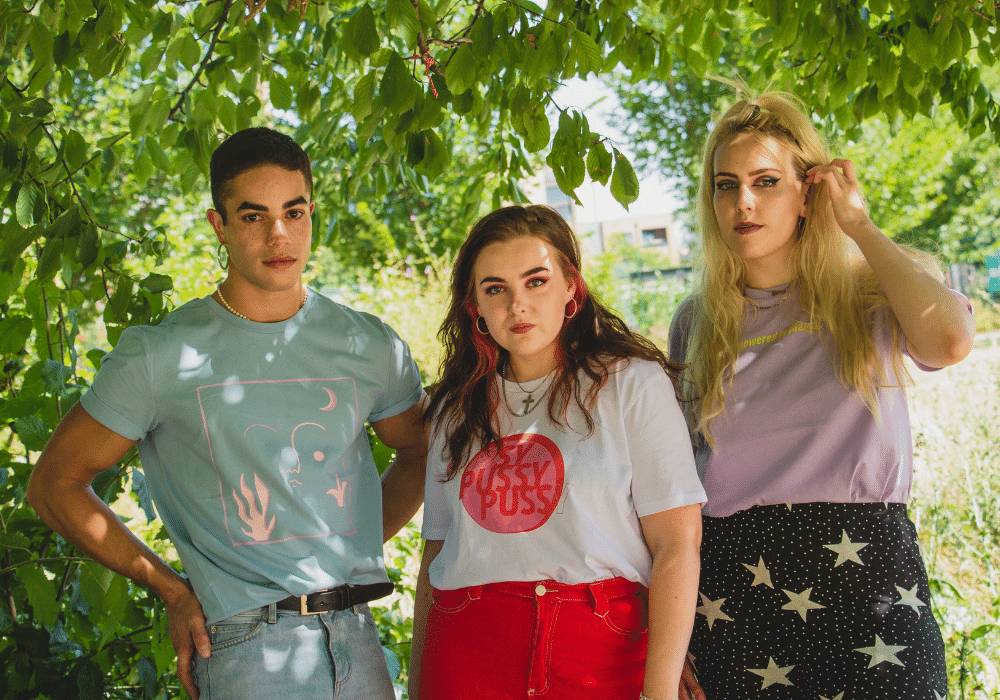
What steps can people take to make their wardrobes kinder to the planet?
You don’t want to start by throwing out all your fast fashion items. Once you start learning about the fashion industry – it’s hard to not want to throw everything fast fashion in the bin.
But that’s counterproductive, the opposite is actually much more useful – you want to make what you own last longer.
Not that long ago, there were only two fashion seasons: spring/summer and autumn/winter.
Fast fashion has created a climate where we now have 52 seasons a year – that’s new trends released every week of the year. This has not happened by accident, the industry has pushed and pushed consumers to buy as much as possible, as quickly as possible. So, we need to start by unlearning this.
We have spent our lives being subconsciously convinced that we need to buy more: we need to rewire our brains to do the opposite. Contrary to what capitalism would have us believe; we can’t shop our way to happiness. But knowing this is one thing, actually living by it is something else, so it’s okay if it takes time.
If cutting out fast fashion completely feels daunting, start by a commitment to stop buying any new items for 30 days. During this time, try to reorganize your wardrobe. It’s easy to feel frustrated at having nothing to wear when you can’t find any of your clothes. Feel free to clear out what you don’t need but try to rehome your pieces where you can.
Don’t give anything you wouldn’t buy yourself to a charity shop – they don’t want your scraps – and before doing so, see if you can gift it to a friend or sell it online. That way you know these items are getting a second life. What you can’t give away, you could drop to a fabric recycling point or even try to upcycle.
These individual changes are important and can feel empowering. But it’s also vital we don’t put full responsibility on the individual.
Someone who is buying fast fashion because they find it affordable, or easier to find their size isn’t the enemy. There are many privileges at play when it comes to buying sustainably, including class, accessibility, size, and more.
What we can all do though – is buy less.
And when we put the onus on the individual, we simultaneously take attention away from the industry itself. The industry was one created by us (not “us” as in us personally, but “us” as in society as a whole), and not that long ago, perhaps in the last 40 years, with its origins in the ’80s but not really taking off until the late ’90s. So, it is also one that can be dismantled by us.
We need to ask why the fashion industry is allowed to sell garments made under slave labor, or why they are allowed to consciously pollute our planet while chasing profits.
The system needs overhauling, and many organizations and non-profits are working toward this – link up with them and find out what you can do to help. A great place to start is Fashion Revolution. But also, research what’s happening locally or globally and think about how you could support this.
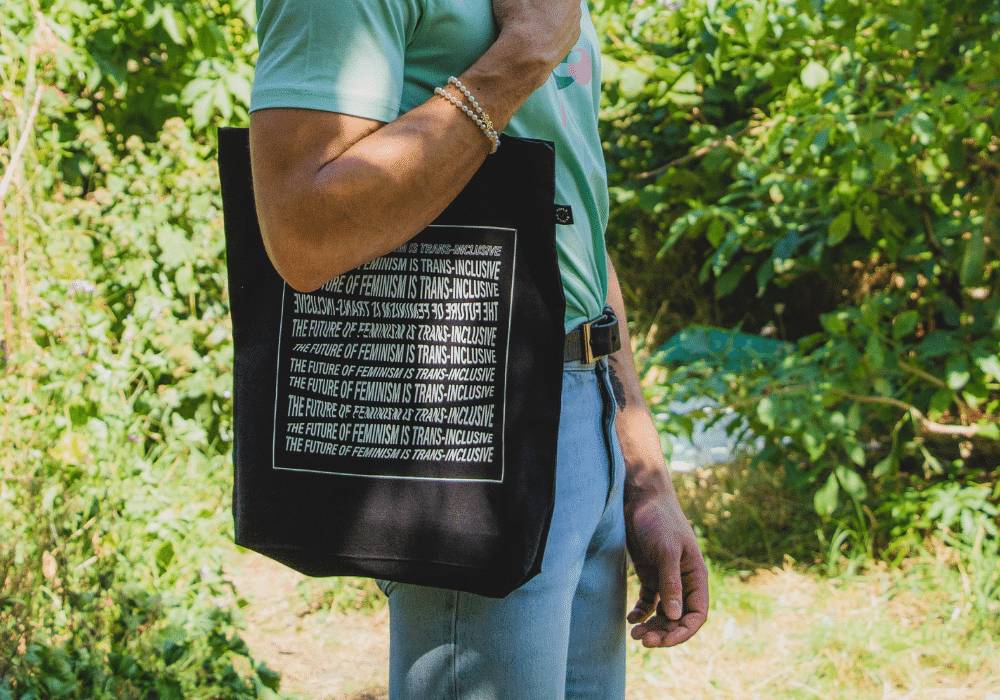
femme forte's '& the future is now' tote bag
What steps did you take to become a sustainable brand?
When first starting femme forte I didn’t quite understand how much I had to learn to do this properly. But I spent the early stages researching and learning everything I could about ethical fashion.
So many things shocked me – such as most inks used to print designs on clothing contain microplastics. Every time you wash your clothes, these microplastics are getting into our oceans and are directly responsible for the extinction of marine life. A single wash can release over 700,000 microplastic fibers. Yikes!
The fact that such a routine task, like washing your clothes, could lead to the extinction of an irreplaceable species is terrifying. But even more reason to put the work in and learn about the repercussions of our way of life. Perhaps we can’t avoid every single negative effect, but we can try.
To ensure we are as sustainable as we possibly can be, femme forte is completely transparent our supply chain: from the very first moment where the cotton is picked, all the way to you receiving your item. Everything is accredited by the Fair Wear Foundation, meaning you can be sure workers were paid and treated fairly.
On top of this, we only use organic cotton, which is 100% vegan and cruelty-free. So you know that there is no polyester or plastic in our products.
Designs are then printed onto the garments with eco-friendly inks – that’s plastic-free ink which is also non-toxic and water-based. The packaging we use is completely plastic-free, made from recycled materials that can then be recycled again.
On top of this, I am constantly looking to increase my knowledge of sustainable fashion. It’s something that takes a lot of work – but the more we can prove ethical fashion isn’t just possible but can be truly successful, the more likely it is the rest of the fashion industry will take note.
Side note: if you are washing fast fashion items, there are lots of things you can do to stop the microplastics in the fiber and ink from getting into the ocean. Here’s a list to start with, but just a quick google will show you plenty of options!
What do you see next for femme forte?
When running a small business, it’s sometimes difficult to look too far ahead – you’re kept so busy with the tasks right in front of you. But, from a personal perspective, I hope to keep learning – about sustainable fashion, inclusivity, and more – and to pour this into what I create. I also hope to keep creating, to channel parts of who I am or how I feel into what I create, whether that becomes something for femme forte or just for myself.
And as a business, I’m hopeful to keep growing and reaching more people with a message of why fashion needs to center kindness. I feel so lucky to have people across the world supporting and buying from femme forte and for that, I am filled with gratitude – to have the opportunity to grow this even further would be an honor.
Find femme forte:
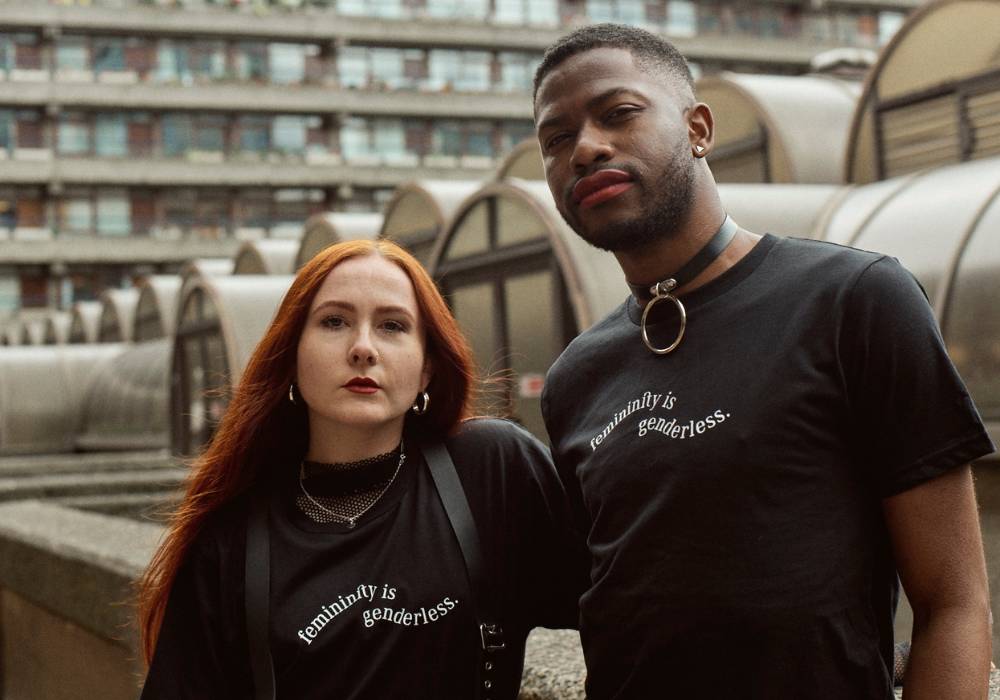
femme forte's '~femininity' t-shirt