The History of Pride Month: what it means, and why it’s important
June 2, 2026On the night of June 27, 1969, the patrons of the Stonewall Inn had had enough. The police had once again stormed a Christopher Street LGBTQ+ bar in New York City. Descending on the club they roughed up the queers, confiscated alcohol, and arrested 13 people on sight – just for wearing less than 3 items of gender appropriate clothing. Normally those in the bar would disperse, fearing arrest or having their lives ruined by being outed – Maria Ritter recalled, "My biggest fear was that I would get arrested. My second biggest fear was that my picture would be in a newspaper or on a television report in my mother's dress." This time they stayed.
Just days before LGBTQ+ bars Snake Pit, Sewer and the Checkerboard had all been raided, with the latter being shut down permanently. Raids on LGBTQ+ clubs were a part of life. In 1960s New York soliciting of homosexual relations was illegal. You couldn’t hold hands with someone of the same sex in public, you couldn’t kiss, or dance with them either. Until 1966 it was forbidden to have a liquor license if you were going to serve LGBTQ+ individuals – you would be charged with encouraging disorderly conduct.
Even without the raids the LGBTQ+ scene had become dangerous to navigate. Organized crime saw an opportunity in catering to LGBTQ+ clientele. They bribed off crooked police officers and opened “private bottle bars” without liquor licenses. They ran these LGBTQ+ clubs without fire exits, running water, and toilets. They would often blackmail some of the wealthier clientele who wanted their sexuality to remain a secret. The Stonewall Inn was one of these places.
Despite this, Stonewall developed a reputation for helping LGBTQ+ runaways. Kids who had been thrown out of home and nowhere else to go. “There are hundreds of young homosexuals in New York who literally have no home,” wrote Dick Leitsch, one of the first journalists to report on what happened at Stonewall. “Most of them are between 16 and 25, and came here from other places without jobs, money or contacts. Many of them are running away from unhappy homes (one boy told us, ‘My father called me 'c**ksucker so many times, I thought it was my name.’). Another said his parents fought so much over which of them ‘made’ him a homosexual that he left so they could learn to live together.”
Many of these young LGBTQ+ people, without jobs or skills, had to hustle to make by. Some fell into drugs and pills, most had to live on the streets and turned to panhandling or shoplifting. “The Stonewall became ‘home’ to these kids,” Leitsch continued. “When it was raided, they fought for it. That, and the fact that they had nothing to lose other than the most tolerant and broadminded LGBTQ+ place in town, explains why the Stonewall uprisings were begun, led and spearheaded by queens.”
LGBTQ+ bars in the 1960s were a sanctuary, despite their dangers. They became the only places LGBTQ+ people could be themselves, freely. In a world that forced them to hide their own nature and demonized their love, these clubs were a refuge.
On the night of June 27, 1969, the patrons of the Stonewall Inn did not disperse when the police arrested 13 of their fellow community. They stood their ground. Neighborhood residents started to gather too, and soon there was a huge crowd in front of the bar. One lesbian, fighting her arrest, was beaten over the head by a police officer while he was pushing her inside a paddy wagon. She turned angrily to the crowd and yelled out, “Why don’t you guys do something”.
The crowd broke. A bottle was hurled through the air and shattered against the paddy wagon. Within minutes, a full-blown uprising had begun. The crowd threw pennies, cobble stones, and other objects at the police. When the officers barricaded themselves inside Stonewall the mob threw a firebomb in after them.
The protests lasted up to six days and involved thousands of angry LGBTQ+ people who had had enough. They chanted “F*g power!” and “We want freedom!”, while the police turned firehoses on them, harassed them and bullied them – one officer even threw his gun at the mob. The protesters resisted and smashed windows, uprooted parking meters, and sang “We Shall Overcome” while drag queens hit officers with their purses.
Historian Susan Stryker, a professor at the University of Arizona who researched LGBTQ+ history, notes that it would be a mistake to say the Stonewall uprising began the LGBTQ+ rights movement. “[Saying that implies] that there was no militant resistance to the social oppression of homosexual and transgender people before Stonewall. Not only did highly visible political organizations working on behalf of gay, lesbian, and [transgender] people exist for many years prior to Stonewall, there are other earlier documented instances of militant resistance.”
LGBTQ+ rights activists had been working for decades beforehand fighting discrimination and chipping away at the goal of freedom. The Stonewall Uprising, rather, acted as a galvanizing force leading to the fruition of many queer activist groups, including the Gay Liberation Front, Human Rights Campaign, GLAAD, and PFLAG.
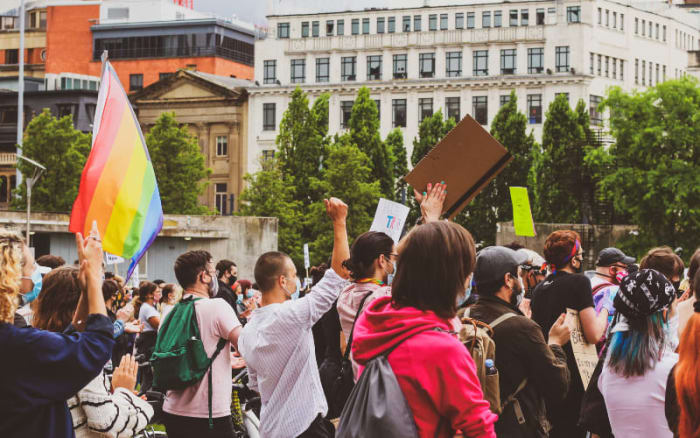
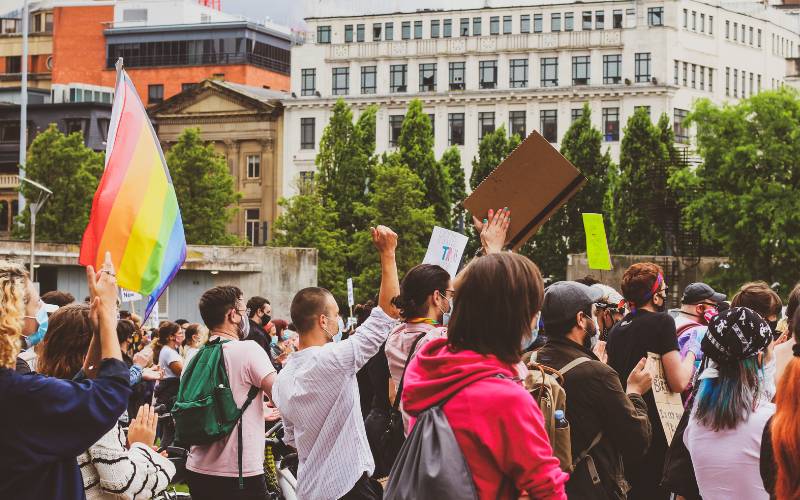
Today, Stonewall is acknowledged as the event that pushed forward LGBTQ+ rights and gave a spotlight to the discriminations faced by our community. It is for that reason that we celebrate Pride in June. Expanding from a commemoration of the uprising to encompass the whole month, Pride Month is now a global celebration of the LGBTQ+ community – of what we’ve achieved and what we have yet to accomplish.
In the 1960s, the Stonewall Inn became a de factor homeless shelter for queer youths – this is still a problem that persists today, decades later. So, when you celebrate Pride this month, remember the struggles and hard-won freedoms of the LGBTQ+ community of the past. Remember their fight and their spirit and look to the future, and what we need to achieve next.
Join WorkPride 2026
Find out more about LGBTQ+ history and unique perspectives in our upcoming WorkPride event! Running from June 8–12, WorkPride will bring together a worldwide audience of LGBTQ+ professionals, allies, HR and DEI leaders, and inclusive employers committed to building safer, fairer, and more equitable workplaces.
Attendees from around the world will hear from expert speakers, share best practice, and gain practical tools to create workplaces where all sexual orientations, gender identities, and gender expressions are respected and celebrated.