
The pros and cons of the term ‘openly LGBTQ+’
June 3, 2024By Dylan Mann-Hazell
The terms 'openly gay’, ‘openly trans’, or just generally ‘openly LGBTQ+' have been a casual part of our vocabulary for a long time. You’ll often catch it in news headlines – ‘artist breaks the record for most streamed openly gay musician’. But, what does the ‘openly’ actually mean?
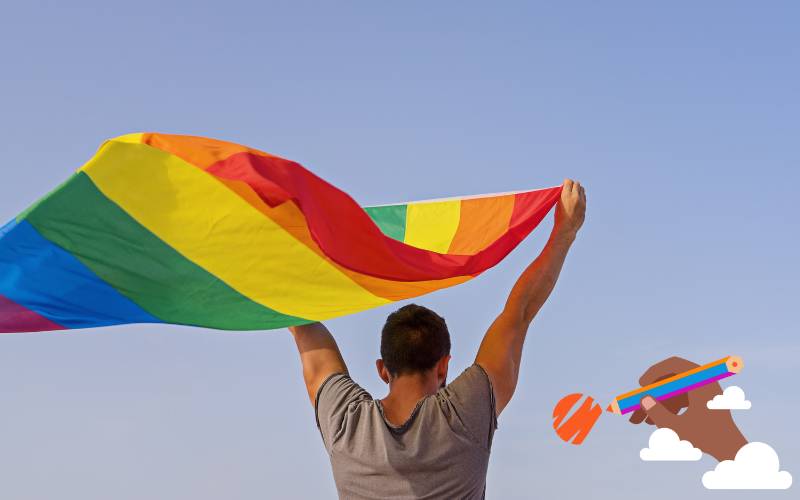
Defining ‘openly LGBTQ’
Naturally, it’s a phrase used to indicate someone’s identity is public knowledge, the antithesis of 'closeted.’ However, there is a valid argument to be held for how dated the term is becoming, as society progresses. Is there such thing as ‘openly’ LGBTQ+, or do we need to explore other terminology? Like many phrases, it has a history and a deeper meaning, with both pros and cons that should be taken into consideration moving forward.
To use the term 'openly LGBTQ+' is to refer to someone who identifies themselves as part of the LGBTQ+ community in their personal, public and professional lives. The phrase can be used inclusively. For example, if a gay man became the first member of the community to break a particular record, you might want to use the term ‘openly gay’, to include previous record-breakers who may have been gay, but not to public knowledge.
It’s an interesting perspective on remembering to extend inclusivity to our LGBTQ+ peers who aren’t out, both now and throughout history. Using the term 'openly LGBTQ+' could also encourage a sense of pride in being open about identity. Living authentically without fear is a powerful message to send, especially while anti-LGBTQ+ discrimination remains rampant.
Downsides to the term
One of the drawbacks of using the term 'openly LGBTQ+' is the implication that there is a default or a norm from which LGBTQ+ people deviate. This can inadvertently reinforce the idea that heterosexuality and cisgender identities are the standard against which all other identities are measured. Additionally, some people may feel uncomfortable or unsafe openly identifying as LGBTQ+ due to societal stigma, discrimination, or personal circumstances. Separating them with this term runs the risk of implying that not being open means they are any less queer.
Irish actor Andrew Scott recently spoke against the use of the term ‘openly gay’ in an interview with the Guardian. His concern stems from the belief that ‘openly’ feels a little too close to “shamelessly”, inferring there is something to be ashamed of.
“I’m going to make a pitch for getting rid of the phrase ‘openly gay’,” he said. “It’s an expression that you only ever hear in the media. You’re never at a party and you say, ‘This is my openly gay friend…’. We don’t say you’re ‘openly Irish.’ We don’t say you’re ‘openly left-handed’…There’s something in it that’s a little near ‘shamelessly.’ ‘You’re open about it?’ You know what I’m saying? It’s time to just sort of park it.”
Language is constantly evolving – should this phrase?
Despite the concern for ‘othering’, 'openly LGBTQ+' can promote a sense of community and solidarity within the community. By openly identifying as LGBTQ+, people can find support, validation, and understanding from others who share similar experiences. This sense of belonging can be empowering and affirming, leading to increased confidence and resilience in the face of discrimination or prejudice.
As attitudes towards LGBTQ+ identities continue to evolve, there may be room for more inclusive and nuanced language that reflects the diverse experiences and identities within the community. However, even having the conversation around the term openly LGBTQ+ is a reflection of broader discussions around language, identity, and progress towards a more inclusive and affirming society.