
The Regression of LGBTQ+ Rights in Hungary
July 13, 2021We often think of LGBTQ+ rights as a battle moving forward, progressing inch by inch to a world of freedom. Hungary, however, is an example of how at times the opposite can be true. And a reminder that rights that were granted yesterday, are not guaranteed tomorrow.
Although homosexuality has been legal in Hungary since 1961 and discrimination based on sexuality is against the law, LGBTQ+ people across the country are still struggling to live safely and freely as themselves. Registered partnerships for same-sex couples were also legalised in 2009, but same-sex marriage remains illegal, and families headed by two adults of the same gender are not granted the same rights as heterosexual couples. The Hungarian government has also come under fire for new legislation restricting the civil rights of LGBTQ+ Hungarians, including ending the legal recognition of transgender people.
Adoption and family laws across Hungary are also rife with LGBTQ-phobia. It is currently not legal for same-sex couples to jointly adopt and although IVF is available for single women regardless of their sexual identity, it is not available for queer women in registered partnerships. On top of this, in 2020 legislation put forward by Prime Minister Viktor Orban, made it impossible for same-sex couples to adopt at all. Before this, there was a loophole where if one partner applied for adoption, it was possible. However, following this new law no single parents are able to apply, with the new law defining a family as “based on marriage and the parent-child relation. The mother is a woman, the father a man".
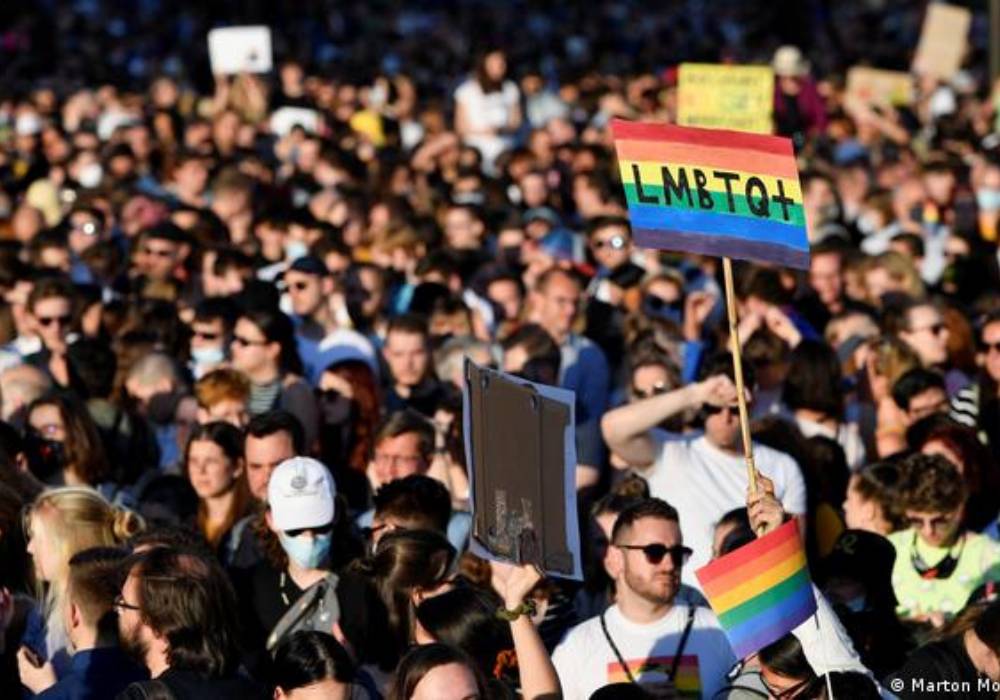
Pro-LGBTQ+ protest, Budapest, 14 June 2021
This is one of the many regressions in LGBTQ+ rights that The Hungarian Prime Minister has been directly responsible for since he came into power in 2010. Mid-pandemic he led a push to change laws to end gender recognition for the trans community. This is after laws only changed in 2017 to make it legal for transgender Hungarians to change their gender marker in the eyes of the law. Since this change, however, although it was theoretically legal, Hungarian transgender rights charity, Transvanilla, has said that the government has refused to accept any applications. Then, whilst the country was fighting the coronavirus, the Prime Minister decided to make life even less safe for the transgender community by taking this law away.
Propelling his anti-LGBTQ+ agenda forward, in October last year Orban described a children’s fairy tale book as “homosexual propaganda”. The book, “Wonderland is for Everyone”, had been published by a lesbian group called Labrisz Lesbian Association and included LGBTQ+ characters. Discussing the book on the radio, Orban stated that "Hungary has laws pertaining to homosexuality, the basis of which is an exceptionally tolerant and patient approach… But there is a red line that you cannot cross. To sum up my opinion on this: leave our children alone."
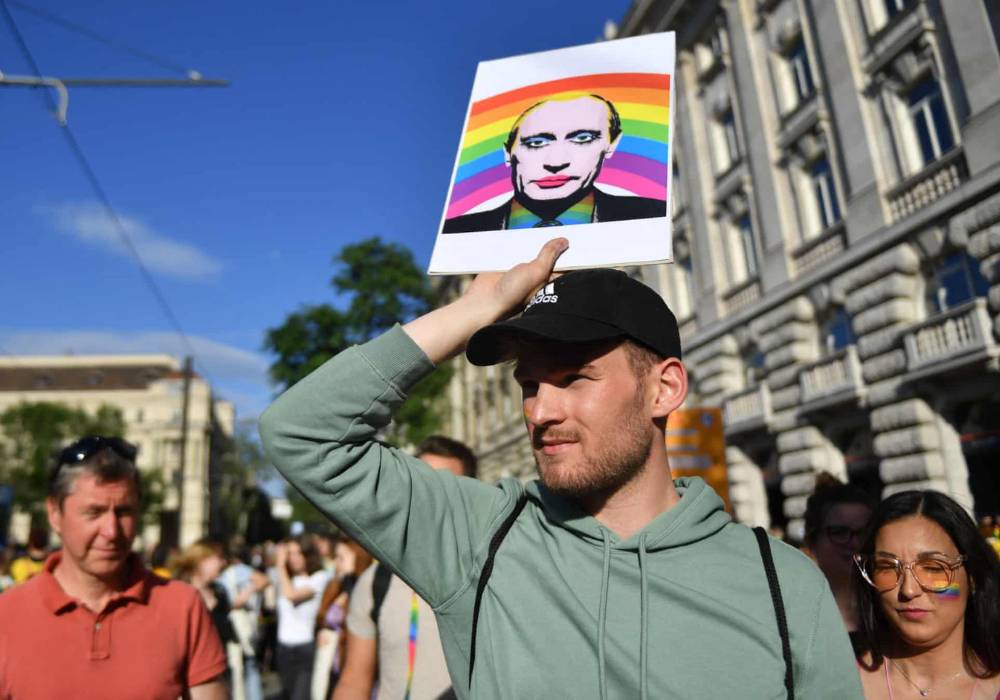
Pro-LGBTQ+ protest, Budapest, June 14 2021
Then, in June this year, the Hungarian government passed another anti-LGBTQ+ law, which prohibits “promoting” homosexuality or gender reassignment in television shows, films, and sexual education programs at schools. The controversial law has been criticised by activists and communities across the world, globally shedding light onto the ongoing backsliding of LGBTQ+ Hungarians rights.
EU leaders have been loud in their opposition to the new law, with a recent commission declaring it “incompatible with international human rights standards”. The European Parliament just this week voted in favour of urgent legal action to be taken against the new law. The parliament adding that the law was "another intentional and premeditated example of the gradual dismantling of fundamental rights in Hungary".
In reaction, the Prime Minister has stood by the school policy describing it as a Hungarian matter and not one for “Brussels bureaucrats”. This has not done anything to quieten the backlash and last Friday The Hungarian office of Amnesty International led a protest in front of the Hungarian Parliament Building.
“This is a homophobic and transphobic law,” Dávid Vig, Director of Amnesty International Hungary, has explained. “It makes consensual love of two people equal to a crime. It is unacceptable.”
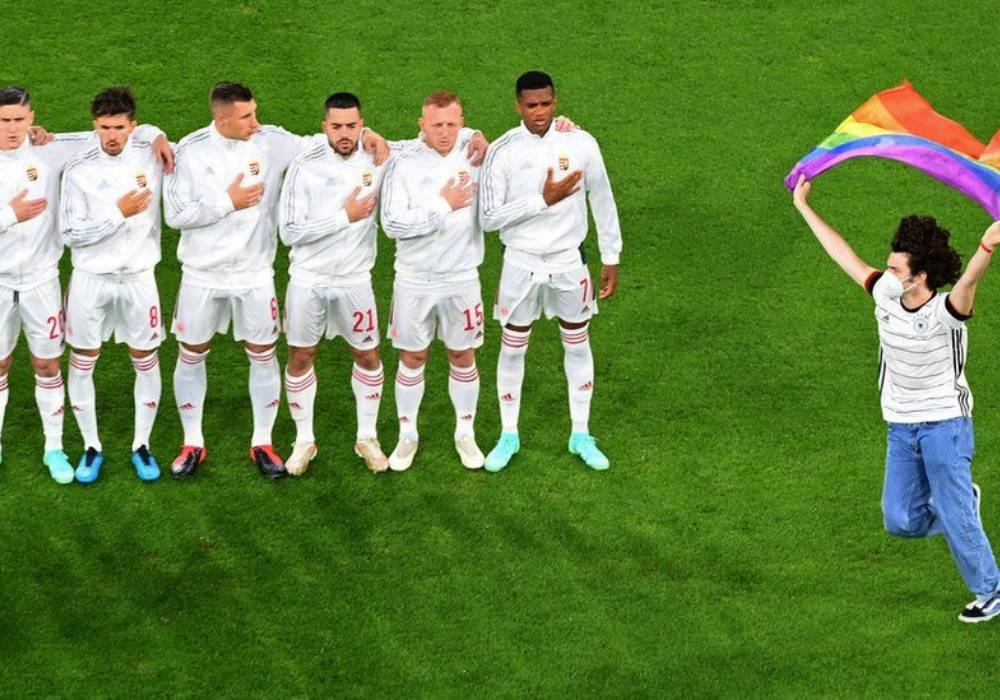
Germany-Hungary Euro 2020, Munich, 2021
Solidarity for LGBTQ+ Hungarians has even spilled onto the football pitch, with rainbows spotted throughout the recent Germany-Hungary Euro 2020 football match in Munich. Although Uefa blocked the Allianz Arena from lighting up in rainbow colours, fans throughout the stadium showed up in rainbow colours, sporting rainbow flags and one person ran onto the pitch with a rainbow flag during Hungary's national anthem. On top of this stadiums across Germany lit their buildings in rainbow colours to stand with LGBTQ+ Hungarians.
Despite global pressure against the anti-LGBTQ+ laws, there is still ongoing danger for the queer people of Hungary. However, some LGBTQ+ Hungarians are still willing to be visible and to push to change this. Adel Onodi, an actor, singer, and transgender activist is daring to do exactly this. In 2019 she was the first transgender woman to the featured on the cover of Elle Hungary, making history but also putting herself in a vulnerable visible position.
“After Elle magazine [came out], I went to a bar,” Adele shares. “Someone recognised me, and when I went to the toilet and he wanted to join [me in there] because he thought I had a d**k and he wanted to see it. It was unbelievable. He just opened the door, and I couldn’t do anything. I just told him that I won’t show him… But because I am self-confident, people sometimes just try [to take advantage of] me.”

Covergirl Adel Onodi, Elle 2019
The current Prime Minister of Hungary has made clear decisions to regress the rights of LGBTQ+ Hungarians. However, the whole world is watching and those these laws affect have the support and solidarity from organizations, charities, and people across the globe. From the outside it may seem like the public can do very little, but mounting pressure from the EU and its members will only draw more attention to the atrocities Orban has pushed for. And activists such as Adele remain hopeful that with added support, they can work to create a better future for LGBTQ+ Hungarians.
“If more of us come out publicly, and share our stories, even our collective stories and represent ourselves,” shares Adele. “This could give hope to build a better world and a better Europe. We need to stand up and take responsibility because that’s the only way to achieve change in our lifetime.”
Transvanilla and TGEU both offer support and resources for the ongoing fight for LGBTQ+ equality in Hungary.