
Trans: Everything You Need to Know
October 1, 2026
More than one in four transgender people report facing discrimination at work, highlighting how misunderstood gender diversity remains. For many, the concept of ‘trans’ goes beyond simple labels, reflecting a deeply personal journey shaped by culture, society, and self-understanding. Gaining clarity about transgender identities and experiences helps open doors to respect, support, and lasting inclusion in every sphere of life.
Key Takeaways
| Point | Details |
|---|---|
| Understanding Trans Identities | Transgender is an expansive term encompassing diverse gender identities that are shaped by personal experiences and societal perceptions. Professionals should approach each individual’s journey with respect and empathy. |
| Types of Trans Experiences | Recognize the variety of trans identities, including binary, non-binary, genderqueer, genderfluid, and agender, reflecting their unique experiences and expressions. |
| Importance of Transition Support | Transitioning involves social, legal, and medical aspects, underscoring the necessity for robust social and professional support systems to enhance well-being. |
| Creating Inclusive Workplaces | Implementing comprehensive policies and providing resources for trans individuals is key to fostering truly inclusive work environments, essential for employee well-being and performance. |
Defining Trans: Core Concepts and Identities
Understanding transgender identities requires recognizing the profound complexity and beautiful diversity of human gender experience. Transgender, or “trans,” represents an expansive umbrella term describing individuals whose gender identity differs from the sex they were assigned at birth.
According to Routledge, transgender identities emerge through intricate interactions between social, cultural, legal, and medical contexts. These identities are not static but dynamic, shaped by personal experiences, societal understanding, and individual self-perception. The formation of gender identity is a nuanced journey that goes far beyond simplistic binary categorizations.
The term Trans* offers an even more inclusive framework. As explored by Wikipedia, this neologism deliberately creates space for multiple gender-expansive identities, emphasizing fluidity and individual autonomy. It acknowledges that gender is not a rigid construct but a spectrum with infinite potential for personal expression.
Key aspects of trans identities include:
- Personal gender identification
- Social and legal recognition
- Individual journey of self-discovery
- Potential medical or social transitions
- Intersectionality with other aspects of identity
Professionals and allies must approach trans experiences with respect, empathy, and a commitment to understanding individual narratives beyond generalized assumptions.
Types of Trans Experiences and Identities
Trans experiences represent a rich and diverse spectrum of gender identity and expression that goes far beyond traditional binary understandings. Gender identity is deeply personal, with each individual’s journey being unique and complex.
According to Cambridge, transgender identities encompass a wide range of experiences that challenge conventional notions of gender. These experiences are not uniform but instead reflect individual paths of self-discovery, social interaction, and personal affirmation.
The wrong-body narrative, as explored by Wikipedia, represents one perspective of trans experience - though it’s important to recognize this framework has limitations. While some trans individuals relate to feeling disconnected from their assigned sex at birth, others experience gender in more fluid and nuanced ways.
Broad categories of trans experiences include:
Here’s a summary of major types of trans experiences and their main characteristics:
| Identity Type | Core Characteristics | Example Expressions |
|---|---|---|
| Binary Transgender | Identifies as male or female Not assigned sex at birth |
Trans man Trans woman |
| Non-binary | Gender outside male/female binary | Non-binary Enby |
| Genderqueer | Rejects fixed gender categories | Mixed gender No specific label |
| Genderfluid | Shifts between genders over time | Alternating male/female Variable |
| Agender | Identifies with no gender | Agender person Genderless |
- Binary transgender: Identifying as male or female, different from assigned sex
- Non-binary: Experiencing gender outside traditional male/female categories
- Genderqueer: Rejecting fixed gender categories
- Genderfluid: Having a gender identity that shifts over time
- Agender: Not identifying with any gender
Professionals supporting trans individuals must approach each experience with profound respect, understanding that no single narrative can capture the complexity of gender identity.
Transitioning: Key Stages and Support
Transitioning is a deeply personal journey that encompasses social, medical, and legal dimensions of gender affirmation. Each individual’s path is unique, with no single universal approach defining the experience.
Research from PubMed highlights the critical importance of social support during transition. Supportive relationships with friends, family, and partners can significantly impact a trans person’s mental health and overall well-being. These connections provide emotional resilience and validation during a potentially challenging personal transformation.
According to MDPI, accessing knowledgeable healthcare providers is a crucial aspect of transitioning. Many trans individuals face significant challenges in finding medical professionals who understand their specific healthcare needs and can provide comprehensive, compassionate care.
Key stages of transitioning typically include:
- Social transition: Changing name, pronouns, and gender expression
- Legal transition: Updating identification documents
- Medical transition: Potential hormone therapy
- Psychological support: Counseling and mental health resources
- Professional support: Workplace and community inclusivity
Transitioning is not about reaching a final destination, but about authentically expressing one’s true self. Each step is valid, personal, and worthy of respect.
Legal Protections and Workplace Rights
Navigating legal protections and workplace rights is a critical aspect of ensuring dignity and respect for trans professionals. These rights represent more than just policy - they are fundamental to creating inclusive, supportive work environments.
Research from PubMed reveals the profound impact of workplace discrimination, highlighting how legal protections are essential in mitigating gender minority stress. Without comprehensive legal frameworks, trans individuals face significant psychological and professional challenges that can substantially impact their career development and mental health.
The concept of transmisogyny, as explored by Wikipedia, specifically underscores the compounded discrimination faced by transfeminine individuals in professional settings. This intersectional understanding reveals that legal protections must go beyond generic non-discrimination policies to address nuanced, systemic barriers.
Key workplace rights and legal protections include:
- Protection from discriminatory hiring practices
- Right to gender-affirming workplace policies
- Access to appropriate restrooms and facilities
- Protection from harassment and workplace discrimination
- Equal opportunities for promotion and professional development
- Reasonable accommodations during transition
Effective legal protections require ongoing education, proactive policies, and a genuine commitment to creating truly inclusive professional environments.
Fostering Inclusive and Safe Workplaces
Creating truly inclusive workplaces requires more than policy statements - it demands genuine commitment to understanding and supporting transgender professionals. Authentic inclusion goes beyond simple tolerance, embracing the full spectrum of gender identity and expression.
Research from Springer reveals that strong identity affirmation serves as a powerful protective factor against workplace stigma. When trans professionals feel supported and validated, their well-being and professional performance significantly improve. This underscores the critical importance of creating environments where individuals can bring their authentic selves to work.
According to Wikipedia, workplaces must challenge homonormative structures that inadvertently replicate restrictive social norms. True inclusivity means actively dismantling systemic barriers and creating space for diverse gender expressions and identities.
Key strategies for fostering inclusive workplaces include:
- Implementing comprehensive non-discrimination policies
- Providing gender-neutral facilities
- Offering transgender-inclusive healthcare benefits
- Conducting regular diversity and sensitivity training
- Creating mentorship and support networks
- Ensuring leadership representation
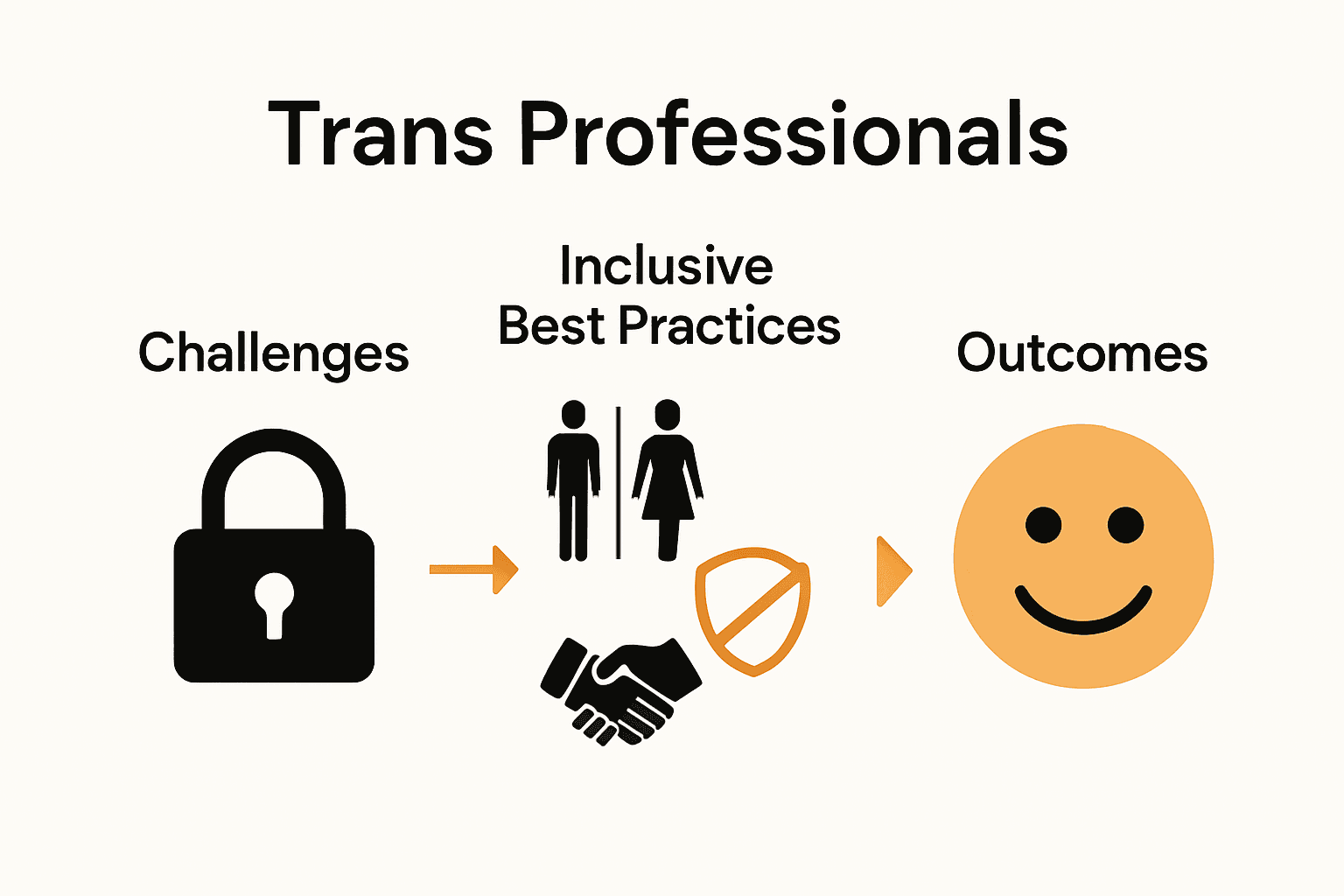
Learn more about supporting LGBTQ+ professionals with our talent solutions guide, which offers comprehensive strategies for creating truly inclusive work environments.
Empower Your Trans Journey with Inclusive Professional Support
Navigating the diverse and deeply personal experiences of transgender identity can feel daunting. From understanding complex identities and the right-body narrative to managing social and legal transitions, the challenges of authentic self-expression in the workplace are real. You deserve a professional space that recognizes these layers with respect and offers genuine support as you advance your career.
Discover a vibrant community at mygwork.com designed specifically for LGBTQ+ professionals seeking inclusive employment opportunities and meaningful connections. Tap into resources, find trusted allies, and access career options that honor your identity. Take charge today and build a workplace experience where you are truly affirmed and empowered. Start exploring now at mygwork.com and join a platform that celebrates every facet of your trans journey.
Frequently Asked Questions
What does it mean to be transgender?
Transgender, or “trans,” refers to individuals whose gender identity differs from the sex they were assigned at birth. It is a broad term that encompasses a variety of gender identities.
What are the different types of transgender identities?
Transgender identities include binary transgender (trans men and women), non-binary, genderqueer, genderfluid, and agender individuals. Each identity reflects a unique experience of gender.

What are the stages of transitioning for transgender individuals?
Transitioning can involve social changes (like name and pronoun changes), legal changes (updating identification documents), and medical changes (hormone therapy). Each person’s transition is unique and can vary in scope and duration.
Why is workplace inclusion important for transgender individuals?
Workplace inclusion is crucial because it helps mitigate discrimination and promotes mental well-being. Supportive environments lead to better performance and job satisfaction among transgender professionals.