
The Essential Guide to Trans Inclusion at Work
October 1, 2026
Most advice about workplace inclusion often misses the real challenges that transgender employees face. Even though over 40 percent of trans professionals report experiencing discrimination at work, real progress only happens when organizations move beyond surface-level gestures. Understanding trans inclusion means recognizing the deep impact of genuine support, empathy, and policy change. This guide shows how thoughtful approaches create safer, more welcoming workplaces where every person is respected and valued.
Key Takeaways
| Point | Details |
|---|---|
| Comprehensive Trans Inclusion | Organizations must actively dismantle systemic barriers and cultivate a workplace environment that prioritizes the dignity and psychological safety of transgender employees. |
| Key Policies for Support | Implement non-discrimination protections, inclusive dress codes, and gender-affirming healthcare to establish a supportive atmosphere for transgender professionals. |
| Proactive Transition Support | Provide individualized transition plans and confidential resources to facilitate smooth transitions for employees while fostering a culture of respect and support. |
| Avoiding Common Missteps | Organizations should refrain from misgendering, enforcing unnecessary disclosures, and treating trans inclusion as merely a checkbox exercise; genuine cultural change is essential. |
Defining Trans Inclusion in the Workplace
Workplace trans inclusion represents a comprehensive organizational approach to creating safe, respectful, and supportive environments where transgender and gender diverse professionals can thrive authentically. According to research from PubMed, this involves addressing the unique challenges faced by transgender employees and developing targeted support systems that mitigate minority stress.
At its core, trans inclusion goes beyond simply allowing transgender individuals to work. It requires actively dismantling systemic barriers and creating environments of genuine psychological safety. As highlighted by Marquette University publications, this involves implementing four key interventions:
- Creating comprehensive non-discrimination policies
- Developing robust gender transition support frameworks
- Providing ongoing diversity and inclusion training
- Establishing clear pathways for employee feedback and support
Successful trans inclusion means recognizing that gender identity is complex and deeply personal. It requires organizational commitment to understanding and respecting each individual’s unique lived experience. This means moving beyond checkbox diversity efforts and developing genuine, meaningful strategies that center transgender employees’ dignity, safety, and professional growth.
By prioritizing trans inclusion, organizations not only support individual employees but also create more innovative, empathetic, and high-performing workplace cultures that benefit everyone.
Key Policies and Practices for Trans Inclusion
Creating a truly trans-inclusive workplace requires deliberate, comprehensive strategies that go beyond surface-level diversity initiatives. According to TGEU, employers must develop multi-faceted approaches that support transgender employees throughout their professional journey.
Workplace policies play a critical role in establishing a supportive environment. These should comprehensively address several key areas:
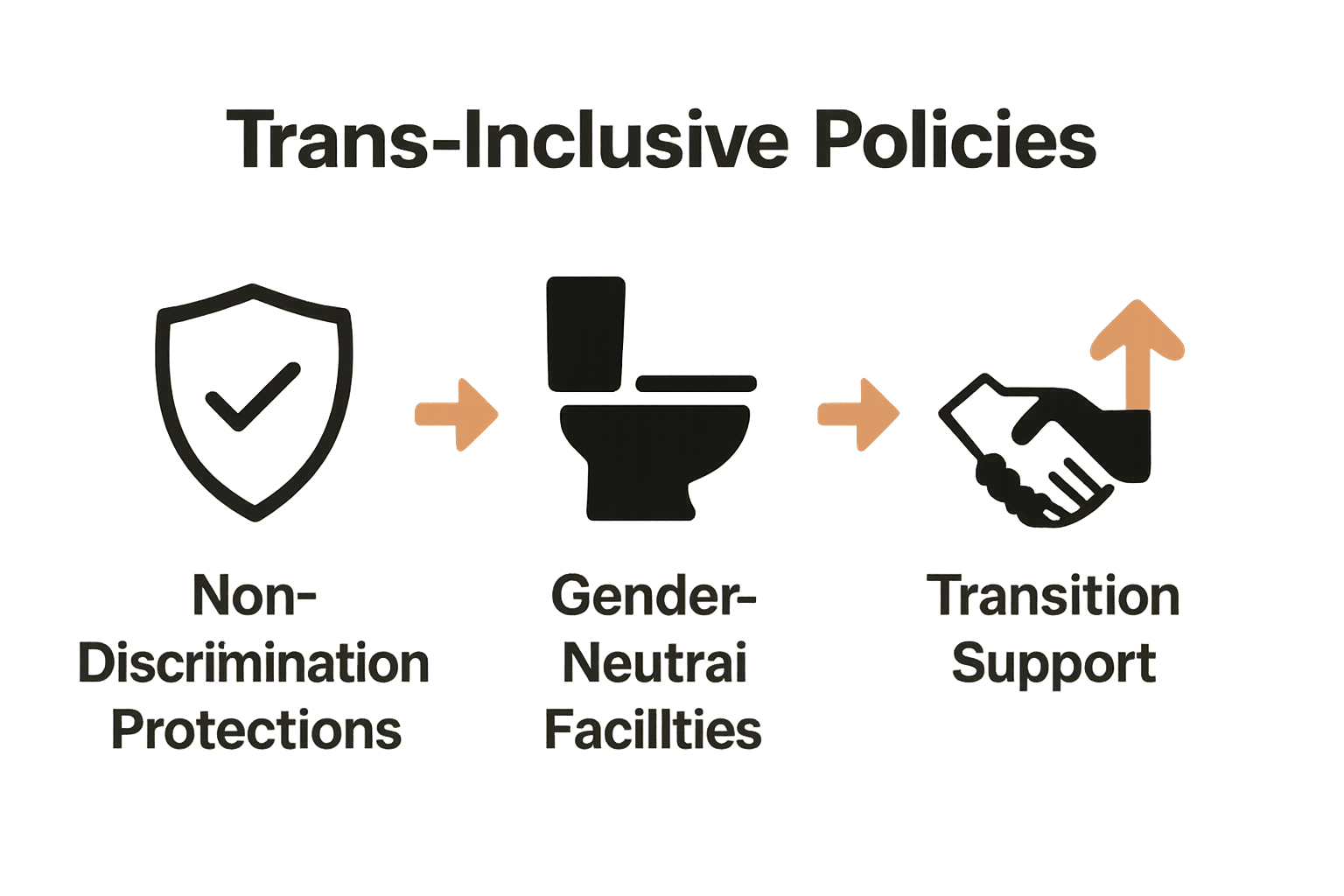
- Non-discrimination protections explicitly covering gender identity
- Inclusive dress code policies that respect individual gender expression
- Healthcare benefits that cover gender-affirming medical care
- Flexible documentation processes for name and gender marker changes
- Gender-neutral facilities and restroom access
Here’s a summary of key organizational strategies for trans inclusion:
| Focus Area | Essential Policy/Practice | Purpose |
|---|---|---|
| Non-Discrimination | Gender identity protections Harassment prevention |
Prevent systemic bias |
| Facilities & Documentation | Gender-neutral restrooms Flexible name/gender change processes |
Respect individual identity |
| Healthcare | Gender-affirming coverage Transition support benefits |
Ensure medical equity |
| Education & Training | Ongoing gender diversity workshops Unconscious bias training |
Build awareness and empathy |
| Employee Support | Feedback channels Confidential transition planning |
Facilitate inclusive engagement |
 |
As recommended by Feinberg Diversity Resources, organizational practices must extend beyond written policies to create genuine cultural transformation. This means implementing robust training programs that educate all employees about gender diversity, challenging unconscious biases, and creating mechanisms for ongoing feedback and improvement.
Effective trans inclusion also requires proactive support during gender transition. Organizations should develop clear transition guidelines that provide employees with confidential support, workplace accommodation resources, and a structured process for communicating gender transition to colleagues. By centering employee dignity and providing comprehensive support, companies can create workplaces where transgender professionals feel genuinely valued, respected, and empowered to contribute their full potential.

Legal Protections and Compliance Requirements
Navigating the legal landscape of trans inclusion requires a nuanced understanding of evolving anti-discrimination protections and workplace rights. American Public Health Association research emphasizes the critical importance of legal frameworks that recognize and protect transgender individuals from systemic discrimination.
Legal compliance in trans inclusion involves multiple critical components:
- Understanding federal and state anti-discrimination statutes
- Implementing comprehensive gender identity protections
- Ensuring equal employment opportunity policies
- Protecting employees from harassment and discriminatory practices
- Providing reasonable accommodations for gender transition
According to Safe Supportive Learning, organizations must proactively develop policies that go beyond minimum legal requirements. This means creating robust mechanisms that not only prevent discrimination but actively promote an inclusive workplace culture where transgender employees can thrive without fear of marginalization.
Compliance is not just about avoiding legal risks, but about fundamentally reimagining workplace environments. Employers must regularly review and update their policies, provide comprehensive training, and create clear reporting mechanisms for potential discrimination. By treating legal protections as a minimum standard and not the endpoint, organizations can build genuinely supportive ecosystems that respect and celebrate gender diversity.
Supporting Trans Employees Through Transitions
Workplace transitions represent profound personal and professional journeys that require comprehensive, compassionate support. Research from PubMed highlights the critical role of supervisor and coworker support in creating an affirming environment that directly impacts job satisfaction and employee well-being.
Transition support encompasses a holistic approach with key strategic elements:
- Confidential consultation processes
- Personalized transition planning
- Workplace accommodation strategies
- Respectful communication protocols
- Ongoing emotional and professional support
According to AAM US, understanding and implementing appropriate workplace transition support requires more than procedural checklist. It demands genuine empathy, active listening, and a commitment to creating an environment where transgender employees feel genuinely respected and valued.
Successful transitions are collaborative processes that center the transgender employee’s comfort, autonomy, and professional dignity. Organizations must develop flexible, individualized approaches that recognize each transition as a unique experience. This means creating safe spaces for open dialogue, providing resources for both the transitioning employee and their colleagues, and actively working to dismantle potential systemic barriers that could impede professional growth and integration.
Addressing Challenges and Avoiding Common Missteps
Transgender professionals continue to face complex workplace challenges that require nuanced, thoughtful approaches. Cambridge University research highlights the systemic barriers that can undermine transgender employees’ professional experiences, emphasizing the need for comprehensive organizational transformation.
Common workplace missteps that organizations must actively avoid include:
- Misgendering or deadnaming employees
- Forcing unnecessary disclosure of medical history
- Creating binary gender-only documentation processes
- Tolerating microaggressions or subtle forms of discrimination
- Lacking clear reporting mechanisms for workplace harassment
- Treating transgender inclusion as a performative checkbox exercise
Addressing these challenges requires more than surface-level policy changes. Organizations must cultivate a genuine culture of respect that goes beyond procedural compliance. This means developing ongoing education programs, creating safe feedback mechanisms, and actively listening to transgender employees’ lived experiences.
True inclusion demands continuous learning and institutional humility. Employers must recognize that supporting transgender professionals is an evolving journey requiring consistent commitment, open communication, and a willingness to acknowledge and rectify systemic inequities. By approaching trans inclusion as a dynamic, collaborative process, organizations can create workplaces that not only prevent harm but actively celebrate gender diversity.
Build a Truly Trans-Inclusive Workplace with Support from MyGwork
Creating an authentic trans-inclusive environment means addressing complex challenges like non-discrimination protections, respectful transition support, and combating microaggressions. If your organization or career journey aims to go beyond surface-level diversity efforts, you need access to a community and resources that empower genuine change and professional growth.
Partner with MyGwork, the leading platform dedicated to connecting LGBTQ+ professionals and allies. Here you will find a supportive network, job opportunities committed to inclusion, and valuable insights tailored for fostering respectful and empowering workplaces. Don’t wait to become part of a movement that champions dignity, safety, and career advancement for transgender and gender diverse professionals. Visit MyGwork today and take the next step toward meaningful trans inclusion.
Frequently Asked Questions
What is trans inclusion in the workplace?
Trans inclusion involves creating a safe, respectful, and supportive environment for transgender and gender diverse professionals, addressing their unique challenges, and promoting their authentic self-expression.
What are some key policies that support trans inclusion?
Key policies include non-discrimination protections for gender identity, inclusive dress code policies, healthcare benefits for gender-affirming care, flexible documentation processes, and access to gender-neutral facilities.
How can organizations support employees during their gender transitions?
Organizations can support gender transition by providing confidential consultation, personalized transition planning, reasonable workplace accommodations, and ensuring respectful communication throughout the process.
What challenges do transgender employees face in the workplace?
Transgender employees often face challenges such as misgendering, lack of acceptance, systemic discrimination, and barriers to healthcare and inclusive workplace policies, which require comprehensive and thoughtful organizational strategies to address.