
U.S.A.: New HHS report urges “exploratory therapy” for trans youth
May 6, 2025The U.S.A. Department of Health and Human Services (HHS) published a report on Thursday, May 1, which seeks to undermine gender-affirming care, instead promoting “exploratory therapy”—or psychotherapy—and asserting that mental health treatment alone can address gender dysphoria in children.
According to the report, “There is a lack of research on psychotherapeutic methods for managing gender dysphoria in children and adolescents. This is partly due to these approaches being mischaracterized as ‘conversion therapy.’ Psychotherapy presents a noninvasive alternative to endocrine and surgical treatments for paediatric gender dysphoria.” Although the report distinguishes “exploratory therapy” from “conversion therapy”—a practice aimed at changing an individual's sexual orientation or gender identity—activists perceive minimal difference.
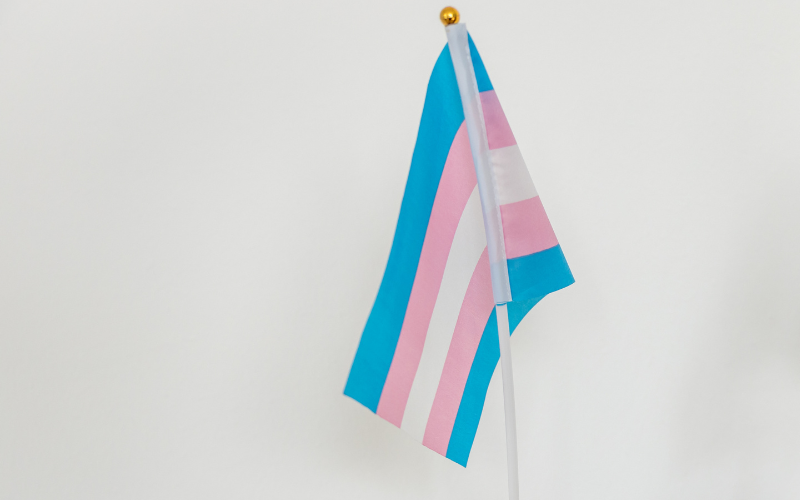
According to ‘Time’, Casey Pick, director of law and policy at the LGBTQ+ advocacy group the Trevor Project, remarked in a statement via email, “This report not only dismisses healthcare best practices for transgender individuals but also goes further by suggesting conversion therapy under a new label, ‘exploratory therapy.’ While the report denies it, this practice is essentially conversion therapy with a more appealing name. We call on this Administration to value and affirm individuals for their identity—and allow families and medical professionals to make health-based decisions rather than adhering to governmental ideology.”
The report follows a Trump Executive Order titled “Protecting Children from Chemical and Surgical Mutilation,” which aims to halt federal funding to hospitals and medical providers that offer gender-affirming care to individuals aged 19 or younger. The Executive Order required HHS to compile a report on the existing literature for treating children with gender dysphoria within 90 days, which was due by April 28.
The language in the report signals a policy and sentiment shift concerning gender-affirming care—labelling it as “Pediatric Medical Transition” and renaming “gender confirmation surgery” as “sex reassignment surgery.” This shift aligns with Trump’s January 20 Executive Order, which asserted that there are only two sexes and described gender identity as being “disconnected from biological reality,” advocating for the removal of the term.
A federal judge has issued a preliminary injunction against the order, and while the order hasn’t been fully enforced, some federal agencies, including the Centers for Medicare & Medicaid Services, have announced changes to align with Trump’s restrictions on gender-affirming care.
Conversion therapy, which attempts to change an individual's sexual orientation or gender identity, is known to be ineffective and harmful to LGBTQ+ individuals, encompassing a range of practices.
Shannon Minter, vice president of legal at the National Center for Lesbian Rights, warns, “Promoting this kind of therapy is devastating. Being gay or transgender is not a choice. No amount of dialogue, persuasion, or counseling can alter that.”
Gender-affirming care is endorsed by major medical associations in the U.S., such as the American Academy of Pediatrics and the American Medical Association, while conversion therapy has been discredited by multiple medical associations.
As the Trump Administration introduces anti-trans policies at the federal level, Supreme Court cases could further impact LGBTQ+ rights. In March, the Supreme Court announced it would hear oral arguments in Chiles v. Salazar, challenging Colorado’s conversion therapy ban on free speech grounds. A decision in U.S. v. Skrmetti—expected in June—will determine if gender-affirming care bans for minors are unconstitutional.
Minter emphasises, “These cases raise the stakes significantly and pose a substantial threat to transgender youth. The worst-case outcome would be for the Supreme Court to uphold state laws banning essential medical care while overturning laws that protect LGBTQ+ youth from conversion therapy, resulting in a devastating dual blow.”
A 2022 report estimated nearly 300,000 trans youth aged 13 to 17 in the U.S.A., according to UCLA School of Law’s Williams Institute.
Trump’s Executive Order also called for investigations into gender-affirming care in sanctuary states, accusing medical professionals of “maiming... impressionable children.” Additionally, Trump proclaimed April as “National Child Abuse Prevention Month,” stating efforts to stop taxpayer funding for institutions that engage in what he termed the sexual mutilation of youth.
More than 500 anti-LGBTQ+ bills have been introduced at the state level for the 2025 legislative session, as reported by the ACLU’s legislative tracker. In Kentucky, legislators voted to repeal their conversion therapy ban, re-legalising the practice in the state. Attacks on gender-affirming care have grown more frequent, with 26 states enacting laws restricting access to such care for trans and nonbinary people, per the Human Rights Campaign.
Dr. Morissa Ladinsky, an academic general paediatrician at Stanford Medicine who cares for children with gender dysphoria, states, “This is not about us as doctors, but about our patients and ensuring they receive evidence-based, standard-of-care medicine that maintains their well-being.” Ladinsky was a plaintiff in the 2022 lawsuit Ladinsky v. Ivey against an Alabama law criminalising parental support for their children’s access to gender-affirming care, which led to a subsequent lawsuit against Alabama’s regulation.
Experts and advocacy groups highlight the adverse effects of conversion therapy. A 2020 peer-reviewed study by the Trevor Project showed that young LGBTQ+ individuals who underwent conversion therapy were more than twice as likely to report suicide attempts compared to those who didn’t.
About half of U.S.A. states prohibit the contentious practice, though federal efforts to ban it have not succeeded. A 2023 Trevor Project report indicates conversion therapy continues nationwide, with around 1,300 practitioners believed to still offer it in the U.S.A. two years ago.