
Uncertain future for Argentina's LGBTQ+ seniors
April 7, 2025Since President Javier Milei took office in December 2023, Argentina has seen major shifts in its economic and social policies, significantly affecting various parts of society, particularly retirees and the LGBTQ+ community.
Mercedes Caracciolo, a 79-year-old sociologist and lesbian activist, described to the ‘Washington Blade’ how these new policies have changed her quality of life.
“Since Milei’s arrival in government, which began with a brutal devaluation, I am more careful in my spending than I was before,” she explained.
Even though Caracciolo benefits from rental property income, she acknowledges the dire situation for those solely relying on a pension.
More than 7 million pension recipients find themselves “scratching the poverty line” due to diminished purchasing power. The libertarian administration's economic policies have severely impacted their welfare, leading to nationwide protests.
The reduction of social programs and absence of LGBTQ+-specific public policies have intensified the challenges seniors face. Economic instability particularly impacts those historically marginalised, experiencing limited job prospects and inadequate retirement options. Many older LGBTQ+ individuals, unable to form traditional families, face a lack of support networks and a decreasingly supportive State.
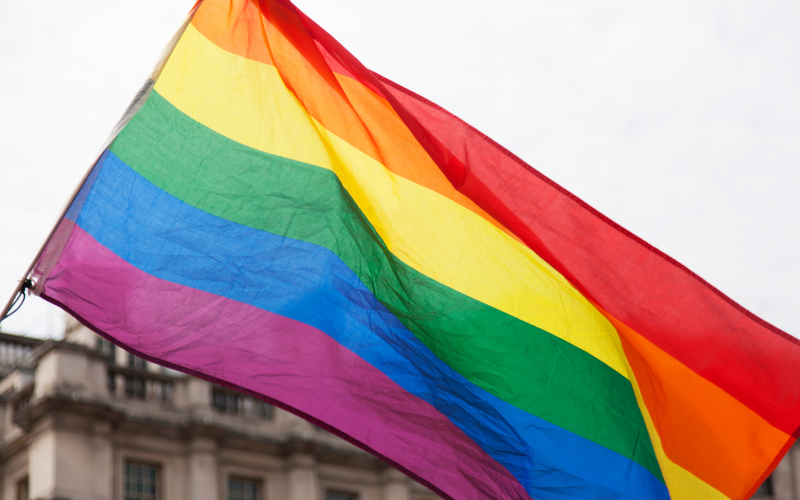
The rise of conservative rhetoric has also fostered an atmosphere of insecurity and fear.
“There is no more sense of security and stability in old age,” remarked Graciela Balestra, a psychologist and president of Puerta Abierta a la Diversidad, Argentina’s first home for LGBTQ+ seniors. “Many LGBTQ+ retirees fear there are fewer and fewer rights. They observe what is happening in Argentina and globally with the right wing's rise and feel that their hard-won achievements are threatened.”
Beyond economic struggles, the LGBTQ+ community has other hurdles to overcome.
Caracciolo pointed out the reduction or elimination of government subsidies for supportive spaces, weakening community networks vital to LGBTQ+ seniors’ well-being.
“Community networks are also weakened because many of them require state support for certain types of expenses,” she noted.
Balestra highlighted the psychological impact.
“It obviously impacted mental health. There is much more anxiety, there is fear. People express fears like ‘I’m afraid they’ll kill me’ or ‘I’m afraid to show myself,’” she remarked. “Previously, people would walk hand in hand with their partner, and now they don’t. A lot of hopelessness.”
For Balestra, concerns extend beyond the LGBTQ+ community.
“There is fear over economic issues, rights, and the possibility of something similar to the dictatorship returning. This is very frightening. Plus, the despair in thinking this situation will persist, unchanged, even after the upcoming elections,” she said.
Civil society organisations have criticised an “adjustment” in gender and diversity policies implemented by Milei’s government. Pride marches in Argentina have become platforms for protesting the president's policies, particularly his speeches, which activists view as hateful toward the LGBTQ+ community.
Balestra emphasises that the fear is collective as well as individual.
“Human rights are eroding everywhere; women are losing their previously held place, treated once more as objects, with machismo rising again,” she stated. “This causes much distress among older individuals.”
Despite the uncertainty, Balestra underscores the resilience of advocacy efforts.
“We continue working, as always,” she affirmed. “For 25 years at Puerta Abierta, we have held reflection groups, cultural workshops, and social gatherings to raise awareness about LGBTQ rights. We never stop meeting, but recently, we are revisiting issues like coming out, fear, and visibility more frequently. Now, we have to talk about these things again.”