
Upward Trend in Suicidal Thoughts Among LGBTQ+ Youth Continues, Especially Among Trans and LGBTQ+ Youth of Color
May 11, 2022Almost half of LGBTQ+ youth have considered committing suicide because of how they are mistreated and stigmatized in society, according to a new report. Additionally the figure is higher for trans and LGBTQ+ youth of color, confirmed The Trevor Project, the world's largest suicide prevention and mental health organization for LGBTQ+ youth. Its 2022 National Survey on LGBTQ+ Youth Mental Health highlighted that round 45% of LGBTQ+ youth seriously considered attempting suicide in the past year.

The annual national survey also revealed that that nearly 1 in 5 transgender and nonbinary youth actually attempted suicide, with LGBTQ+ youth of color reporting higher rates than their White peers. Comparing data from the organization's annual national surveys over the past three years, reports of seriously considering suicide among LGBTQ+ youth respondents have increased from 40% to 42% to 45%.
The report demonstrated that LGBTQ+ youth are not inherently prone to suicide risk because of their sexual orientation or gender identity, but rather at higher risk because of how they are mistreated and stigmatized in society. A large majority of LGBTQ+ youth also reported symptoms of anxiety (73%) and depression (58%). Additionally, around 60% of youth who wanted mental health care in the past year were not able to get it. The top four barriers to accessing were fears around discussing mental health; concerns with parental permission; fears of not being taken seriously; and lack of affordability.
"The Trevor Project's research demonstrates that suicidal thoughts have trended upward among LGBTQ+ young people over the last three years, making our life-saving work all the more important. The impacts of the COVID-19 pandemic and relentless political attacks during this time period cannot be understated," stated Amit Paley, CEO & Executive Director of The Trevor Project. "It's essential to emphasize that we still do not have known counts or registries of the LGBTQ+ youth population, and comprehensive, intersectional data on their mental health outcomes remain limited. Our annual national survey strives to fill in these gaps and amplify the experiences of young LGBTQ+ people, a marginalized group consistently found to be at significantly increased risk for suicide because of how they are mistreated and stigmatized in society."
LGBTQ+ youth who held more marginalized identities reported greater suicide risk compared to their peers. 1 in 5 transgender and nonbinary youth (19%) attempted suicide in the past year compared to nearly 1 in 10 cisgender lesbian, gay, bisexual, queer, and questioning youth (9%). The rate of attempting suicide among LGBTQ+ youth of color (21% of Native/Indigenous youth, 20% of Middle Eastern/Northern African youth, 19% of Black youth, 17% of multiracial youth, 16% of Latinx youth, and 12% of Asian/Pacific Islander youth) was higher for almost all groups than that of White LGBTQ+ youth (12%). Furthermore, youth who identify as pansexual attempted suicide at a significantly higher rate than lesbian, gay, bisexual, and queer youth.

Across race and ethnicity, Native/Indigenous LGBTQ+ youth reported the highest rates of seriously considering and attempting suicide, symptoms of depression and anxiety, and being physically harmed or discriminated against on the basis of their sexual orientation or gender identity.
"Lumping diverse youth into broad identity categories and applying single-size approaches does a disservice to everyone, and makes our work to end LGBTQ+ youth suicide even harder. This year's findings emphasize the importance of intersectionality in research, particularly among a community as diverse as LGBTQ+ youth, as disparities in mental health and suicide risk were found across race/ethnicity, sexual orientation, and gender identity," commented Dr. Myeshia Price, Senior Research Scientist for The Trevor Project. "We urge fellow researchers to include expansive identity terminology in all youth survey research, and for public health officials and youth-serving organizations to tailor services to meet LGBTQ+ youth's unique needs. Only then will we be able to better understand and support the young people who need us most."
These findings underscore the victimization faced by LGBTQ+ youth on the basis of their sexual orientation or gender identity that places many at significantly increased risk for suicide. For example, 73% of LGBTQ+ youth reported that they have experienced discrimination at least once in their lifetime and 36% of LGBTQ+ youth reported that they have been physically threatened or harmed. In both cases, LGBTQ+ youth who experienced this type of victimization attempted suicide at nearly triple the rate of those who have not. Furthermore, 17% of LGBTQ+ youth reported being threatened with or subjected to conversion therapy; and subjection to this discredited practice was associated with more than twice the rate of attempting suicide in the past year.
More importantly, the data pointed to ways to support LGBTQ+ young people and prevent suicide, as those who lived in an accepting community, had access to LGBTQ+-affirming spaces, and/or felt high social support from family and friends reported significantly lower rates of attempting suicide in the past year.
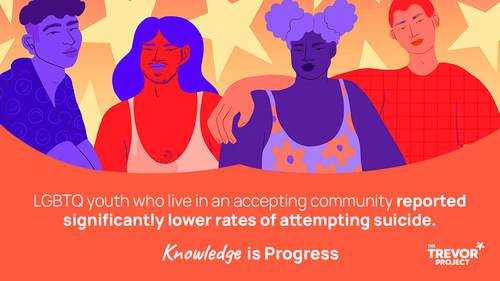
The findings clearly highlighted that LGBTQ+ youth find joy and affirmation from a variety of sources — and report lower rates of attempting suicide when they are supported by family and friends. For example:
- LGBTQ+ youth who felt high social support from their family reported attempting suicide at less than half the rate of those who felt low or moderate social support.
- Specifically, LGBTQ+ youth reported feeling supported by their parent or caregiver when they were welcoming to their LGBTQ+ friends or partners (62%), talked with them respectfully about their LGBTQ+ identity (48%), used their names and pronouns correctly (47%), supported their gender expression (45%), and educated themselves about LGBTQ+ people and issues (35%).
- An overwhelming majority of LGBTQ+ youth reported that they feel good about being LGBTQ+ when they see LGBTQ+ representation in TV, movies, and music, and when they see non-LGBTQ+ celebrities advocate for LGBTQ+ people.
ADDITIONAL KEY FINDINGS
Amid ongoing national debates around LGBTQ+ content in schools and the ability of parents to support their transgender and nonbinary kids, key data from the report underscores the importance of having affirming homes and schools. For example:
- 37% of LGBTQ+ youth found their home to be LGBTQ+-affirming and 55% found their school to be affirming.
- Fewer than 1 in 3 transgender and nonbinary youth found their home to be gender-affirming and a little more than half (51%) found their school to be affirming.
- Across the board, youth who had access to affirming homes and schools reported much lower rates of attempting suicide in the past year.
The report also found that transgender and nonbinary youth, who already report the highest rates of anxiety and depression symptoms, are worried about anti-transgender legislation. For example:
- Among transgender and nonbinary youth, 93% have worried about trans people being denied access to gender-affirming medical care, 91% have worried about trans people being denied access to the bathroom, and 83% have worried about trans people being denied the ability to play sports due to state or local laws.
- Among LGBTQ+ youth, more than three-quarters of transgender and nonbinary youth (78%) reported experiencing symptoms of anxiety compared to nearly two-thirds of cisgender youth (65%).
- Among LGBTQ+ youth, nearly two-thirds of transgender and nonbinary youth (65%) reported experiencing symptoms of depression compared to nearly half of cisgender youth (47%).
According to the report, the pandemic continued to negatively impact LGBTQ+ youth's mental health — and LGBTQ+ youth of color reported higher rates of having a close family member or friend who died due to COVID-19 compared to their White LGBTQ+ peers. For example:
- 56% of LGBTQ+ youth reported that their mental health was poor most of the time or always due to the COVID-19 pandemic, including more than 6 in 10 transgender and nonbinary youth (62%) and nearly half of cisgender youth (49%).
- 18% of LGBTQ+ youth reported that a close family member or friend died due to COVID-19, including 27% of Native/Indigenous youth, 25% of Latinx youth, 24% of Middle Eastern/Northern African youth, 22% of Black youth, 19% of multiracial youth, 16% of Asian American/Pacific Islander youth, and 14% of White youth.
The report represents the experiences of nearly 34,000 LGBTQ+ youth (ages 13-24) across the United States. With 45% of respondents being LGBTQ+ youth of color and 48% being transgender or nonbinary, the survey is one of the most diverse surveys of LGBTQ+ youth ever conducted. Click here to read the full report.