
Uzbekistan to become the latest country to implement anti-LGBTQ+ ‘propaganda’ laws
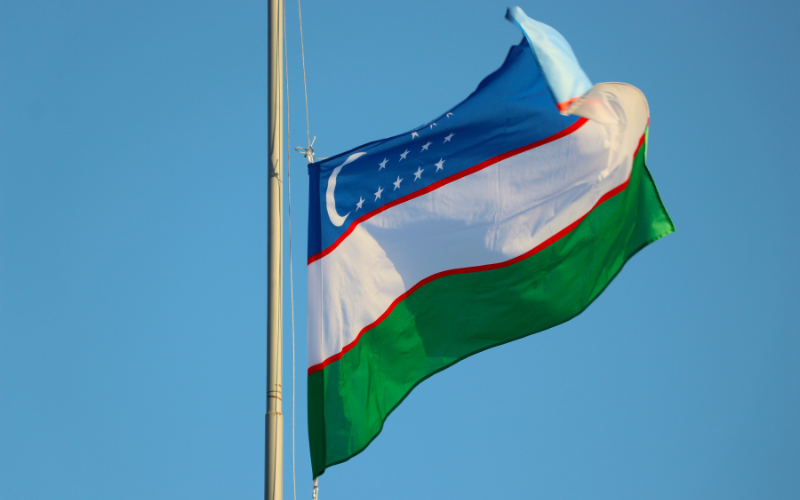
November 15, 2024Uzbekistan is the newest country to propose a new anti-LGBTQ+ propaganda law, joining a group of nations increasingly targeting queer individuals and their communities.
According to ‘MSN’, Alisher Qodirov, leader of the ruling Milliy Tiklanish (National Revival) Party, announced via his Telegram channel that legislation is being drafted to ban LGBTQ+ content, as reported by The Times of Central Asia.
He commented, “The change in the centre of the disease is very good,” while sharing a post from Ivanka Trump, who mentioned that her father, U.S. president-elect Donald Trump, would cut federal funding to schools promoting “inappropriate sexual content” and “transgender ideology.”
Qodirov further stated: “We are working on adopting a law prohibiting any kind of propaganda in this regard.”
In Uzbekistan, male homosexuality is illegal, punishable by up to three years in prison for same-sex acts, and there are no anti-discrimination protections under the law.
However, Uzbekistan is not the first country to suggest such legislation recently. Among the most notable, Russia's anti-LGBTQ+ law was controversial upon its enactment in 2013 and has since been strengthened.
Officially titled For the Purpose of Protecting Children from Information Advocating for a Denial of Traditional Family Values, the law bans any public representation of non-heteronormative behaviour and relationships, leading to increased censorship, arrests, and fines. This was followed by a purge of gay men in Chechnya in 2017, where hundreds were reportedly detained in secret prisons and subjected to inhumane treatment. Chechen leader Ramzan Kadyrov denied any actions, claiming “LGBTQ+ people do not exist in Chechnya.” Accounts from those who fled proved this claim to be false.
Since 2021, the crackdown has intensified. A children's book featuring same-sex parents was published with an 18+ rating, and the Russian media watchdog investigated Duolingo for app stories, and My Little Pony was considered adult content.
Additionally, a print shop allegedly refused to print BTS-themed greeting cards and cafe banners, labelling them as “gay propaganda.” A gay student was expelled for posting makeup tutorials online.
MP Vitaly Milonov infamously suggested that gay individuals should be “sterilised” and housed like cats in shelters, having called actor and author Stephen Fry “sick” in 2012.
When questioned about a war against homosexuals, Milonov remarked: “It is a shame and it is a sin but it is a personal choice. It is not normal but a person cannot be punished in Russia for being homosexual, or to live with a dog, with a horse, with a sheep, whatever.” When pressed on equating being gay with bestiality, he continued: “Homosexuality is one of the sins for us and it means we should not teach our kids that sin is OK,” according to The Independent.
LGBTQ+ venues have been raided and shut down, with staff and patrons arrested by armed police. In 2021, Hungary implemented a law banning discussions of LGBTQ+ identities in schools, with the National Assembly passing it as an amendment to an anti-paedophilia law by a 157-1 vote. This law prohibits the depiction or discussion of diverse gender identities and sexual orientations in schools and bans any LGBTQ+ content in advertising or media viewable by minors.
In August, Bulgaria’s president signed into law a ban on so-called LGBTQ+ propaganda. Rumen Radev, in office since 2017, enacted amendments to the country's 2020 Pre-School and School Education Act, proposed by the pro-Russian Vazrazhdane (Revival) Party, which passed with 159 votes to 22. The amendments ban “propaganda, promotion or incitement in any way, directly or indirectly, in the education system” and define “non-traditional sexual orientation” as differing from the legally established notions in Bulgarian tradition of attraction between opposite sexes.
Protests occurred outside the government building in Sofia, with chants like “Bulgaria is no Russia” and “silence means death.”
Georgia’s controversial ban on queer content, passed in September, grants authorities the power to prohibit Pride events and flag displays. Approved with 84 votes to zero, the law bans gender-affirming care, LGBTQ+ adoption rights, and nullifies same-sex marriages within Georgian territory. The bill was signed into law in October by Shalva Papuashvili, the speaker of parliament, after President Salome Zourabichvili refused to do so.
Papuashvili stated the law did “not reflect current, temporary, changing ideas and ideologies, but is based on common sense, historical experience and centuries-old Christian, Georgian and European values.”