What if AI could help restore the human touch in healthcare?
January 5, 2026Can technology really be the solution to its own riddle? Rahul’s own experience suggests so.
“I work in urgent care and one of my patients is a six-year-old boy,” he said. “He’s usually very active – rides a bike, plays football, all those things that a six-year-old loves to do.”
However, the boy developed a serious limp. He couldn’t play in the way he loved, and yet extensive tests and scans had come back normal.
“That’s frightening for any child,” Rahul said. “There are times when you have to tell a patient that you’re uncertain about the next steps, but you want to be doing that with your full care and attention.”
He entered the full case into ClinicalKey AI — symptoms, scans, and one key detail: the boy’s Indian heritage. The AI flagged a diagnosis others missed. Tuberculosis.
Rahul returned to the radiology team to request a PET scan, which revealed that the boy had quite a few spots of inflammation on the hip. Combined with a special blood test it confirmed active tuberculosis
That boy is now back to his old self, running and jumping and playing as before. Rahul commented, “The AI helped us break through human bias, and gave me time to focus on caring, not just searching.”
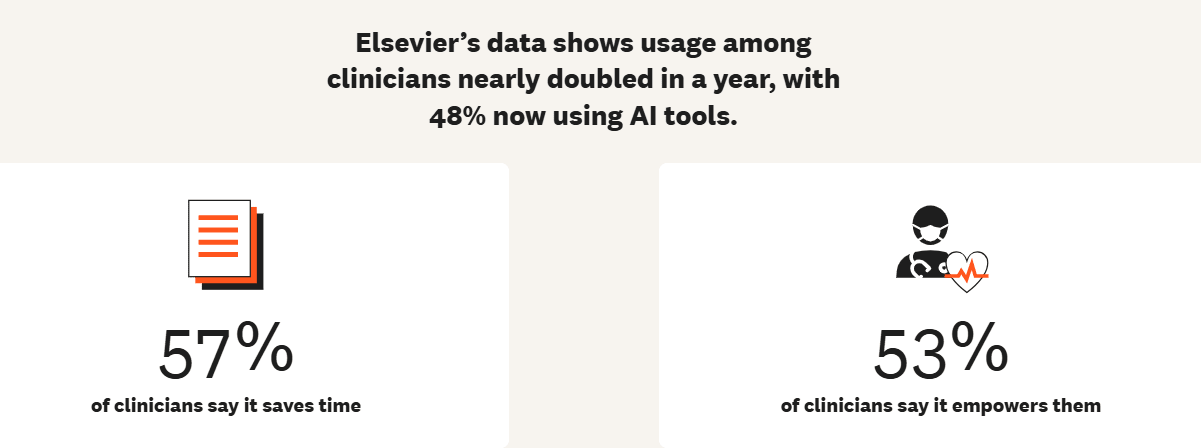
Rahul is among many clinicians using AI to support their work. Dr Russ Cucina Chief Medical Information Officer at University of California, San Francisco, said,
“AI is the first technology I’ve seen in my more than two decades of health IT leadership where the excitement might actually match the potential. It holds real promise for applications in clinical practice, especially in areas that free clinicians from time-consuming tasks.”