
What Is Inclusive Language—Impact on LGBTQ+ Workplaces
February 3, 2026A single word can make someone feel seen or invisible at work. In global organizations, the way we speak often shapes whether LGBTQ+ professionals and their allies experience genuine respect or subtle exclusion. Inclusive language is more than a checklist—it is a dynamic tool for building belonging and recognizing diverse identities. By understanding its practical application and challenging old misconceptions, you can strengthen connection and foster a truly supportive workplace culture.

Defining Inclusive Language and Misconceptions
Inclusive language represents a deliberate communication strategy designed to respect and recognize the dignity of all individuals, particularly those from marginalized communities. The American Psychological Association’s guide emphasizes that inclusive language involves intentionally choosing words that avoid excluding or marginalizing people based on their identity characteristics.
At its core, inclusive language goes beyond simple political correctness. It’s a thoughtful approach to communication that acknowledges the complexity of human identity and seeks to create environments where everyone feels respected and valued. This means moving beyond traditional binary thinking and recognizing the nuanced ways people experience gender, sexuality, race, ability, and other fundamental aspects of personal identity.
Common misconceptions about inclusive language often prevent meaningful progress in workplace communication. Here are some key misunderstandings:
- Inclusive language is NOT about being “perfectly” politically correct
- It’s not about restricting speech, but expanding understanding
- The goal is connection, not criticism
- Language guidelines evolve as societal understanding grows
Inclusive language is a journey of continuous learning and respect, not a destination of absolute perfection.
Practical implementation requires ongoing education and genuine empathy. Organizations must create supportive environments where employees feel comfortable discussing language, asking questions, and growing together. This means providing training, creating safe spaces for dialogue, and demonstrating a commitment to understanding diverse perspectives.
Pro tip: Start by listening to colleagues from different backgrounds and being open to learning about their preferred language and terminology.
Types of Inclusive Language in Practice
The APA’s Inclusive Language Guide offers comprehensive insights into the diverse applications of inclusive communication strategies across professional environments. Inclusive language encompasses multiple nuanced approaches that address various dimensions of human identity and experience.
Key types of inclusive language focus on several critical areas of communication:
- Gender-inclusive language
- Using gender-neutral terms
- Respecting personal pronoun preferences
- Avoiding binary gender assumptions
- Neurodiversity and disability language
- Person-first terminology
- Avoiding medical model descriptions
- Emphasizing individual capabilities
- Racial and ethnic communication
- Acknowledging cultural complexity
- Using preferred cultural identifiers
- Avoiding stereotypical language
In professional settings, implementing inclusive language requires understanding contextual subtleties. This means moving beyond surface-level word replacement and developing genuine cultural competence. Organizations must create frameworks that encourage respectful, nuanced communication that recognizes individual identities.

Here’s a comparison of three common approaches to inclusive language in professional settings:
Inclusive language is not about policing speech, but about creating environments where everyone feels valued and understood.
Transitioning to inclusive language practices demands ongoing education and self-reflection. Workplace training programs should focus on developing empathy, active listening skills, and a deep understanding of how language shapes perceptions and experiences.
Pro tip: Regularly consult with diverse team members and stay updated on evolving language preferences to demonstrate genuine commitment to inclusivity.
Critical Features for Workplace Communication
Workplace inclusive communication strategies require a comprehensive approach that goes beyond simple language modification. Inclusive communication represents a holistic framework designed to create psychological safety, respect individual identities, and foster genuine understanding across diverse professional environments.
Critical features of effective workplace communication include:
- Respectful Language
- Avoiding stereotypes and harmful assumptions
- Recognizing individual identity preferences
- Validating diverse experiences
- Context-Sensitive Communication
- Understanding cultural nuances
- Adapting communication style
- Practicing active listening
- Empowerment-Focused Dialogue
- Centering marginalized voices
- Creating platforms for authentic expression
- Challenging systemic communication barriers
Professional environments must move beyond tokenistic approaches to truly integrate inclusive communication. This means developing organizational cultures that view communication as a dynamic, evolving process of mutual respect and understanding, rather than a static set of rules.
Inclusive communication is not about perfection, but about genuine commitment to understanding and valuing every individual’s unique perspective.
Successful implementation requires ongoing education, self-reflection, and a willingness to learn from mistakes. Organizations should create structured opportunities for dialogue, feedback, and continuous improvement in communication practices.
Pro tip: Develop regular communication audit processes that actively solicit feedback from employees across different identity groups to identify and address potential communication barriers.
Common Pitfalls and Language to Avoid
Language guidelines for workplace communication reveal critical areas where professionals frequently encounter problematic communication patterns. Unconscious bias frequently manifests through seemingly innocuous language choices that can unintentionally marginalize or exclude individuals from diverse backgrounds.
Common language pitfalls to avoid include:
- Gendered Terminology
- Using gender-specific job titles (e.g., “chairman” instead of “chair”)
- Assuming gender pronouns without confirmation
- Using binary gender language
- Ableist Language
- Avoiding terms that define people by their disabilities
- Eliminating derogatory references to mental health
- Using person-first language
- Stereotypical Descriptors
- Removing age-related biased language
- Avoiding ethnic or racial stereotypes
- Preventing assumptions about sexual orientation
Professionals must recognize that language is not static but continuously evolving. What might have been considered acceptable a decade ago could now be recognized as harmful or exclusionary. This requires ongoing education, self-reflection, and a commitment to understanding the nuanced ways language impacts individual experiences.
Language is a powerful tool that can either build bridges or create barriers in workplace communication.
Effective communication demands intentional practice and a willingness to learn from mistakes. Organizations should create safe spaces for employees to provide feedback about language use, helping to build a culture of mutual respect and understanding.
Pro tip: Conduct periodic language awareness workshops and create anonymous feedback channels to help employees understand and improve inclusive communication practices.
Impact on Workplace Culture and Belonging
Workplace communication research demonstrates that inclusive language fundamentally transforms organizational dynamics. Workplace belonging emerges as a critical outcome of intentional, respectful communication strategies that validate individual identities and experiences.
Key impacts of inclusive language on workplace culture include:
- Enhanced Team Dynamics
- Increased psychological safety
- Improved collaboration
- Reduced interpersonal friction
- Organizational Performance
- Higher employee engagement
- Improved creativity and innovation
- Lower turnover rates
- Individual Employee Experience
- Stronger sense of organizational commitment
- Reduced experience of marginalization
- Greater emotional well-being
Professional environments that prioritize inclusive language signal a deeper commitment to equity beyond surface-level diversity initiatives. By recognizing and respecting individual experiences, organizations create cultures where diverse talents can truly flourish and contribute meaningfully.
This table summarizes the impact of inclusive language on critical areas of workplace culture:
Inclusive language transforms workplace culture from a space of mere tolerance to one of genuine belonging and mutual respect.
Successful implementation requires more than policy changes. It demands ongoing education, genuine listening, and a willingness to evolve organizational communication practices continuously. Leaders must model inclusive language, creating cascading cultural transformation throughout the organization.
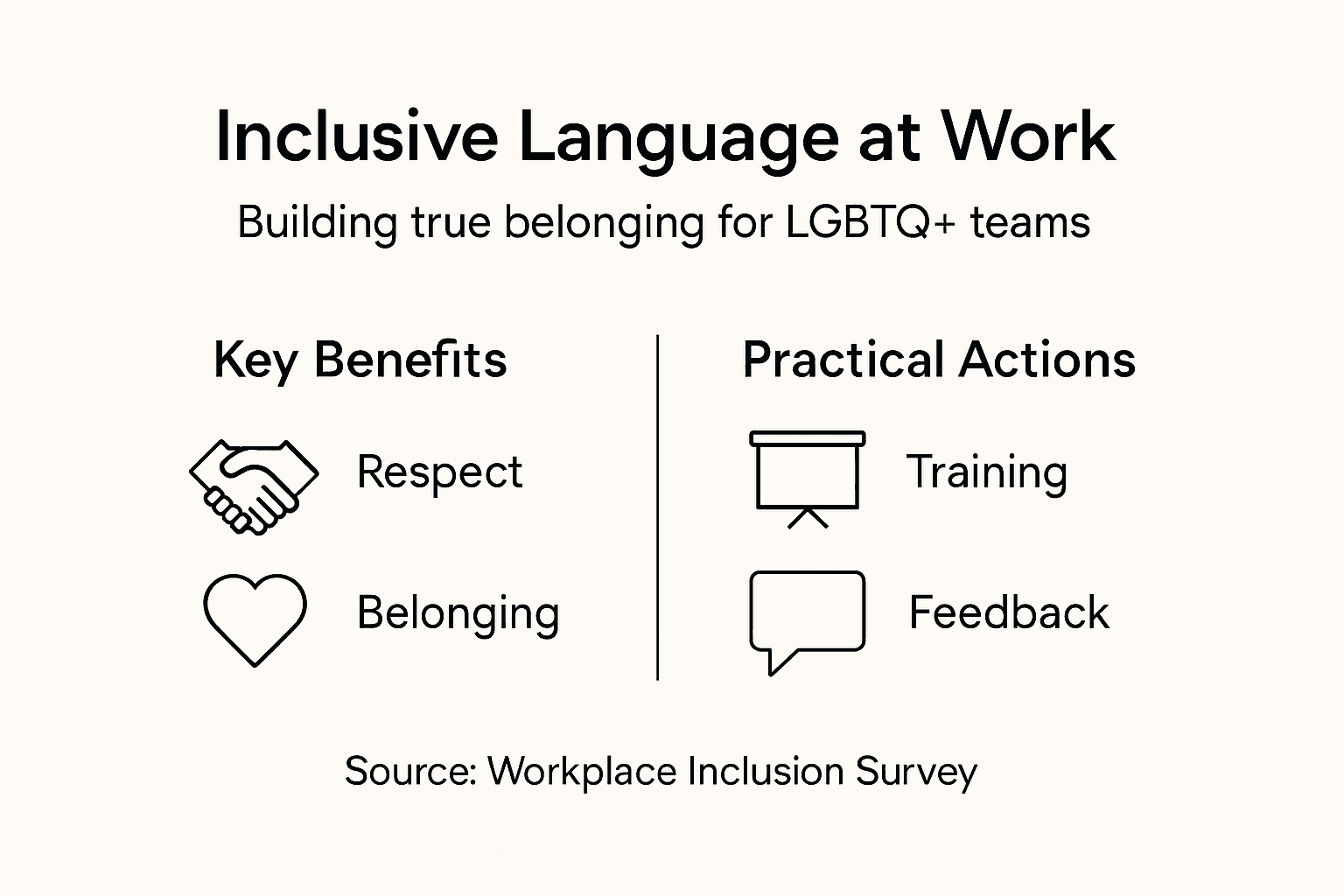
Pro tip: Implement quarterly inclusive language assessments and provide team training that goes beyond theoretical guidelines to include practical communication skill development.
Embrace Inclusive Language to Foster True Workplace Belonging for LGBTQ+ Professionals
Navigating the complexities of inclusive language in LGBTQ+ workplaces can feel overwhelming. This article highlights the vital role of respectful communication in breaking down barriers and building authentic belonging. If you aim to go beyond mere words and create professional environments where every identity is valued and empowered you need actionable solutions that connect you with a like-minded community and inclusive employers.
Discover how myGwork serves as a unique platform designed to support LGBTQ+ individuals in their career journey by providing access to inclusive job opportunities, professional networking, and key resources focused on workplace equality. Join a growing network where language matters, diversity thrives, and your authentic self is celebrated. Take the first step toward advancing your career and shaping workplace culture by visiting myGwork today.
Frequently Asked Questions
What is inclusive language in the workplace?
Inclusive language is a communication strategy that respects and recognizes the dignity of all individuals, particularly marginalized communities. It involves choosing words that avoid excluding or marginalizing people based on their identity characteristics.
Why is inclusive language important for LGBTQ+ individuals at work?
Inclusive language fosters a sense of belonging and psychological safety, enabling LGBTQ+ individuals to feel valued and respected. It improves team dynamics and decreases marginalization, ultimately enhancing workplace culture and performance.
How can organizations implement inclusive language practices?
Organizations can implement inclusive language by providing training, creating safe spaces for dialogue, and developing guidelines that reflect evolving language preferences. Encouraging active listening and ongoing education helps to foster understanding and respect among employees.
What are some common misconceptions about inclusive language?
Common misconceptions include the belief that inclusive language is about being perfectly politically correct, restricting speech, or policing language. In reality, it is about expanding understanding and creating environments where everyone feels connected and valued.