
What Is Neurodiversity – Why It Matters at Work
January 21, 2026Feeling misunderstood by colleagues or boxed in by traditional workplace expectations is a reality many LGBTQ+ tech professionals with neurodiverse identities experience daily. In an industry fueled by innovation, understanding the concept of neurodiversity as natural cognitive variation can transform how diversity is valued and supported. This article unpacks essential terms, common myths, and actionable strategies for creating inclusive work environments that recognize the unique strengths of every individual.

Defining Neurodiversity and Common Myths
Neurodiversity represents a groundbreaking perspective on human cognitive variation, emphasizing that neurological differences are natural expressions of human diversity rather than medical deficits. Originating from disability rights movements, this paradigm challenges traditional deficit-based models of neurological conditions like autism, ADHD, and dyslexia.
The term neurodiversity was first coined in the late 1990s by Judy Singer, an Australian sociologist who sought to reframe neurological differences as variations to be understood and respected, not problems requiring correction. Neurodiversity promotes the concept that human minds naturally operate in multiple distinct ways, with each neurological configuration offering unique strengths and perspectives.
Common myths about neurodiversity persist, often rooted in outdated medical perspectives. These misconceptions include believing that neurodivergent conditions are:- Inherently limiting or defining a person’s potential- Always requiring medical intervention- Representing uniform experiences across all individuals- Indicating lower intelligence or capability
In reality, neurodiversity acknowledges that brain differences represent natural human variation. Some individuals might require specific accommodations, but these differences do not diminish a person’s fundamental worth or potential for meaningful contribution. Each neurological configuration brings distinctive cognitive approaches, problem-solving skills, and innovative thinking patterns.
Pro Tip: Approach neurodiversity with curiosity and openness, recognizing that cognitive differences are strengths, not limitations.
Types of Neurodivergent Conditions at Work
Neurodivergent conditions represent a spectrum of neurological variations that significantly impact how individuals process information, interact with environments, and approach professional challenges. With an estimated 25% of the population experiencing neurodivergent conditions, understanding these variations becomes crucial for creating inclusive workplaces.
The primary neurodivergent conditions encountered in professional settings include:
- Autism Spectrum Disorder (ASD): Characterized by unique communication styles, intense focus, and exceptional pattern recognition skills
- ADHD: Featuring dynamic attention patterns, high creativity, and non-linear problem-solving approaches
- Dyslexia: Involving alternative information processing, strong visual-spatial reasoning, and innovative thinking strategies
- Dyspraxia: Presenting challenges with motor coordination while often demonstrating excellent strategic planning abilities
- Tourette Syndrome: Involving involuntary vocal or motor tics, frequently accompanied by high intellectual capabilities
Professional environments offer diverse opportunities for neurodivergent individuals to leverage their distinctive cognitive strengths. Each condition brings unique perspectives that can drive innovation, enhance team problem-solving, and create more comprehensive workplace solutions. Recognizing these differences as valuable assets rather than limitations is key to developing truly inclusive professional environments.
Understanding neurodivergent conditions requires acknowledging individual variations within each diagnosis. No two neurodivergent professionals experience their condition identically, making personalized support and flexible workplace accommodations essential for enabling their success.
Here’s how common neurodivergent conditions differ in strengths and workplace support needs:
Pro Tip: Request individualized conversations with neurodivergent team members to understand their specific strengths and preferred work adaptations.
Key Strengths and Challenges in Tech Workplaces
Neurodivergent professionals bring extraordinary capabilities to technology environments, offering unique problem-solving approaches and innovative perspectives that can transform traditional workplace dynamics. Their distinctive cognitive styles enable them to approach complex technological challenges with remarkable depth and creativity.
Key strengths of neurodivergent tech professionals include:
- Exceptional Pattern Recognition: Ability to identify intricate details and systemic connections
- Intense Focus: Capacity for deep concentration on complex technical problems
- Innovative Problem Solving: Non-linear thinking that generates breakthrough solutions
- Systematic Approach: Methodical analysis and consistent performance in structured environments
- Specialized Technical Skills: Often demonstrating extraordinary expertise in specific technological domains
Engineering and technology sectors benefit significantly from neurodivergent talents, yet workplace challenges persist. These challenges include sensory sensitivities in open-plan offices, communication barriers, unstructured social interactions, and recruitment processes that fail to recognize alternative cognitive strengths. Successful integration requires intentional workplace adaptations that leverage individual neurodivergent professionals’ unique capabilities.

Addressing these challenges demands a proactive approach from tech organizations. This involves redesigning recruitment strategies, providing sensory-friendly workspaces, offering communication support, and creating mentorship programs that understand and celebrate neurodivergent professionals’ distinctive contributions.
Pro Tip: Develop personalized workplace accommodation strategies that highlight individual neurodivergent professionals’ specific strengths and preferred work methods.
How Neurodiversity Drives Inclusion and Innovation
Neurodiversity transforms organizational culture by reimagining cognitive differences as powerful strategic assets rather than limitations. This paradigm shift challenges traditional workplace models, encouraging companies to develop environments that genuinely celebrate and leverage diverse cognitive approaches.
Key innovation drivers from neurodiversity include:
- Unique Problem-Solving Perspectives: Breaking conventional thinking patterns
- Specialized Skill Sets: Deep expertise in specific technological domains
- Creative Thinking: Non-linear approaches to complex challenges
- Detailed Analytical Capabilities: Exceptional pattern recognition and systemic understanding
- Hyperfocus: Ability to engage deeply with intricate technical problems
Inclusive workplaces recognize neurodiversity as a competitive advantage that expands talent pools and generates innovative solutions. By creating adaptive environments that accommodate different cognitive styles, organizations can unlock extraordinary potential. This approach goes beyond traditional accommodation strategies, treating neurodivergent professionals as essential contributors whose unique perspectives drive meaningful technological and organizational advancement.
Successful neurodiversity integration requires intentional cultural transformation. This involves redesigning recruitment processes, developing supportive management strategies, creating sensory-friendly workspaces, and establishing mentorship programs that understand and celebrate cognitive differences as fundamental strengths.
The table below summarizes strategies organizations can use to promote neuroinclusion:
Pro Tip: Develop systematic approaches to identify and amplify individual neurodivergent professionals’ unique cognitive strengths within your organizational framework.
Workplace Rights and Advocacy for Neurodivergent Staff
Workplace rights for neurodivergent professionals represent a critical frontier in developing truly inclusive professional environments. These rights extend beyond basic legal protections, encompassing systemic changes that recognize neurodivergent individuals as valuable contributors with unique perspectives and capabilities.
Key advocacy priorities include:
- Legal Protections: Ensuring protection from discrimination
- Reasonable Accommodations: Developing flexible workplace adaptations
- Disclosure Rights: Creating safe environments for voluntary neurodivergent identity disclosure
- Career Development: Providing equitable advancement opportunities
- Cultural Recognition: Challenging stigmatizing workplace narratives
Workplace discrimination remains a significant challenge for neurodivergent professionals. Research indicates that approximately 20% of neurodivergent employees have experienced direct harassment or systemic discrimination, highlighting the urgent need for comprehensive policy reforms and cultural transformation in professional settings.
Advocacy efforts must focus on creating holistic support systems that go beyond legal compliance. This involves developing organizational cultures that actively celebrate cognitive diversity, provide meaningful accommodations, and recognize neurodivergent talents as essential contributions to workplace innovation and effectiveness.
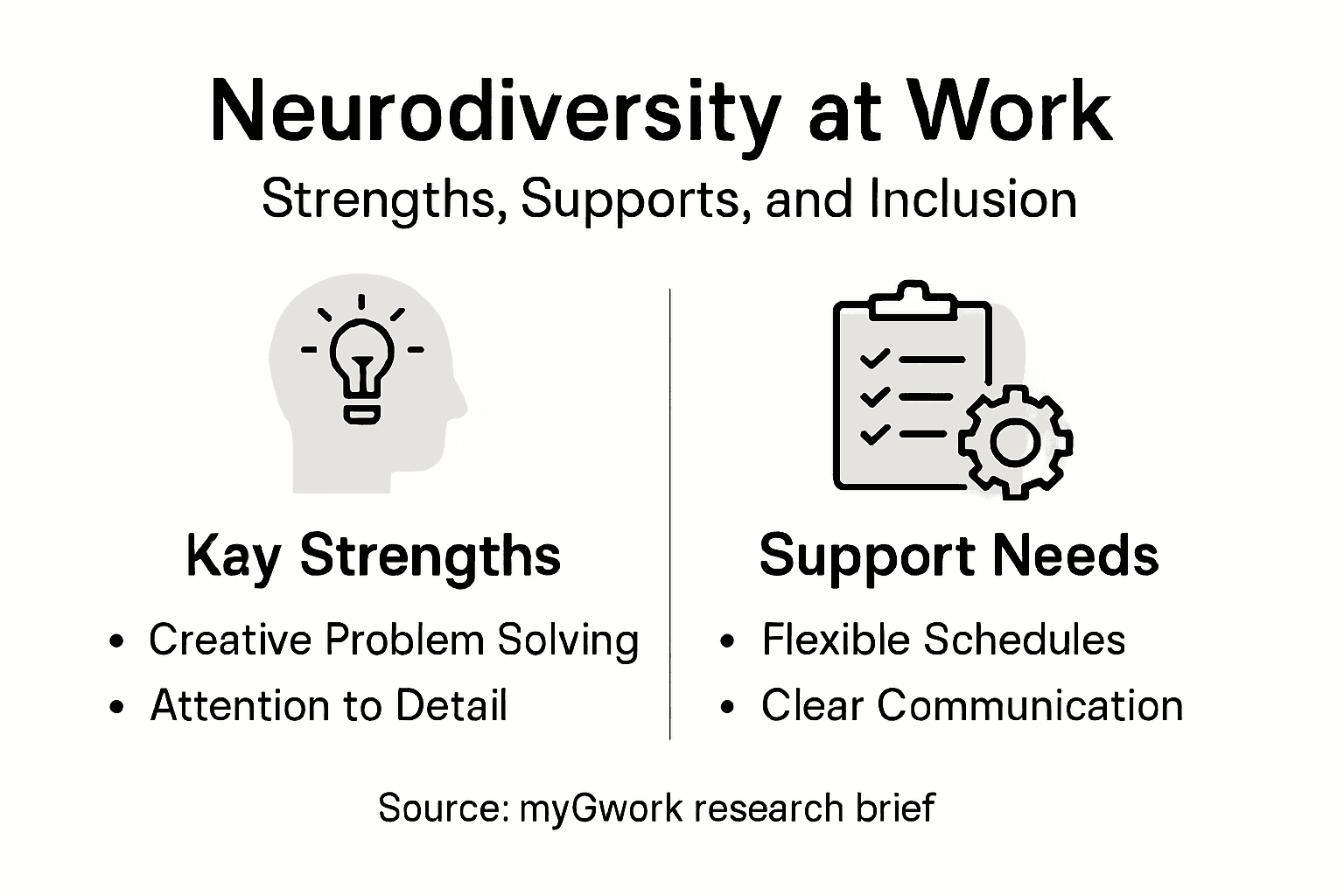
Pro Tip: Document and communicate your specific workplace accommodation needs proactively and professionally, focusing on how these adaptations will enhance your overall work performance.
Empower Neurodiversity and LGBTQ+ Inclusion in Your Career Today
Navigating the workplace challenges associated with neurodiversity requires not only understanding unique cognitive strengths but also finding a community that values diversity in all its forms. This article highlights the importance of recognizing neurodivergent talents and creating supportive environments that celebrate these differences. At the same time, LGBTQ+ professionals often face their own barriers to inclusion and acceptance. Combining these perspectives can transform how organizations promote true inclusion.
mygwork.com is a dedicated platform that embraces this vision by connecting LGBTQ+ individuals with inclusive employers who value diversity in every respect. Whether you identify as neurodivergent, LGBTQ+, or both, the platform empowers you to showcase your unique abilities, find flexible roles that respect your needs, and join a community committed to workplace equality.
Take charge of your professional journey now by joining mygwork.com. Explore jobs, network with like-minded professionals, and access resources that uplift LGBTQ+ and neurodiverse talents alike. Your distinctive perspective is a powerful asset. Connect today and help shape a more inclusive future.
Frequently Asked Questions
What is neurodiversity?
Neurodiversity refers to the idea that neurological differences, such as autism, ADHD, and dyslexia, are natural human variations rather than deficits or disorders. This perspective emphasizes the strengths and unique contributions of neurodivergent individuals.
Why is neurodiversity important in the workplace?
Neurodiversity is important in the workplace as it fosters innovation, enhances problem-solving, and expands talent pools. By embracing diverse cognitive styles, organizations can create more inclusive environments that leverage the distinct strengths of neurodivergent professionals.
What are common neurodivergent conditions found in professional settings?
Common neurodivergent conditions in the workplace include Autism Spectrum Disorder (ASD), ADHD, dyslexia, dyspraxia, and Tourette Syndrome. Each condition presents unique strengths and challenges that can influence workplace dynamics.
How can organizations support neurodivergent employees?
Organizations can support neurodivergent employees by providing reasonable accommodations, fostering inclusive workplace cultures, offering flexible work arrangements, and creating mentorship programs tailored to their unique strengths and needs.