
What Is Workplace Equity and Its Real Impact
January 12, 2026Most American organizations still fall short of true workplace equity, even as over 60 percent of LGBTQ+ employees report barriers to career advancement. For mid-level managers working across multinational teams, understanding what equity really means is not just corporate jargon—it is vital for attracting and empowering diverse talent. This article explains how managers can recognize common myths, build authentic inclusion strategies, and create real opportunities for LGBTQ+ professionals to thrive.

Workplace Equity Defined and Common Myths
Workplace equity goes far beyond simple diversity metrics. At its core, workplace equity means creating an environment where every professional can access meaningful opportunities, regardless of their background, identity, or personal circumstances. This concept is more nuanced than treating everyone identically - it’s about providing targeted support that acknowledges individual barriers and systemic challenges.
Contrary to popular misconceptions, workplace equity isn’t just about race and gender representation. It’s a comprehensive approach that examines how organizational structures, policies, and cultural norms can unintentionally disadvantage certain groups. For LGBTQ+ professionals, this might mean creating promotion pathways that recognize unique career obstacles, developing mentorship programs specifically designed to support underrepresented talent, and implementing transparent evaluation processes that mitigate unconscious bias.
Some persistent myths undermine genuine equity efforts. Many organizations mistakenly believe that simply increasing demographic diversity automatically creates an inclusive environment. However, true equity requires active, intentional strategies that dismantle systemic barriers. This means going beyond numeric representation to create genuine opportunities for advancement, professional development, and meaningful organizational influence for marginalized professionals.
Pro tip: Conduct a comprehensive equity audit of your organization’s policies, tracking not just diversity numbers but actual career progression and opportunities for underrepresented professionals.
The table below compares typical myths about workplace equity with the actual realities:
Types of Equity Within the Workplace
Workplace equity is a multifaceted concept that extends far beyond traditional diversity metrics. Comprehensive equity frameworks recognize that employees have unique needs, circumstances, and systemic challenges that require targeted, nuanced approaches. Understanding the different types of equity helps organizations create more meaningful and transformative inclusion strategies.
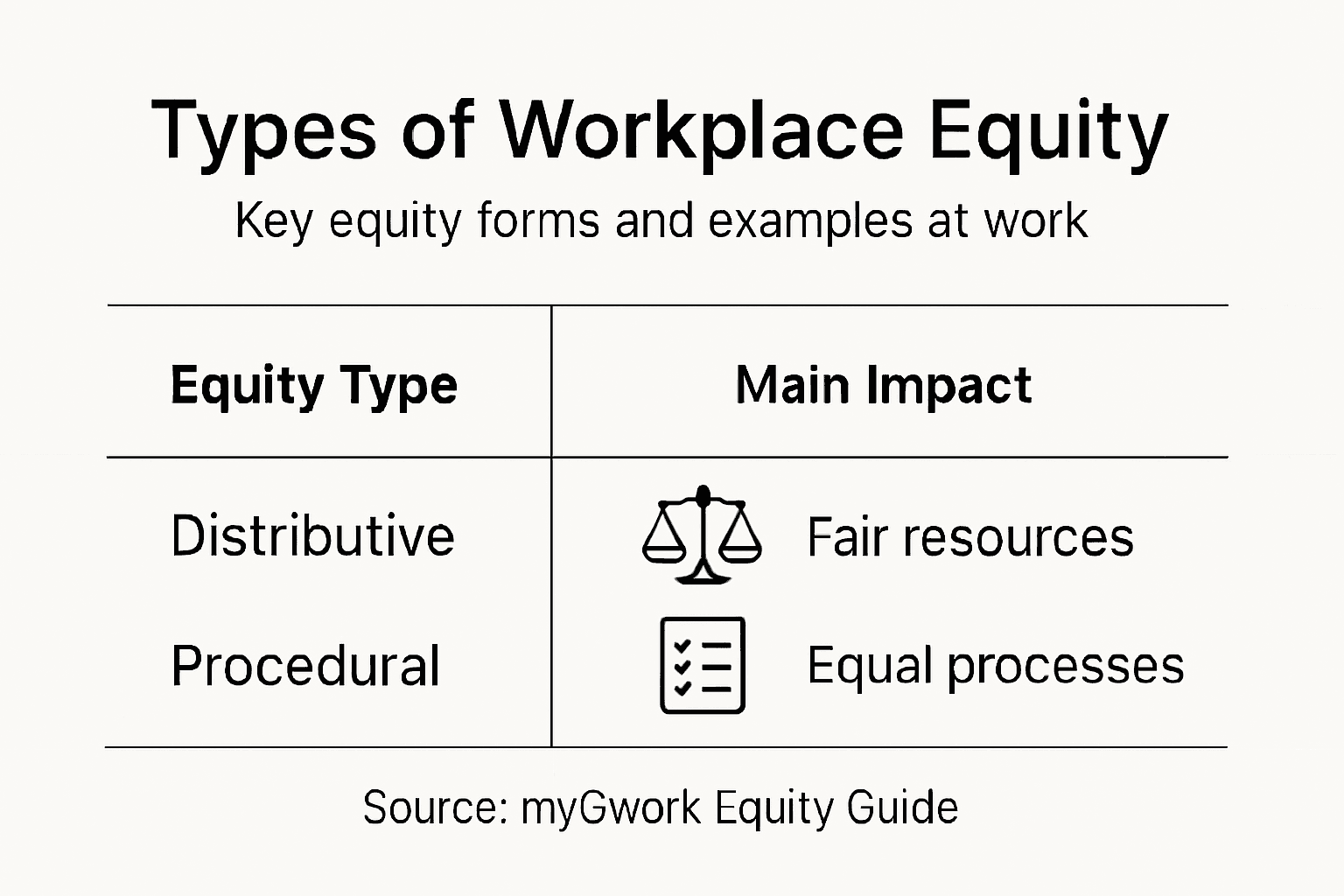
Three critical dimensions of workplace equity emerge as particularly significant for LGBTQ+ professionals. Distributive Equity focuses on fair allocation of resources, ensuring that opportunities, training budgets, professional development funds, and career advancement pathways are accessible equitably. Procedural Equity examines the underlying processes and systems that might inadvertently create barriers, such as recruitment practices, promotion criteria, and performance evaluation methods that may disadvantage certain groups. Interactional Equity addresses the quality of interpersonal interactions, emphasizing respectful communication, inclusive leadership behaviors, and creating psychological safety for marginalized professionals.
Workplace equity approaches go beyond mere representation. For LGBTQ+ professionals, this means creating intentional support structures that recognize unique challenges. This could involve mentorship programs specifically designed for queer professionals, leadership development initiatives that address systemic barriers, and creating organizational cultures that actively celebrate diversity while providing meaningful pathways for career progression.
Pro tip: Develop a comprehensive equity dashboard that tracks not just diversity numbers, but also measures progression, satisfaction, and retention rates across different professional identity groups.
Here is a summary of the key types of workplace equity and their organizational impacts:
How Workplace Equity Works in Practice
Practical workplace equity implementation requires a strategic, systematic approach that goes beyond surface-level diversity initiatives. Organizations must develop comprehensive frameworks that address systemic barriers and create meaningful opportunities for all professionals, particularly those from historically marginalized communities like the LGBTQ+ workforce.

The process typically involves a five-step approach that transforms organizational culture. First, leaders must conduct a thorough audit of existing policies, identifying potential barriers in recruitment, promotion, compensation, and professional development. This means critically examining job descriptions, evaluation criteria, and advancement pathways to eliminate hidden biases. For LGBTQ+ professionals, this might include reviewing policies around parental leave, healthcare benefits, professional networking opportunities, and leadership development programs that traditionally have overlooked queer talent.
Cultural competency plays a crucial role in equity implementation. Workplace transformation strategies emphasize creating environments of psychological safety, where employees feel empowered to bring their authentic selves to work. This involves ongoing training that develops empathy, challenges unconscious biases, and creates inclusive communication practices. Effective equity work requires continuous learning, transparent feedback mechanisms, and a commitment to dismantling systemic obstacles that have historically prevented marginalized professionals from achieving their full potential.
Pro tip: Implement regular equity audits that go beyond demographic tracking, using qualitative and quantitative data to measure actual career progression and workplace experience for underrepresented professionals.
Legal Frameworks and Global Standards
International Labour Standards form the cornerstone of global workplace equity, providing a comprehensive legal framework that protects workers’ rights across diverse cultural and organizational contexts. These standards go beyond simple anti-discrimination policies, establishing fundamental principles that ensure fair treatment, equal opportunities, and dignity for all professionals, regardless of their gender identity, sexual orientation, or personal characteristics.
For LGBTQ+ professionals, these legal frameworks are particularly critical. They address systemic barriers by requiring organizations to implement non-discriminatory practices in recruitment, compensation, promotion, and workplace culture. This means creating legal protections that explicitly recognize sexual orientation and gender identity as protected characteristics, ensuring that queer professionals can pursue their careers without fear of marginalization or unfair treatment.
Global Diversity and Inclusion Benchmarks provide organizations with comprehensive standards that evolve with changing social landscapes. These benchmarks go beyond legal minimums, encouraging proactive approaches to equity that involve continuous assessment, cultural competency training, and meaningful structural changes. For multinational corporations, this means developing policies that are both locally sensitive and globally consistent, recognizing the nuanced ways workplace discrimination can manifest across different cultural contexts.
Pro tip: Develop a comprehensive equity compliance checklist that not only meets legal requirements but also anticipates emerging global standards and best practices in workplace inclusion.
Manager Responsibilities and Potential Pitfalls
Managerial equity responsibilities extend far beyond traditional supervision, requiring a proactive approach to creating inclusive workplace environments. Managers serve as critical architects of organizational culture, with the power to either perpetuate systemic barriers or actively dismantle them through intentional leadership practices that recognize and support diverse professional experiences.
Understanding unconscious bias becomes paramount in equitable management. This means critically examining decision-making processes in recruitment, performance evaluations, task allocation, and career development opportunities. For LGBTQ+ professionals, this involves creating transparent promotion pathways, ensuring equal access to mentorship, and developing evaluation criteria that do not inadvertently disadvantage individuals based on gender identity or sexual orientation. Workload distribution strategies require careful monitoring to prevent overburdening marginalized team members or creating environments where certain professionals feel pressured to overcompensate to prove their value.
Potential pitfalls for managers include passive inclusivity, where well-intentioned policies fail to create meaningful change. This requires moving beyond surface-level diversity metrics to develop genuine understanding of individual team members’ unique challenges and strengths. Effective managers must cultivate psychological safety, create open communication channels, and demonstrate a genuine commitment to understanding and addressing systemic workplace inequities through continuous learning and self-reflection.
Pro tip: Conduct regular anonymous team surveys that measure not just job satisfaction, but the actual lived experience of equity and inclusion within your specific work environment.
Drive Genuine Workplace Equity with Support from myGwork
The article highlights the deep challenges of achieving true workplace equity, especially for LGBTQ+ professionals facing systemic barriers that traditional diversity efforts often overlook. Key pain points like lack of transparent promotion criteria, limited mentorship opportunities, and the need for psychological safety demand more than surface-level solutions. Understanding concepts like distributive, procedural, and interactional equity is just the start organizations need targeted, meaningful strategies that empower marginalized talent and promote real career progression.
Take control of your career and find an inclusive environment where equitable treatment and authentic community are foundational. myGwork.com connects LGBTQ+ professionals with employers who are committed to fostering leadership growth, clear advancement pathways, and equitable workplaces. Explore tailored job opportunities, join a thriving network of peers and allies, and access resources designed to break down systemic obstacles. Begin your journey to a workplace where you are seen and valued at myGwork. Visit myGwork today to discover inclusive roles and build connections that support your professional success.
Frequently Asked Questions
What is workplace equity?
Workplace equity refers to creating an environment where every professional can access meaningful opportunities, regardless of their background or identity. It involves addressing systemic barriers and providing targeted support to ensure that all employees have equitable access to resources and advancement.
How does workplace equity impact employees?
Workplace equity positively impacts employees by fostering an inclusive environment where all individuals can thrive. By addressing unique challenges faced by marginalized groups, organizations can enhance employee satisfaction, retention, and overall workplace culture.
What are the different types of workplace equity?
The three critical types of workplace equity are distributive equity, which focuses on fair allocation of resources; procedural equity, which examines fair processes and systems; and interactional equity, which emphasizes respectful workplace behaviors and communication.
How can organizations implement workplace equity effectively?
Organizations can implement workplace equity by conducting comprehensive audits of existing policies, promoting cultural competency, and establishing intentional support structures. This involves ongoing training, transparent feedback mechanisms, and a commitment to dismantling systemic obstacles.