Where do I fit?
October 15, 2026By Cassandra Corbet, Global Wellbeing Director, Culture and People Experience at Novartis
Where do I fit? It is a question I asked myself often throughout my childhood and adolescence. Sometimes I wondered about it out loud; sometimes only in my head, because I was afraid of what not knowing might mean. In my most honest moments, at 42, I still ask it.
For me, that question of belonging was rooted in race: what Blackness meant to me, and what others might assume if I embraced it. Growing up there was a stereotype that defined what my Blackness could or would mean for me, and it scared me. So I devoted years of my life to distancing myself from Blackness, believing that doing so would protect me from the stereotype. The media told me what I was allowed to like. The news suggested where my life might lead. School showed me where people like me belonged in history. Everywhere I looked, Blackness seemed to come with boundaries. So I tried to place myself beyond them. I distanced myself from Black culture, believing that if I rejected the label, I could escape the assumptions attached to it.
It is a painful paradox: I hid from who I was in an attempt to control how I would be seen. I was trying not to fit a mould that society had already built for me, a mould based on the idea that Blackness was singular. And that is how stereotypes sustain wider inequalities, they do not simply describe us; they quietly teach us which parts of ourselves are safe to show.
What I could not understand as a teenager was that I had confused Blackness with the stereotypes imposed upon it. I thought I was rejecting other people’s limitations. In reality, I was allowing those stereotypes to shape my choices.
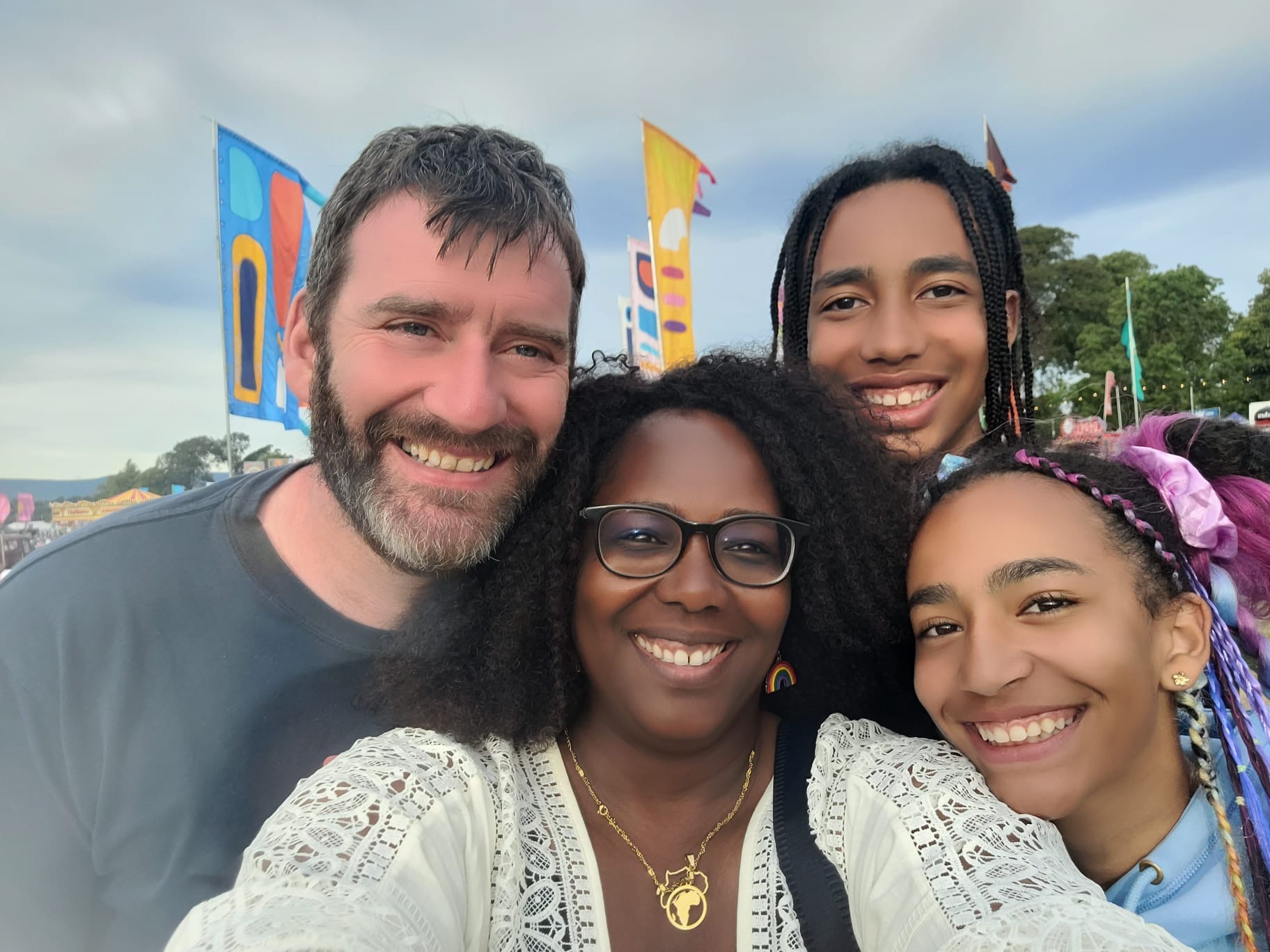
Love became one of the places where that belief began to change. The man I married saw and celebrated the parts of me I had spent years trying to make smaller. Our mixed-race marriage did not suddenly answer the question of where I belonged, but it gave me an experience of being loved without editing myself. Over time, that began to challenge the way I saw myself too.
Starting a family turned that private challenge into something more urgent. I stopped asking, “How do I protect myself from being judged?” and began asking, “What will my children learn if they see me hiding parts of myself?” How could I teach them curiosity, pride and self-love if I was still treating parts of my own identity as something to minimize?
The irony about all of this is that embracing my Blackness did not make my world smaller. It made it bigger. The boundaries I had spent years running from were never created by Blackness itself. They were created by other people's assumptions about Blackness. Once I understood that, I could explore my heritage, culture and identity on my own terms.
Learning to free myself from assumptions about my heritage and cultural identity changed how I respond when others are constrained by the widely held assumptions about their identity. That is why allyship with the LGBTQI+ community matters so deeply to me. Race, sexual orientation and gender identity are distinct, and I do not equate those experiences. But I recognise the harm that occurs when someone else decides who you are, where you belong or how much of yourself is acceptable. The more comfortable I became in my own identity, the more committed I became to helping create spaces where other people do not have to edit theirs. For me, allyship means listening without assuming, challenging the boundaries placed around others and using my voice to make belonging more possible.
At 42, I still occasionally ask myself, “Where do I fit?” The difference now is that I no longer believe there is a single answer. I fit in many places. I am Black, a mother, a wife, a colleague and an ally. None of these identities diminishes the others; together, they tell the story of who I am. Belonging is not about finding a mould that fits, it is about having the courage to stop shrinking ourselves to fit moulds that were never made to uplift us.