
Why address LGBTQ+ mental health at work
December 10, 2025A staggering number of American professionals identify as LGBTQ+, yet over half report experiencing workplace discrimination that harms their mental health. These challenges are rarely due to individual circumstances but are often tied to systemic barriers and deep-rooted biases. Tackling these issues means understanding the pressures faced by queer workers and discovering practical ways to foster workplaces where everyone can thrive without fear or stigma.

Key Takeaways
LGBTQ+ Mental Health: Core Concepts and Issues
The mental health challenges faced by LGBTQ+ professionals are deeply rooted in systemic discrimination and social dynamics that extend far beyond personal experiences. Specific research reveals profound psychological impacts demonstrating how societal marginalization creates complex mental health disparities within queer communities.
Unique stressors contribute significantly to mental health challenges. Self-stigma, concealment, and anticipated rejection emerge as critical psychological barriers that directly impact workplace well-being. Minority stress theory suggests that chronic social discrimination creates cumulative psychological strain which manifests through increased rates of anxiety, depression, and potential suicidality.
These mental health challenges are not simply individual experiences but systemic issues requiring comprehensive workplace interventions. Key contributing factors include:
- Persistent social marginalization
- Heteronormative workplace expectations
- Limited representation in leadership roles
- Ongoing discrimination and microaggressions
- Psychological impact of identity concealment
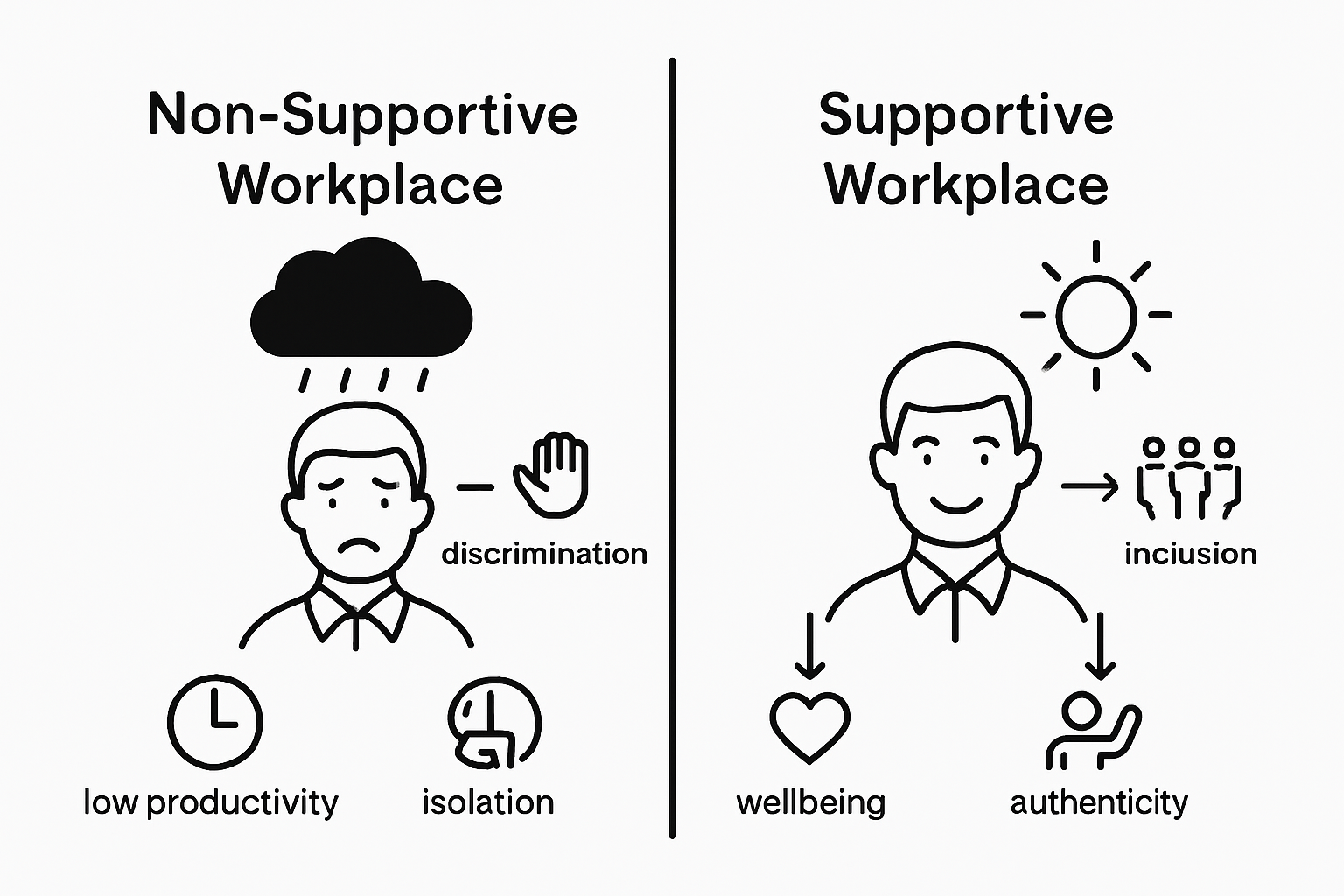
Workplace mental health strategies must move beyond traditional support models, recognizing the nuanced experiences of LGBTQ+ professionals. This requires creating environments of genuine psychological safety, where individuals can authentically express their identities without fear of professional repercussions or social stigma.
Understanding these core concepts is crucial for organizations committed to meaningful diversity and inclusion. By acknowledging the complex mental health landscape of LGBTQ+ professionals, employers can develop targeted support systems that address systemic challenges and promote holistic workplace wellness.
Unique Stressors for LGBTQ+ Professionals
LGBTQ+ professionals navigate a complex landscape of workplace challenges that extend far beyond typical career obstacles. Systematic research reveals significant mental health disparities demonstrating elevated risks of depression, anxiety, and suicidality compared to non-LGBTQ+ workers.
In specific professional domains like technology, these challenges become even more pronounced. Workplace invisibility, systemic prejudice, and persistent discrimination create psychological barriers that impact professional development and personal well-being. Research among software engineering professionals highlights how team dynamics and organizational culture directly influence queer worker experiences, revealing the intricate relationship between workplace environment and mental health.
The unique stressors LGBTQ+ professionals encounter can be categorized into several critical dimensions:
- Identity concealment and psychological taxation
- Continuous threat of professional marginalization
- Higher likelihood of experiencing microaggressions
- Unequal opportunities for career advancement
- Emotional labor of educating colleagues about queer experiences
These stressors are not merely abstract concepts but tangible experiences that significantly impact professional performance and personal resilience. LGBTQ+ workers often expend considerable mental and emotional energy navigating workplace dynamics, which can lead to increased stress, reduced job satisfaction, and potential burnout.
Recognizing and addressing these unique stressors requires a holistic approach that goes beyond traditional diversity training. Organizations must create inclusive environments that actively validate diverse experiences, provide robust support systems, and dismantle systemic barriers preventing LGBTQ+ professionals from achieving their full potential.
Workplace Discrimination and Its Effects
Comprehensive research reveals the profound impact of workplace discrimination on LGBTQ+ professionals, demonstrating a clear correlation between discriminatory practices and significant mental health challenges. The systematic review underscores how institutional and interpersonal biases create a toxic environment that extends far beyond isolated incidents of prejudice.

Discrimination manifests through multiple complex mechanisms, creating psychological barriers that undermine professional growth and personal well-being. These experiences are particularly acute in certain professional sectors, with studies highlighting specific challenges faced by marginalized groups in academic and professional environments.
The primary forms of workplace discrimination impacting LGBTQ+ professionals include:
- Verbal harassment and microaggressions
- Exclusion from professional networks
- Unequal promotion and advancement opportunities
- Differential treatment in performance evaluations
- Systematic erasure of queer identities
The cumulative effect of these discriminatory practices extends beyond immediate workplace interactions. LGBTQ+ professionals often experience heightened stress, reduced job satisfaction, and increased likelihood of career interruptions. This persistent psychological strain can lead to significant long-term mental health consequences, including:
- Increased anxiety and depression
- Lower self-esteem and professional confidence
- Chronic stress and potential burnout
- Reduced career trajectory and economic opportunities
Addressing workplace discrimination requires a multifaceted approach that goes beyond surface-level diversity training. Organizations must develop comprehensive strategies that actively dismantle systemic barriers, create genuinely inclusive environments, and provide meaningful support for LGBTQ+ professionals navigating complex workplace dynamics.
Legal Protections and Employer Responsibilities
Institutional research highlights the critical importance of proactive organizational efforts in establishing comprehensive legal protections for LGBTQ+ professionals. These protections extend beyond mere compliance, representing a fundamental commitment to creating equitable and supportive workplace environments.
Employers bear significant legal and ethical responsibilities in protecting LGBTQ+ workers from discrimination. Comprehensive interventions, similar to those developed in educational settings, demonstrate the necessity of systematic approach to inclusivity, which includes staff training, visual affirmation, and explicit inclusive policy frameworks.
Key legal responsibilities for employers include:
- Implementing non-discrimination policies
- Providing equal employment opportunities
- Establishing clear anti-harassment protocols
- Creating confidential reporting mechanisms
- Ensuring workplace safety for all gender expressions
Effective legal protection requires more than passive policies. Organizations must actively cultivate environments where LGBTQ+ professionals can thrive without fear of marginalization. This involves developing robust support systems, promoting cultural competence, and creating transparent mechanisms for addressing potential discriminatory practices.
The most progressive organizations view legal protections as more than regulatory compliance. They understand that true workplace equality demands ongoing commitment, continuous education, and a genuine culture of respect that recognizes the unique experiences and contributions of LGBTQ+ professionals. By prioritizing comprehensive legal protections, employers not only mitigate potential legal risks but also create more innovative, diverse, and dynamic workplace ecosystems.
Benefits of Supportive Mental Health Policies
Research demonstrates the profound importance of holistic mental health approaches that center LGBTQ+ experiences and acknowledge the complex intersectional nature of individual identities. Supportive mental health policies represent a transformative strategy for addressing systemic challenges faced by queer professionals.
These policies go beyond traditional workplace wellness programs, creating comprehensive support frameworks that recognize the unique psychological experiences of LGBTQ+ individuals. Interventional studies highlight the critical role of affirmative visual displays and inclusive policy structures in preventing and reducing mental health challenges within marginalized communities.
Key benefits of robust mental health policies include:
- Reduced workplace stress and anxiety
- Enhanced professional psychological safety
- Improved employee retention and satisfaction
- More authentic workplace identity expression
- Increased organizational trust and transparency
Supporting mental health requires a nuanced, person-centered approach that moves beyond generic wellness strategies. Organizations must develop policies that not only address immediate psychological needs but also create systemic pathways for long-term professional and personal well-being.
The most effective mental health policies are those that empower LGBTQ+ professionals to bring their full, authentic selves to work. By prioritizing psychological support, organizations can transform workplace culture, drive innovation, and create environments where diverse talents can truly flourish. These policies are not just compassionate interventions but strategic investments in human potential and organizational excellence.
Support LGBTQ+ Mental Health by Connecting with a Community That Understands
The article highlights the critical challenges LGBTQ+ professionals face including self-stigma, workplace discrimination, and the psychological toll of identity concealment. These stressors create barriers to career growth and well-being that require more than traditional solutions. If you are seeking a supportive environment where your authentic self is valued and mental health is prioritized, the journey begins with connection and community.
Discover empowering opportunities through mygwork.com the leading platform dedicated to LGBTQ+ inclusion in the workforce. Here you can build your professional profile, find jobs that embrace diversity, and join a network that actively champions mental health support and workplace equality. Take the step now to join a community that understands your unique experiences and is committed to fostering genuine psychological safety. Visit mygwork.com and start turning challenges into career-strengthening opportunities today.
Frequently Asked Questions
What are the unique mental health challenges faced by LGBTQ+ professionals?
LGBTQ+ professionals often encounter unique mental health challenges such as self-stigma, concealment of their identities, anticipated rejection, and microaggressions, which are compounded by systemic discrimination.
How does workplace discrimination affect LGBTQ+ mental health?
Workplace discrimination can lead to increased rates of anxiety, depression, and stress among LGBTQ+ professionals, adversely impacting their job satisfaction, self-esteem, and overall mental well-being.
Why is it important for organizations to address LGBTQ+ mental health?
Addressing LGBTQ+ mental health is essential for creating inclusive workplaces that support diverse identities, enhance employee well-being, and improve overall organizational performance by fostering a culture of respect and belonging.
What strategies can organizations implement to support LGBTQ+ mental health?
Organizations can support LGBTQ+ mental health by developing comprehensive policies that focus on inclusivity, providing training, creating safe reporting mechanisms, and promoting psychological safety, ensuring all employees can express their identities authentically.