
Why mentor LGBTQ+ Employees: a complete guide
December 4, 2025
Nearly half of LGBTQ+ employees hide part of their identity at work because they fear discrimination. This silence impacts well-being and limits career potential. Effective mentoring changes that story by offering support, guidance, and representation that many professionals are missing. Strong mentorship not only helps LGBTQ+ individuals grow but also makes workplaces more inclusive for everyone.
The Role Of Mentoring LGBTQ+ Employees
Mentoring plays a transformative role in supporting LGBTQ+ professionals by creating intentional pathways for career development, personal growth, and organizational inclusion. According to research from Cambridge, specialized mentorship programs are critical for addressing the unique professional challenges faced by LGBTQ+ individuals across different sectors.
The core purpose of mentoring LGBTQ+ employees extends far beyond traditional professional guidance. It represents a strategic approach to building supportive professional ecosystems that actively counteract systemic barriers. Workplace mentorship becomes a powerful mechanism for knowledge transfer, skill development, and creating safe spaces where LGBTQ+ professionals can authentically navigate their careers.
Research from Academic Sources highlights how mentorship facilitates multigenerational knowledge sharing within LGBTQ+ professional communities. This knowledge transfer is particularly crucial because it helps:
- Build professional resilience
- Provide emotional support during career transitions
- Share strategies for workplace navigation
- Create visibility for LGBTQ+ leadership potential
- Develop intersectional professional networks
Effective mentorship for LGBTQ+ employees requires intentional strategies that go beyond traditional one-size-fits-all approaches. Mentors must understand the nuanced experiences of LGBTQ+ professionals, recognizing that career development intersects with personal identity, workplace culture, and professional aspiration. By creating tailored, empathetic mentorship frameworks, organizations can unlock extraordinary potential and foster truly inclusive professional environments.
Key Benefits For LGBTQ+ Professionals
Mentorship offers profound transformative benefits for LGBTQ+ professionals that extend far beyond traditional career development strategies. According to research from PubMed, mentorship provides critical opportunities for positive role modeling and developing shared understanding within professional contexts, directly impacting personal and career growth trajectories.
The professional empowerment generated through targeted mentorship creates multi-dimensional advantages for LGBTQ+ individuals. These benefits manifest through several key dimensions of professional development, including:
- Enhanced psychological safety in workplace environments
- Strategic career progression pathways
- Increased professional confidence and self-advocacy skills
- Expanded professional networking opportunities
- Personal resilience building
Mentorship becomes a powerful mechanism for addressing systemic professional barriers by creating intentional support structures. By connecting LGBTQ+ professionals with experienced mentors who understand intersectional challenges, individuals gain access to nuanced guidance that transcends traditional professional development approaches. This targeted support helps professionals navigate complex workplace dynamics, overcome potential discrimination, and strategically position themselves for meaningful career advancement.
Ultimately, effective mentorship serves as a transformative catalyst, enabling LGBTQ+ professionals to not just survive but truly thrive in their chosen career paths. Through personalized guidance, knowledge transfer, and strategic relationship building, mentorship programs become instrumental in creating more inclusive, equitable professional landscapes that recognize and celebrate diverse professional talents.
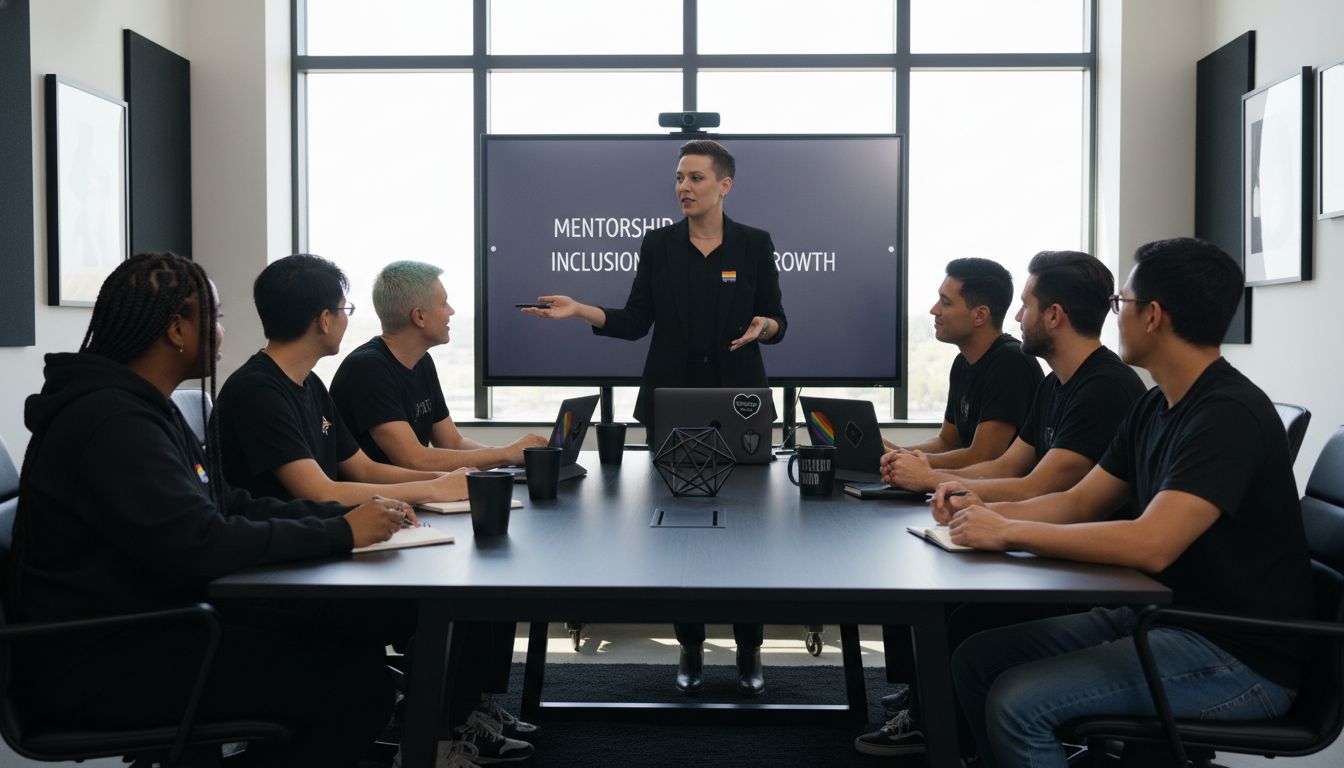
Unique Barriers LGBTQ+ Employees Face
LGBTQ+ professionals encounter a complex landscape of systemic workplace challenges that extend far beyond traditional professional obstacles. According to research from MDPI, queer individuals often face identity-based risks that significantly impact their professional development and access to critical mentoring relationships.
These barriers manifest through multiple interconnected dimensions of workplace experience:
- Persistent workplace discrimination
- Unequal career advancement opportunities
- Psychological safety challenges
- Microaggressions and subtle professional exclusion
- Higher rates of professional isolation
Research from Evidence Based Mentoring highlights that LGBTQ+ professionals frequently contend with internalized challenges like internalized homophobia and external pressures such as anti-LGBTQ workplace harassment. These experiences create significant psychological and professional hurdles that can dramatically impact career trajectory and personal well-being.
Navigating these complex barriers requires intentional strategies that address both systemic workplace inequities and individual professional resilience. By recognizing and actively addressing these unique challenges, organizations can create more inclusive environments that not only prevent discriminatory practices but actively support the professional growth and potential of LGBTQ+ employees. The goal is transforming workplace cultures from merely tolerant to genuinely empowering and celebratory of diverse professional identities.
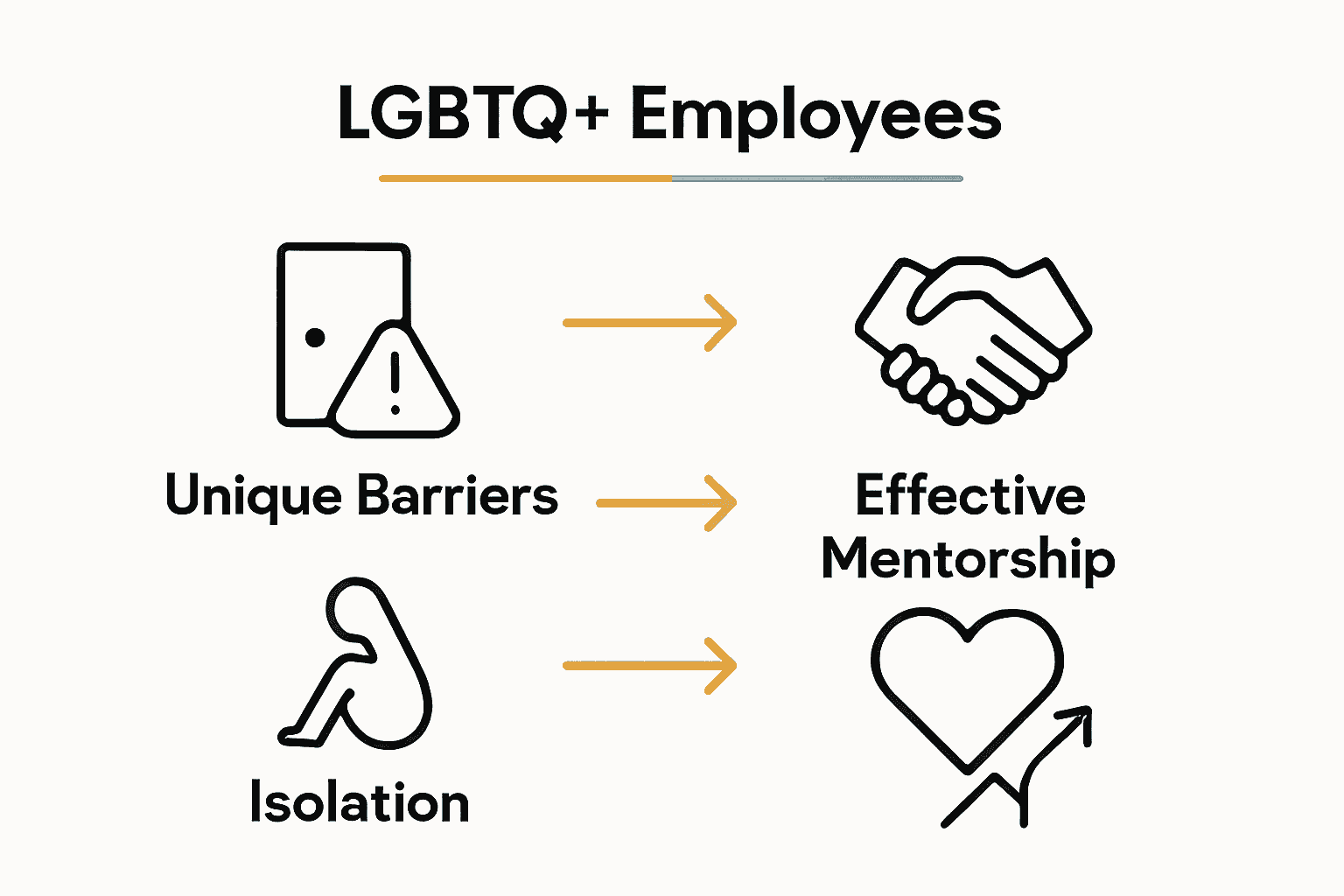
Here’s a comparison of the unique barriers and effective mentorship strategies for LGBTQ+ employees:
Effective Mentorship Practices And Strategies
Developing robust mentorship approaches for LGBTQ+ professionals requires strategic, intentional frameworks that go beyond traditional mentoring models. According to research from Cambridge, specialized mentorship curricula are essential for addressing the unique challenges faced by LGBTQ+ professionals across various sectors.
Key strategic practices for effective LGBTQ+ mentorship include:
- Creating psychologically safe mentoring environments
- Developing intersectional understanding
- Implementing structured yet flexible mentoring frameworks
- Promoting active listening and empathetic communication
- Establishing clear boundaries and expectations
- Encouraging vulnerability and authentic professional representation
Research from MDPI underscores the importance of designing mentorship programs that actively address systemic challenges like discrimination and professional stereotyping. Successful mentorship strategies require mentors to be not just guides, but active allies who understand the complex professional landscape LGBTQ+ individuals navigate.
Ultimately, effective mentorship transcends traditional knowledge transfer. It becomes a transformative relationship that empowers LGBTQ+ professionals to build resilience, develop strategic career skills, and create pathways for authentic professional growth. By implementing thoughtful, intentional mentorship practices, organizations can create powerful support systems that celebrate diversity and unlock extraordinary professional potential.
Building Inclusive And Supportive Workplaces
Creating truly inclusive workplaces requires intentional, strategic approaches that go beyond surface-level diversity initiatives. According to research from HR Review, mentoring programs play a critical role in helping LGBTQ+ employees develop a genuine sense of belonging, security, and professional happiness within organizational environments.
Key strategies for building inclusive workplaces include:
- Establishing clear anti-discrimination policies
- Creating visible support structures
- Implementing comprehensive diversity training
- Developing identity-affirming professional networks
- Promoting leadership opportunities for marginalized professionals
- Encouraging authentic self-representation
Research from arXiv highlights the transformative power of professional networks specifically designed to support underrepresented groups. These networks provide more than just professional connections - they create ecosystems of understanding, advocacy, and mutual empowerment that directly challenge systemic workplace barriers.
Ultimately, building inclusive workplaces is an ongoing, dynamic process that requires continuous commitment, genuine empathy, and active listening. Organizations must move beyond performative allyship to create environments where LGBTQ+ professionals can not only survive but truly thrive. This means developing organizational cultures that celebrate diversity as a fundamental strength, recognizing that genuine inclusion drives innovation, creativity, and collective professional excellence.
Empower LGBTQ+ Employees with Meaningful Mentorship and Community Support
Building inclusive workplaces that actively support LGBTQ+ professionals requires more than policy changes it calls for real connection and understanding. As the article highlights, the unique challenges of workplace discrimination, psychological safety, and professional isolation demand intentional mentorship strategies that foster authentic growth and resilience. By nurturing these supportive relationships, organizations empower LGBTQ+ employees to thrive personally and professionally.
myGwork offers a dedicated platform where LGBTQ+ professionals find career opportunities, build connections, and access resources tailored to promote diversity and inclusion. Whether you are seeking a mentor, want to expand your professional network, or looking to recruit inclusive talent, the site creates a safe space for authentic engagement and advancement.
Take action now to bridge the gap between mentoring insights and real-world impact by joining a community committed to transforming workplaces into environments where everyone belongs.
Explore how you can support or find meaningful mentorship today at myGwork and be part of a network championing LGBTQ+ career success and inclusion.
Frequently Asked Questions
What are the benefits of mentoring LGBTQ+ employees?
Mentoring LGBTQ+ employees provides significant benefits such as enhanced psychological safety, increased professional confidence, strategic career progression, and expanded networking opportunities, helping them navigate workplace challenges effectively.
How does mentorship support LGBTQ+ professionals in overcoming workplace barriers?
Mentorship supports LGBTQ+ professionals by offering targeted guidance, emotional support, and strategies to navigate systemic discrimination, helping them build resilience and advance their careers.
What unique challenges do LGBTQ+ employees face in the workplace?
LGBTQ+ employees often encounter workplace discrimination, unequal advancement opportunities, psychological safety challenges, microaggressions, and higher rates of professional isolation, which can impact their career growth and well-being.
What strategies are effective for mentoring LGBTQ+ individuals?
Effective mentorship strategies include creating psychologically safe environments, applying intersectional understanding, promoting active listening, establishing clear boundaries, and encouraging authentic self-representation to support the unique needs of LGBTQ+ professionals.