
Why Partner With LGBTQ+ Organizations: Key Benefits
January 13, 2026
Most American companies now recognize that inclusion drives both innovation and retention, yet true progress relies on strategic partnerships with LGBTQ+ organizations. For professionals seeking authentic workplace equity, understanding how these groups shape hiring practices matters more than ever. This guide uncovers how credible alliances empower LGBTQ+ talent, spotlighting international best practices and the core benefits of transformative collaboration.
LGBTQ+ Organizations: Role and Mission
LGBTQ+ organizations play a critical role in advancing equality, human rights, and social justice for marginalized communities worldwide. These organizations operate as multifaceted advocacy platforms, simultaneously driving political change and providing direct support to LGBTQ+ individuals. Through strategic political activities like lobbying, media campaigns, and legal challenges, they work to dismantle systemic barriers and promote inclusive policies.

Their mission extends far beyond political advocacy. LGBTQ+ organizations provide vital community services, including mental health support, legal resources, job placement assistance, and safe spaces for connection and empowerment. Advancing human rights protections requires a nuanced approach that balances institutional transformation with grassroots community care. By addressing both structural inequalities and individual needs, these organizations create meaningful pathways toward social acceptance and personal dignity.
Globally, LGBTQ+ organizations adapt their strategies to diverse political and cultural contexts. In regions with high governmental repression, they must carefully navigate complex social landscapes while maintaining their core commitment to equality. This often involves building strategic partnerships, developing resilient community networks, and creating innovative approaches to advocacy that minimize potential backlash while steadily pushing for progressive change.
Pro tip: When engaging with LGBTQ+ organizations, approach partnerships with genuine respect, cultural humility, and a commitment to long-term systemic change rather than tokenistic gestures.
Types of LGBTQ+ Partnerships for Workplaces
Workplaces can engage with LGBTQ+ organizations through multiple strategic partnership models that foster diversity, inclusion, and professional development. These partnerships range from targeted initiatives addressing specific workplace challenges to comprehensive long-term collaborative programs designed to create systemic change. Capacity building and legal support represent foundational approaches that enable organizations to develop more inclusive environments.
One primary partnership type involves organizational policy development, where LGBTQ+ advocacy groups provide expert guidance in crafting inclusive workplace guidelines. This might include designing non-discrimination policies, developing inclusive HR practices, and creating robust mechanisms for addressing workplace harassment. Another critical partnership model focuses on employee training and education, helping organizations implement comprehensive diversity and inclusion programs that go beyond surface-level compliance.
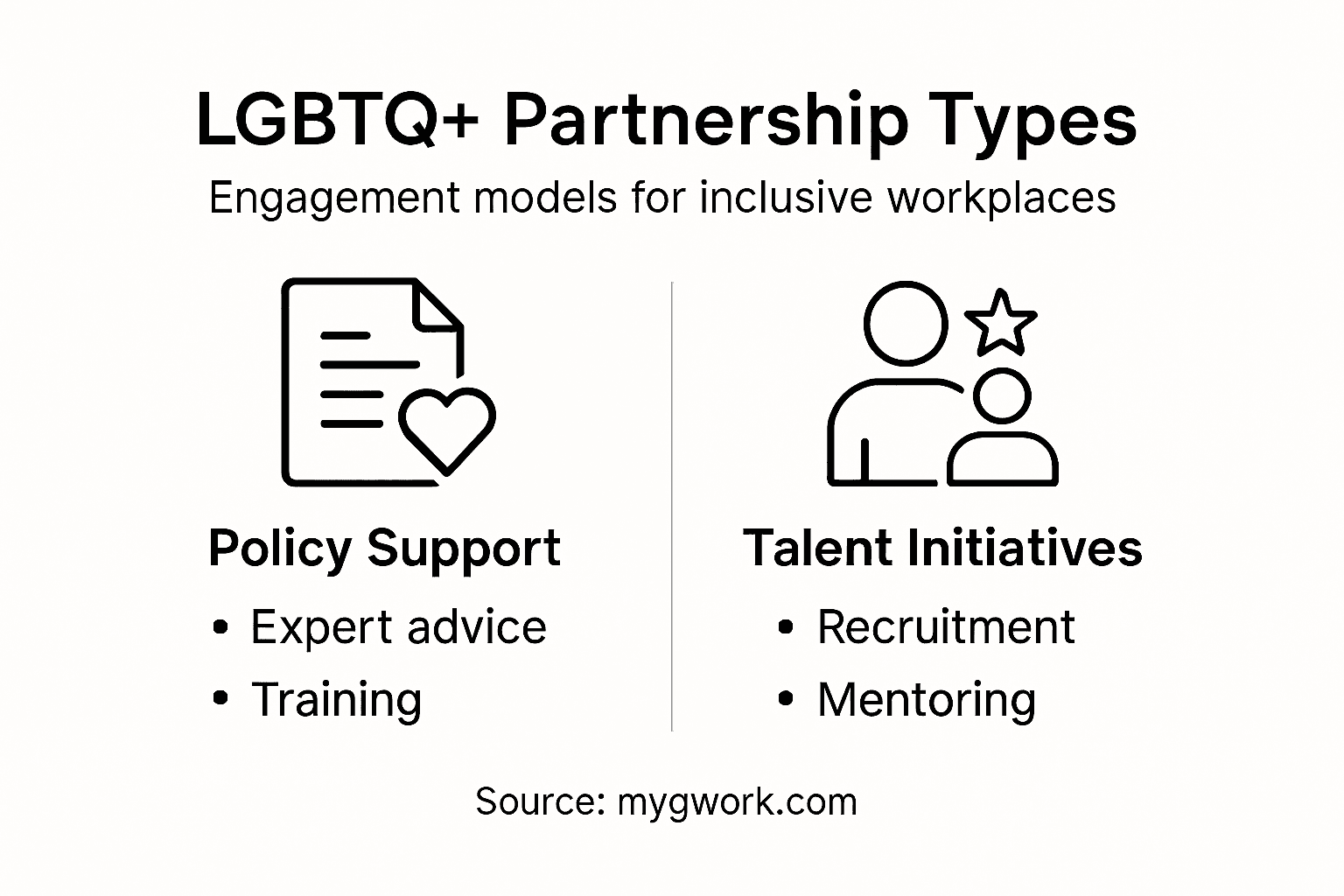
Moreover, workplace partnerships with LGBTQ+ organizations can take the form of recruitment and talent development initiatives. These collaborations often involve creating pipelines for LGBTQ+ talent, establishing mentorship programs, and developing networking opportunities that support career advancement for marginalized professionals. Inclusive curriculum development plays a crucial role in these efforts, ensuring that professional development resources reflect diverse experiences and perspectives.
Pro tip: When establishing LGBTQ+ workplace partnerships, prioritize authentic engagement and long-term commitment over performative gestures, focusing on meaningful structural changes that create genuine opportunities for professional growth and inclusion.
Here’s a summary of common LGBTQ+ workplace partnerships and their primary impact:
Core Benefits of Strategic Collaboration
Strategic collaboration with LGBTQ+ organizations offers transformative advantages that extend far beyond traditional diversity initiatives. Amplifying advocacy impact through combined community-focused efforts and political engagement creates powerful mechanisms for systemic change. These partnerships enable organizations to develop more nuanced, comprehensive approaches to addressing complex social challenges while building organizational resilience and credibility.
One fundamental benefit of strategic collaboration involves expanding institutional capacity for understanding and implementing genuine inclusivity. By partnering with LGBTQ+ organizations, workplaces gain access to specialized expertise, nuanced perspectives, and targeted resources that can dramatically improve internal policies and cultural dynamics. This collaborative approach helps organizations move beyond performative diversity efforts, creating meaningful pathways for professional development, recruitment, and talent retention for LGBTQ+ professionals.
Moreover, these strategic collaborations generate significant external and internal advantages. Strengthening human rights advocacy allows organizations to demonstrate authentic commitment to social justice, enhancing their reputation among employees, consumers, and stakeholders. Such partnerships create opportunities for knowledge exchange, mutual learning, and developing innovative strategies that address intersectional challenges faced by LGBTQ+ professionals in various workplace environments.
Pro tip: Approach LGBTQ+ organizational partnerships as long-term strategic relationships, investing time in understanding their unique perspectives and co-creating meaningful, sustainable initiatives rather than treating them as transactional diversity checkboxes.
Building an Inclusive, Productive Workforce
Building an inclusive workforce requires a comprehensive approach that goes beyond surface-level diversity initiatives. Supporting employee resource groups creates environments where LGBTQ+ professionals can thrive, driving organizational innovation and productivity. By implementing targeted strategies that acknowledge and celebrate diversity, companies can transform workplace culture, break down systemic barriers, and develop more dynamic, collaborative professional ecosystems.
Successful workforce inclusion involves multiple interconnected strategies. This includes developing robust anti-discrimination policies, providing comprehensive diversity training, and creating safe spaces for authentic professional expression. Organizations must recognize that true inclusivity means actively dismantling traditional hierarchical structures that marginalize LGBTQ+ professionals. By valuing diverse perspectives and lived experiences, companies can unlock unprecedented levels of creativity, problem-solving capabilities, and employee engagement.
Workplace partnerships with LGBTQ+ organizations play a critical role in driving meaningful change. Affirming LGBTQ+ professional identities enables organizations to develop more nuanced approaches to recruitment, talent development, and retention. These collaborative efforts help businesses create work environments that not only welcome diversity but actively cultivate it as a strategic advantage, leading to improved organizational performance, enhanced employee satisfaction, and a more representative professional landscape.
Pro tip: Develop systematic mechanisms for continuous feedback and adaptation in your inclusion strategies, ensuring that LGBTQ+ professionals are active participants in shaping workplace culture rather than passive recipients of diversity initiatives.
Financial, Legal, and Reputational Impacts
Organizations that prioritize LGBTQ+ inclusion experience multifaceted benefits that extend far beyond social responsibility. Protective workplace policies directly correlate with improved financial performance, reduced legal risks, and enhanced organizational reputation. By implementing comprehensive LGBTQ+ inclusive strategies, businesses can create tangible economic advantages that position them as forward-thinking, progressive employers in competitive talent markets.
The legal landscape surrounding workplace diversity has become increasingly complex, making proactive LGBTQ+ inclusion a critical risk management strategy. Companies that develop robust anti-discrimination policies and create supportive work environments significantly reduce their exposure to potential litigation, employee grievances, and reputational damage. These protective measures not only mitigate legal vulnerabilities but also demonstrate a genuine commitment to creating equitable professional spaces that attract and retain top talent from diverse backgrounds.
Reputational impacts of LGBTQ+ workplace inclusion extend to broader stakeholder perceptions, influencing customer loyalty, investor confidence, and brand positioning. Modern consumers and investors increasingly evaluate organizations based on their commitment to social responsibility and inclusive practices. By visibly supporting LGBTQ+ professionals and implementing meaningful diversity initiatives, companies can differentiate themselves in crowded markets, attract socially conscious customers, and build stronger, more resilient organizational brands that resonate with progressive values.
Pro tip: Develop a comprehensive diversity impact assessment that quantifies the financial and reputational benefits of LGBTQ+ inclusion, using data-driven metrics to demonstrate the strategic value of these initiatives to leadership and stakeholders.
This table highlights key financial, legal, and reputational advantages of LGBTQ+ inclusion:
Common Pitfalls and How to Avoid Them
Workplace LGBTQ+ partnerships can encounter significant challenges that undermine their effectiveness if organizations do not approach these collaborations with genuine commitment and strategic awareness. The most prevalent pitfall involves treating LGBTQ+ inclusion as a superficial compliance exercise rather than a substantive cultural transformation. Performative allyship creates more harm than good, potentially damaging organizational reputation and alienating the very communities organizations aim to support.
Another critical mistake is failing to create meaningful, sustained engagement with LGBTQ+ organizations. Transactional approaches that view partnerships as one-time diversity checkboxes miss the profound potential for organizational learning and systemic change. Successful collaborations require ongoing dialogue, active listening, and a willingness to decenter existing power structures, allowing LGBTQ+ voices to genuinely shape organizational culture and policy development.
Organizations frequently underestimate the complexity of intersectionality within LGBTQ+ professional experiences. Overly simplistic diversity initiatives that do not recognize the nuanced challenges faced by LGBTQ+ professionals with multiple marginalized identities can inadvertently reinforce existing systemic inequities. True inclusion demands a sophisticated understanding that goes beyond surface-level representation, acknowledging the diverse experiences of LGBTQ+ professionals across different racial, socioeconomic, and gender backgrounds.
Pro tip: Develop comprehensive feedback mechanisms that center LGBTQ+ professional voices, creating transparent channels for continuous improvement and genuine organizational accountability.
Unlock the Full Potential of LGBTQ+ Workplace Partnerships
The article highlights key challenges organizations face when partnering with LGBTQ+ groups such as avoiding performative allyship and creating sustainable, authentic inclusion. If you want to move beyond surface-level diversity efforts and build real, lasting change in your workplace, strategic collaboration and access to specialized resources are essential. Embracing terms like “capacity building,” “policy development,” and “recruitment and talent development” means focusing on genuine professional growth and creating environments where LGBTQ+ individuals can thrive.
Discover how mygwork.com helps you connect with a vibrant community of LGBTQ+ professionals and inclusive employers who are committed to meaningful diversity. Join a platform that supports your goals with comprehensive networking, event participation, and curated job opportunities designed to advance inclusion and representation. Start making a difference today by leveraging proven tools and authentic partnerships that champion systemic change. Visit https://mygwork.com now and transform your commitment into action.
Frequently Asked Questions
What are the main benefits of partnering with LGBTQ+ organizations?
Partnering with LGBTQ+ organizations offers numerous advantages, including improved workplace inclusivity, enhanced employee satisfaction, increased organizational capacity for understanding diversity, and a bolstered reputation among stakeholders.
How can LGBTQ+ partnerships improve my company’s policies?
LGBTQ+ organizations provide expert guidance in developing non-discrimination policies, inclusive HR practices, and robust mechanisms for addressing workplace harassment, thereby fostering a more inclusive environment.
What types of programs can companies implement with LGBTQ+ organizations?
Companies can implement various programs, such as employee training and education, recruitment initiatives for LGBTQ+ talent, and mentorship opportunities to support career advancement within the LGBTQ+ community.
Why is it important to engage authentically with LGBTQ+ organizations?
Authentic engagement fosters genuine partnerships that lead to meaningful structural changes rather than performative gestures, ultimately creating systemic change and ensuring that LGBTQ+ professionals feel valued and supported.