
Why prioritize LGBTQ+ representation at work
December 17, 2025Most American workplaces still miss the mark when it comes to authentic LGBTQ+ representation. Research shows queer identities are often portrayed through narrow, misleading stereotypes, distorting what inclusion truly means. This matters because meaningful representation shapes workplace culture, influences careers, and affects everyday well-being. If you want to understand how misconceptions form and what genuine inclusion should look like for LGBTQ+ professionals, you will find clear, evidence-based insights here.

LGBTQ+ Representation Defined and Misconceptions
LGBTQ+ representation is more than a simple checkbox of diversity. It involves authentically showcasing the depth, complexity, and lived experiences of queer individuals within professional and social environments. Critically, representation goes beyond numerical inclusion and requires genuine understanding and respect.
Multimodal research reveals significant challenges in authentic representation. Studies examining non-cisgender identity depictions demonstrate consistent misrepresentation where LGBTQ+ individuals are frequently portrayed as less human, more stereotyped, and hypersexualized. This problematic framing undermines the nuanced realities of queer experiences and perpetuates harmful misconceptions.
Key misconceptions about LGBTQ+ representation often stem from limited, reductive perspectives. Research analyzing media representations highlights how queer identities get filtered through homonormative and cis-heteronormative frameworks, which distort authentic experiences. These narrow portrayals fail to capture the rich diversity of sexual orientation, gender identity, and personal narratives within the LGBTQ+ community.
The most effective representation involves direct community involvement, centering authentic voices, and challenging existing stereotypical narratives. Organizations must move beyond tokenism toward genuine inclusion that respects individual complexity and lived experiences.
Here’s a summary comparing key misconceptions and realities of LGBTQ+ workplace representation:
Pro Tip: Community Consultation: Always involve LGBTQ+ individuals directly in representation strategies, ensuring your approach is collaborative, respectful, and truly reflective of community experiences.
Benefits of Inclusive Work Environments
Inclusive work environments represent far more than a progressive ideal – they are a strategic imperative for organizational success. Workplace inclusion fundamentally transforms organizational dynamics by creating spaces where diverse talents can flourish, innovate, and contribute meaningfully.
Research demonstrates that inclusive environments drive significant performance improvements. Neurological studies reveal that inclusive workplaces enhance cognitive function, promoting self-improvement behaviors and increasing pro-social actions among employees. When workers feel genuinely welcomed and valued, they exhibit higher levels of engagement, creativity, and collaborative potential.

The tangible benefits of workplace inclusion extend across multiple dimensions. Organizations with robust inclusive practices experience lower turnover rates, higher employee satisfaction, and improved recruitment capabilities. By eliminating barriers and creating psychologically safe environments, companies unlock unprecedented potential from their diverse workforce. This approach transforms traditional hierarchical structures into dynamic, adaptive ecosystems where individual differences become strategic advantages.
Moreover, inclusive workplaces signal organizational maturity and forward-thinking leadership. They demonstrate a commitment to equity that attracts top talent, enhances brand reputation, and positions companies as progressive employers of choice in competitive talent markets.
The table below outlines organizational benefits linked to inclusive work environments:
Pro Tip: Inclusion Assessment: Conduct regular, anonymous workplace inclusion surveys to identify systemic barriers and measure progress toward creating truly welcoming professional environments.
Impact on Employee Well-Being and Performance
Employee well-being transcends traditional workplace metrics, representing a holistic approach to professional satisfaction and personal growth. Comprehensive research models demonstrate intricate connections between workplace inclusion and individual performance, revealing how supportive environments directly influence psychological safety and professional engagement.
Inclusive workplaces fundamentally transform employee experiences by creating environments where individuals feel genuinely valued and empowered. Workplace studies consistently show that inclusive practices drive significant improvements in productivity and team collaboration, enabling employees to bring their authentic selves to work without fear of marginalization or discrimination. This psychological freedom unleashes remarkable potential, allowing workers to focus their energy on innovation and meaningful contribution rather than managing external perceptions or navigating systemic barriers.
The impact of inclusive environments extends beyond individual performance to broader organizational dynamics. When employees experience genuine acceptance, they demonstrate higher levels of emotional investment, increased discretionary effort, and more profound commitment to organizational goals. These environments foster psychological resilience, reduce stress-related performance degradation, and create positive feedback loops that continuously enhance workplace culture and individual potential.
Moreover, organizations committed to true inclusion recognize that employee well-being is a complex, multidimensional construct. By addressing intersectional experiences and creating nuanced support structures, companies can develop robust ecosystems that celebrate diversity as a fundamental strength rather than a compliance checkbox.
Pro Tip: Holistic Inclusion Audit: Develop comprehensive, anonymous assessment tools that measure not just representation metrics, but also qualitative experiences of belonging and psychological safety across all employee demographics.
Legal Protections and Employer Responsibilities
Legal protections for LGBTQ+ employees represent a critical framework for ensuring workplace equality and preventing discrimination. Research emphasizes the importance of implementing comprehensive policies that actively promote diversity and inclusion, transforming legal compliance from a minimum requirement into a strategic organizational advantage.
Employers bear significant responsibilities in creating safe, supportive work environments that go beyond basic legal mandates. Comprehensive workplace studies highlight that inclusive policies directly correlate with improved employee engagement and organizational reputation, demonstrating that legal compliance is not just about avoiding penalties, but about creating genuinely supportive professional ecosystems.
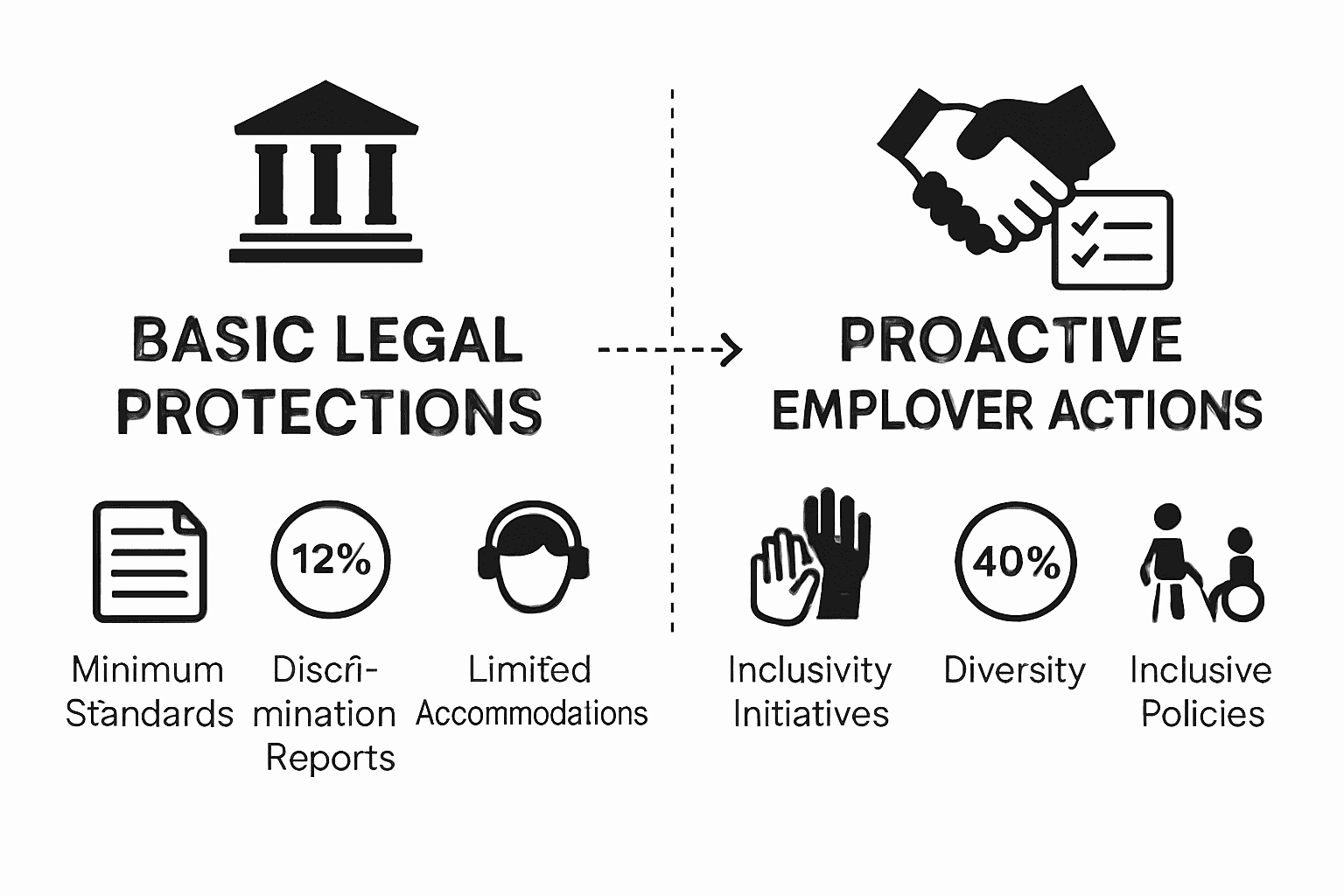
The legal landscape for LGBTQ+ workplace protections continues to evolve, requiring organizations to maintain dynamic, proactive approaches to inclusivity. This means developing robust anti-discrimination policies, implementing comprehensive training programs, creating clear reporting mechanisms for harassment or bias, and establishing support structures that protect and empower LGBTQ+ employees across all organizational levels.
Moreover, effective legal protections require a holistic approach that acknowledges intersectionality. Organizations must recognize that LGBTQ+ employees have diverse experiences shaped by multiple identity factors, including race, disability status, age, and socioeconomic background. True legal protection means creating nuanced, adaptable policies that recognize and respect this complexity.
Pro Tip: Policy Audit: Conduct an annual comprehensive review of workplace policies, involving LGBTQ+ employees in the process to ensure legal protections are meaningful, current, and genuinely protective.
Challenges and Solutions in Representation Initiatives
Representation initiatives require nuanced, strategic approaches that go far beyond surface-level diversity metrics. Research investigating LGBTQ+ experiences in professional environments reveals complex challenges related to discrimination and systemic visibility, highlighting the critical need for comprehensive, intentional intervention strategies.
Emerging studies exploring minority stress experiences demonstrate the profound psychological impact of workplace representation challenges, revealing that effective solutions must address both structural barriers and individual emotional experiences. These challenges manifest through subtle microaggressions, unconscious bias, limited career advancement opportunities, and persistent emotional taxation that disproportionately affect LGBTQ+ professionals.
Successful representation initiatives demand multilayered strategies that simultaneously address systemic inequities and individual experiences. This requires developing robust support mechanisms, implementing comprehensive training programs, creating transparent career progression pathways, and establishing mentorship networks that specifically support LGBTQ+ talent development. Organizations must move beyond tokenistic approaches, instead creating genuine ecosystems of belonging that recognize and celebrate diverse professional identities.
Moreover, effective representation requires ongoing commitment, continuous learning, and a willingness to evolve organizational culture. This means creating feedback loops, conducting regular diversity audits, and maintaining transparency about progress, challenges, and strategic improvements in supporting LGBTQ+ workforce experiences.
Pro Tip: Representation Mapping: Develop a comprehensive diversity dashboard that tracks representation metrics across multiple dimensions, including leadership roles, career progression, and intersectional experiences, to identify and address systemic barriers proactively.
Unlock Genuine LGBTQ+ Inclusion at Work Today
The article highlights the urgent need to move beyond tokenism and superficial diversity checkboxes toward authentic LGBTQ+ representation in the workplace. Many organizations struggle with misrepresentation, lacking meaningful community involvement, and failing to create psychologically safe environments where LGBTQ+ employees truly belong. These challenges lead to diminished employee well-being, limited career growth, and stagnant organizational culture.
Take action now to champion true inclusivity by connecting with myGwork, the professional network dedicated exclusively to LGBTQ+ talent and inclusive employers. Discover resources, community support, and job opportunities designed to embrace diverse identities and lived experiences. By joining myGwork, you engage directly with a platform that respects authenticity and empowers marginalized professionals. Start fostering real change and cultivating a workplace culture where everyone can thrive.
Explore how to build inclusive work environments and find career growth on myGwork. Your commitment to meaningful LGBTQ+ representation begins with your next connection.
Frequently Asked Questions
What is LGBTQ+ representation at work?
LGBTQ+ representation at work refers to the authentic inclusion of queer individuals in professional environments, showcasing their diverse experiences, identities, and perspectives, rather than simply focusing on numerical inclusion.
Why is authentic LGBTQ+ representation important?
Authentic representation challenges stereotypes, promotes understanding, and creates supportive environments that allow LGBTQ+ individuals to thrive, ultimately benefiting the organization through improved engagement and innovation.
How can organizations improve LGBTQ+ representation?
Organizations can improve representation by involving LGBTQ+ individuals in decision-making, creating inclusive policies, implementing comprehensive training programs, and fostering a culture of genuine belonging and respect.
What are the benefits of inclusive workplaces for employees?
Inclusive workplaces enhance employee well-being, job satisfaction, and engagement. They also lead to higher productivity, reduced turnover, and a culture of collaboration, allowing individuals to contribute their best to the organization.