
Why update diversity policies: complete expert guide
December 5, 2025Over 60 percent of employees say that a company’s diversity policy directly impacts their sense of belonging at work. In today’s evolving workplace, these policies do more than just check boxes—they help shape ethical, inclusive environments where everyone can thrive. Understanding what diversity policies are and why they matter provides a foundation for building stronger teams, driving innovation, and attracting top talent from every background.

Defining Diversity Policies and Their Purpose
Diversity policies represent structured organizational strategies designed to create inclusive workplaces that welcome and support professionals from all backgrounds, identities, and experiences. According to research from scielo, these policies serve critical ethical, legal, and economic objectives in modern professional environments.
At their core, diversity policies aim to establish frameworks that prevent discrimination, promote equal opportunities, and cultivate environments where every professional can thrive regardless of gender, sexual orientation, race, disability status, or other personal characteristics. The fundamental goals include:
- Eliminating workplace barriers
- Ensuring fair treatment and opportunities
- Creating representation across organizational levels
- Developing inclusive recruitment and advancement practices
Research from en highlights that effective diversity policies are not just moral imperatives but strategic business advantages. Organizations implementing comprehensive diversity strategies often experience enhanced innovation, improved employee engagement, and stronger talent attraction and retention. By recognizing and valuing individual differences, companies can unlock potential, foster creativity, and build more dynamic, resilient workplace cultures.
Successful diversity policies go beyond simple compliance. They require ongoing commitment, transparent communication, and measurable actions that demonstrate genuine organizational investment in creating equitable professional environments. This means developing robust training programs, establishing clear accountability mechanisms, and continuously evaluating and improving inclusion strategies to ensure meaningful, sustainable change.
Evolving Types of Diversity and Inclusion Policies
Diversity and inclusion policies have transformed dramatically in recent years, moving from basic compliance strategies to comprehensive organizational approaches that recognize the complex, intersectional nature of workplace representation. According to research from jier, modern Human Resources Management (HRM) is pioneering increasingly nuanced strategies that go beyond traditional demographic considerations.
Contemporary diversity policies now encompass multiple sophisticated dimensions:
- Intersectional Representation: Recognizing individuals’ multiple identity dimensions
- Flexible Work Arrangements: Supporting diverse personal and professional needs
- Inclusive Recruitment Practices: Expanding talent sourcing beyond traditional networks
- Continuous Learning Programs: Developing cultural competence and awareness
Research from arxiv reveals emerging trends in Diversity, Equity, and Inclusion (DEI) strategies, particularly within technology sectors. These evolving policies are not just about numerical representation but about creating genuine belonging. Organizations are developing more holistic approaches that address systemic barriers, challenge unconscious biases, and create environments where every professional can authentically contribute.
The most progressive diversity policies now integrate proactive measurement, transparent accountability, and adaptive strategies.
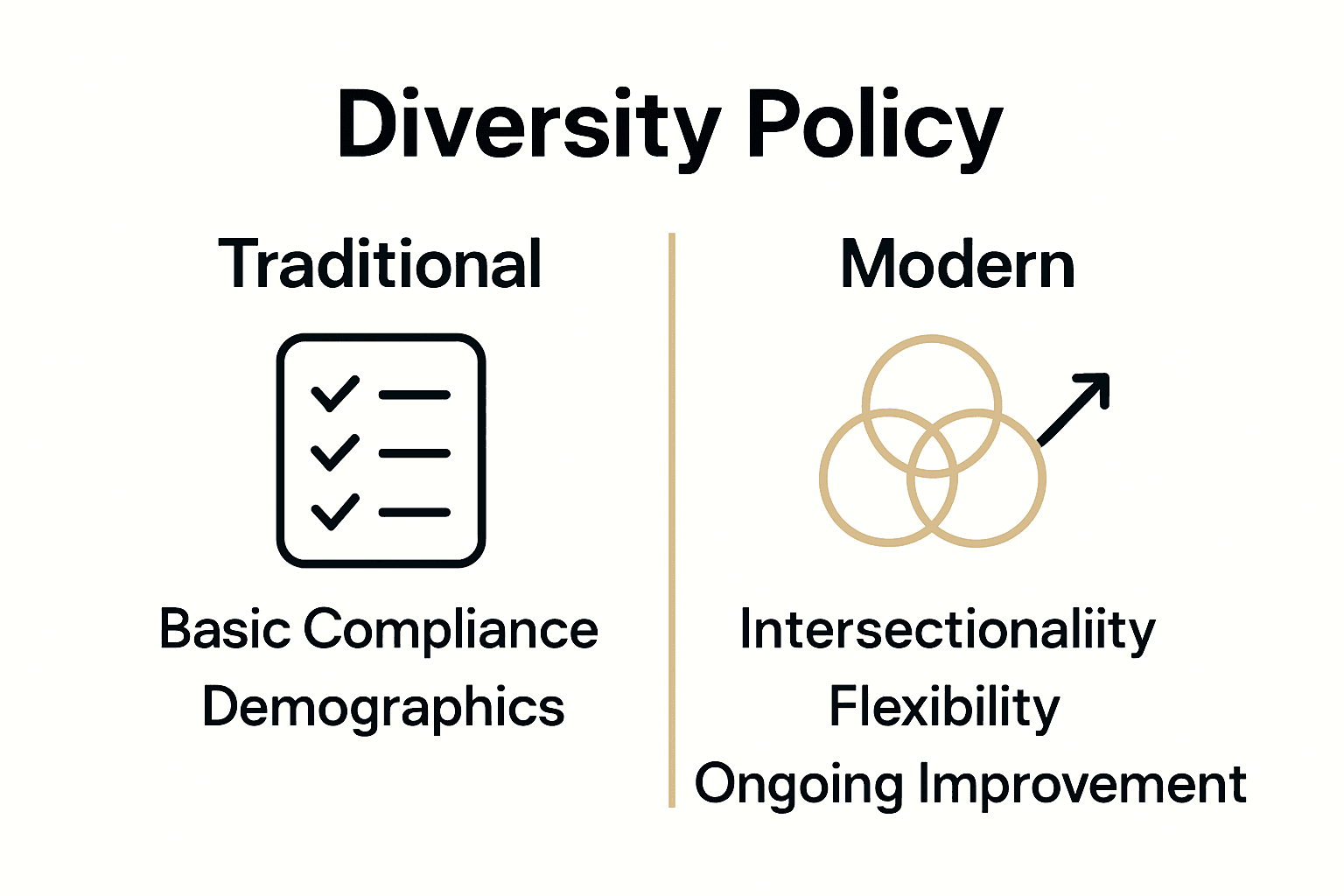 This means regularly collecting demographic data, establishing clear metrics for inclusion, creating safe feedback mechanisms, and being willing to continuously adjust policies based on real-world outcomes. By treating diversity and inclusion as dynamic, ongoing processes rather than static checkboxes, forward-thinking organizations are building more innovative, resilient, and equitable workplaces.

Legal, Social, and Business Imperatives Explained
Diversity policies represent a complex intersection of legal requirements, social responsibilities, and strategic business advantages. According to research from scielo, these policies are not just optional initiatives but critical frameworks that address ethical, legal, and economic dimensions of organizational culture.
The legal imperatives driving diversity policies are multifaceted:
- Compliance with Anti-Discrimination Laws: Preventing workplace discrimination
- Equal Employment Opportunity Regulations: Ensuring fair hiring practices
- Protecting Marginalized Group Rights: Creating legally defensible workplace environments
- Mitigating Potential Legal Risks: Reducing exposure to discrimination lawsuits
Research from en highlights how these policies go beyond mere legal compliance, serving as transformative mechanisms for addressing systemic inequalities. Organizations that embrace comprehensive diversity strategies demonstrate a commitment to social justice and ethical leadership, which increasingly influences consumer perceptions, talent attraction, and overall corporate reputation.
Beyond legal and social considerations, diversity policies represent critical business strategic assets. Companies with robust inclusion strategies consistently outperform competitors by unlocking diverse talent perspectives, fostering innovation, and creating more adaptable, resilient organizational cultures. By viewing diversity not as a compliance requirement but as a competitive advantage, forward-thinking organizations can transform workplace dynamics, drive meaningful change, and build more dynamic, inclusive professional environments.
Key Benefits of Updating Diversity Policies
Diversity policy updates are strategic investments that yield multiple organizational advantages. According to research from jier, integrating contemporary diversity and inclusion strategies can dramatically enhance employee satisfaction, productivity, and overall organizational performance.
The key benefits of updating diversity policies include:
- Enhanced Organizational Performance: Creating more adaptive and resilient workplace cultures
- Improved Talent Attraction: Positioning the organization as an inclusive employer of choice
- Increased Employee Engagement: Demonstrating genuine commitment to workforce equity
- Reduced Workplace Conflicts: Establishing clear expectations and communication frameworks
Research from arxiv highlights the nuanced impact of diversity, revealing how strategic policy updates can positively influence team dynamics. For instance, age diversity has been shown to enhance team effectiveness, while carefully managed gender diversity can mitigate potential relational conflicts and promote more collaborative work environments.
Ultimately, updating diversity policies is about creating transformative workplace ecosystems. By continuously refining policies, organizations signal their commitment to equity, attract top talent from diverse backgrounds, and build more innovative, inclusive professional spaces. Learn more about how myGwork can support your diversity initiatives in creating meaningful organizational change.
Risks, Liabilities, and Missed Opportunities
Organizational diversity strategies are complex ecosystems fraught with potential risks and transformative possibilities. Research from arxiv reveals the nuanced challenges of diversity implementation, highlighting that while diverse teams bring rich cognitive resources, they simultaneously introduce potential for increased interpersonal complexity and conflict.
The primary risks organizations face when neglecting diversity policy development include:
- Legal Vulnerability: Increased exposure to discrimination lawsuits
- Talent Exodus: Potential loss of high-performing diverse employees
- Reputation Damage: Negative perception among potential recruits and consumers
- Innovation Stagnation: Reduced capacity for creative problem-solving
According to research from arxiv, the tech industry provides a compelling case study of diversity implementation challenges. Companies experiencing backlash against DEI initiatives often respond by reducing their commitment, thereby creating a self-perpetuating cycle of missed opportunities for meaningful organizational transformation.
Effective risk mitigation requires a proactive, strategic approach to diversity policy development. Organizations must view these policies not as compliance checkboxes, but as dynamic frameworks for creating inclusive, innovative workplace cultures. By anticipating potential challenges, implementing robust communication strategies, and maintaining genuine commitment to equity, companies can transform potential risks into powerful opportunities for growth and organizational excellence.
Best Practices for Effective Policy Updates
Policy transformation requires strategic, thoughtful approaches that go beyond surface-level modifications. According to research from jier, effective diversity policy updates demand a comprehensive, holistic methodology that integrates multiple organizational dimensions.
Key best practices for implementing robust diversity policy updates include:
- Comprehensive Stakeholder Engagement: Involving employees from all levels and backgrounds
- Data-Driven Decision Making: Utilizing quantitative and qualitative insights
- Transparent Communication: Establishing clear channels for feedback and dialogue
- Continuous Learning and Adaptation: Creating mechanisms for ongoing policy refinement
Research from arxiv recommends implementing advanced analytical approaches, such as developing formalized collaboration assessments and leveraging adaptive systems that can identify and address potential inclusion gaps. These sophisticated strategies move beyond traditional compliance frameworks, creating dynamic environments that genuinely support diverse professional experiences.
Successful policy updates are not one-time events but continuous journeys of organizational growth. By maintaining flexibility, promoting genuine dialogue, and demonstrating measurable commitment to equity, organizations can develop living diversity policies that evolve with changing workplace dynamics. myGwork can help support your organization’s diversity transformation by providing resources and connections that facilitate meaningful, sustainable change.
Empower Your Diversity Policy Updates with Proven Support
Updating diversity policies is essential for fostering inclusive and equitable workplaces. The article highlights challenges such as navigating legal risks, enhancing employee engagement, and driving genuine belonging. At the heart of these efforts is the need for strategic, ongoing commitment to diversity and inclusion that goes beyond compliance to unlock true organizational potential.
Take the next step by connecting with a dedicated community focused on LGBTQ+ workplace equality at myGwork. Discover how our platform offers resources, networking opportunities, and job listings tailored to support your diversity initiatives. Learn more about how we help drive meaningful change and position your organization as an inclusive employer by visiting myGwork today. Empower your diversity strategies now and build the workplace culture your team deserves.
Frequently Asked Questions
What are the main benefits of updating diversity policies?
Updating diversity policies enhances organizational performance, improves talent attraction, increases employee engagement, and reduces workplace conflicts. These changes signal a commitment to equity and foster a more innovative work environment.
How can organizations ensure their diversity policies are effective?
Organizations can ensure effectiveness by engaging stakeholders, utilizing data-driven decision-making, maintaining transparent communication, and fostering continuous learning and adaptation within their policies.
What are the legal implications of neglecting diversity policies?
Neglecting diversity policies can lead to legal vulnerabilities, including increased exposure to discrimination lawsuits, potential loss of talented diverse employees, and damage to the organization’s reputation.
How do modern diversity policies differ from traditional ones?
Modern diversity policies have evolved to incorporate intersectional representation, flexible work arrangements, inclusive recruitment practices, and continuous learning programs, moving beyond basic compliance to foster genuine belonging and inclusion.