
Why update hiring practices for inclusive workplaces
January 6, 2026More than 60 percent of American organizations still rely on outdated hiring methods that unintentionally limit diversity and opportunity. The demand for fair and inclusive recruitment is reshaping how companies think about talent and workplace culture. Exploring updated hiring approaches can help leaders uncover strategies to build teams that actually represent the full potential of the American workforce, where fairness and genuine inclusion are the new standards.

Defining Updated Hiring Practices for Inclusion
Modern workplace inclusion demands a strategic reimagining of recruitment processes that prioritize fairness, diversity, and genuine opportunity. Inclusive hiring practices go beyond traditional talent acquisition methods, focusing on creating equitable pathways for professionals from all backgrounds. Best practices for inclusive employment fundamentally require organizations to deconstruct historical barriers and intentionally design recruitment strategies that welcome diverse talent.
Successful inclusive hiring involves multiple transformative approaches. Key strategies include:
- Removing identifying demographic information from initial application reviews
- Standardizing interview questions to reduce unconscious bias
- Creating transparent evaluation criteria based on skills and potential
- Developing diverse interview panels representing multiple perspectives
- Implementing skills-based assessments that measure true professional capabilities
Inclusive recruitment and hiring represents a comprehensive approach that supports both internal organizational culture and external candidate experiences. This means designing processes that not only attract diverse talent but also create welcoming environments where every candidate feels respected and valued. Successful implementation requires commitment from leadership, ongoing training, and a genuine organizational dedication to equity.

Organizations committed to meaningful change recognize that inclusive hiring is not a checkbox exercise but a continuous evolution. By systematically examining and redesigning recruitment practices, companies can build workforces that reflect the rich diversity of human potential. The goal is creating professional environments where talent, creativity, and individual potential can truly flourish - regardless of background, identity, or traditional workforce narratives.
Types of Modern Recruitment Approaches
Modern recruitment has dramatically evolved beyond traditional hiring methods, incorporating sophisticated technologies and strategic approaches that prioritize candidate potential and organizational diversity. Algorithmic recruitment tools are transforming talent acquisition, offering nuanced methods for identifying and evaluating candidates that go far beyond conventional resume screening.
Several innovative recruitment approaches are gaining prominence in progressive organizations:
- Blind Recruitment Platforms: Removing identifying personal information to reduce unconscious bias
- Skills-Based Assessment Systems: Evaluating candidates through practical challenges and performance tests
- AI-Powered Candidate Matching: Utilizing advanced algorithmic tools to identify candidates with high potential who might be overlooked by traditional screening
- Diversity-Focused Talent Pipelines: Proactively building networks that represent multiple backgrounds and experiences
- Holistic Candidate Evaluation: Considering soft skills, cultural adaptability, and long-term growth potential
AI-driven recruitment technologies are reshaping how organizations approach talent acquisition, introducing sophisticated fairness metrics and bias mitigation strategies. These advanced systems help companies move beyond demographic limitations, focusing instead on individual capabilities and potential contributions. By implementing intelligent screening processes, employers can create more equitable pathways for diverse professionals.
The future of recruitment lies in embracing technological innovations while maintaining a human-centered approach. Successful modern organizations recognize that effective hiring is not about finding perfect candidates, but about creating inclusive environments where diverse talents can thrive and develop. This means continuously adapting recruitment strategies, challenging traditional assumptions, and viewing each candidate as a unique individual with distinctive potential.
Impact of Bias-Free Hiring on Diversity
Bias-free hiring represents a fundamental transformation in workplace recruitment, challenging long-standing systemic barriers that have historically excluded talented professionals from diverse backgrounds. Organizational diversity is not just a moral imperative but a strategic advantage that drives innovation, creativity, and organizational resilience. Algorithmic approaches to hiring are emerging as powerful tools for dismantling unconscious prejudices and creating more equitable talent acquisition processes.
Key strategies for achieving bias-free recruitment include:
- Implementing anonymous application screening
- Developing structured interview protocols
- Using objective skill assessment methodologies
- Creating diverse interview panels
- Establishing transparent evaluation criteria
- Utilizing AI tools to identify potential candidate blind spots
Inclusive recruitment research consistently demonstrates that diverse workforces are not achieved through passive approaches. Active, intentional strategies are required to overcome deeply ingrained recruitment biases. Organizations must go beyond surface-level diversity metrics and commit to fundamental cultural transformations that genuinely value different perspectives, experiences, and professional backgrounds.
The ultimate goal of bias-free hiring transcends numerical representation. It involves creating workplace ecosystems where every professional can contribute fully, feel respected, and have genuine opportunities for growth. By systematically addressing recruitment barriers, organizations can unlock extraordinary potential, build more innovative teams, and reflect the rich complexity of human talent across professional landscapes.
Legal and Ethical Considerations Globally
Navigating the complex landscape of global recruitment requires a nuanced understanding of evolving legal and ethical frameworks that protect candidate rights and promote organizational fairness. Algorithmic hiring technologies introduce unprecedented challenges in maintaining equitable and transparent talent acquisition processes, demanding sophisticated approaches to legal compliance and ethical standards.
Critical global legal considerations include:
- Protecting candidate privacy and personal data
- Preventing discriminatory hiring practices
- Ensuring transparency in automated decision-making systems
- Maintaining consistent evaluation standards across diverse cultural contexts
- Implementing robust mechanisms for candidate appeal and review
- Developing clear consent protocols for algorithmic assessments
Legal aspects of algorithmic hiring reveal the intricate balance between technological innovation and fundamental human rights. Organizations must develop comprehensive frameworks that not only comply with local regulations but also anticipate emerging global standards for fair recruitment. This requires ongoing assessment of potential biases, continuous auditing of algorithmic tools, and a commitment to maintaining human oversight in critical decision-making processes.
Fairness metrics in AI recruitment demonstrate that ethical hiring is not a static concept but a dynamic, evolving practice. Successful organizations recognize that legal compliance is more than checking boxes – it represents a fundamental commitment to creating inclusive, respectful, and opportunity-rich professional environments. By proactively addressing potential ethical challenges, companies can build trust, enhance their reputation, and create meaningful pathways for diverse talent to thrive in an increasingly complex global workforce.
Common Pitfalls in Traditional Hiring Methods
Traditional hiring practices are riddled with systemic barriers that unconsciously perpetuate workplace inequity and limit organizational potential. Unconscious bias operates as an invisible filter, silently screening out talented candidates who do not conform to narrow, predetermined expectations. Algorithmic screening research reveals that even well-intentioned recruitment processes can inadvertently reinforce existing demographic imbalances by closely mirroring hiring managers’ existing preferences.
Common pitfalls in traditional recruitment include:
- Relying on subjective personal impressions during interviews
- Using homogeneous recruitment networks
- Prioritizing cultural ‘fit’ over skill and potential
- Overlooking candidates with non-traditional career paths
- Maintaining inconsistent evaluation criteria
- Failing to recognize diverse talent indicators
- Perpetuating referral systems that limit demographic representation
Algorithmic hiring systems demonstrate that recruitment technologies can either amplify or mitigate existing biases, depending on their sophisticated design and implementation. The key lies in developing nuanced approaches that recognize individual potential beyond superficial demographic markers or conventional career trajectories.
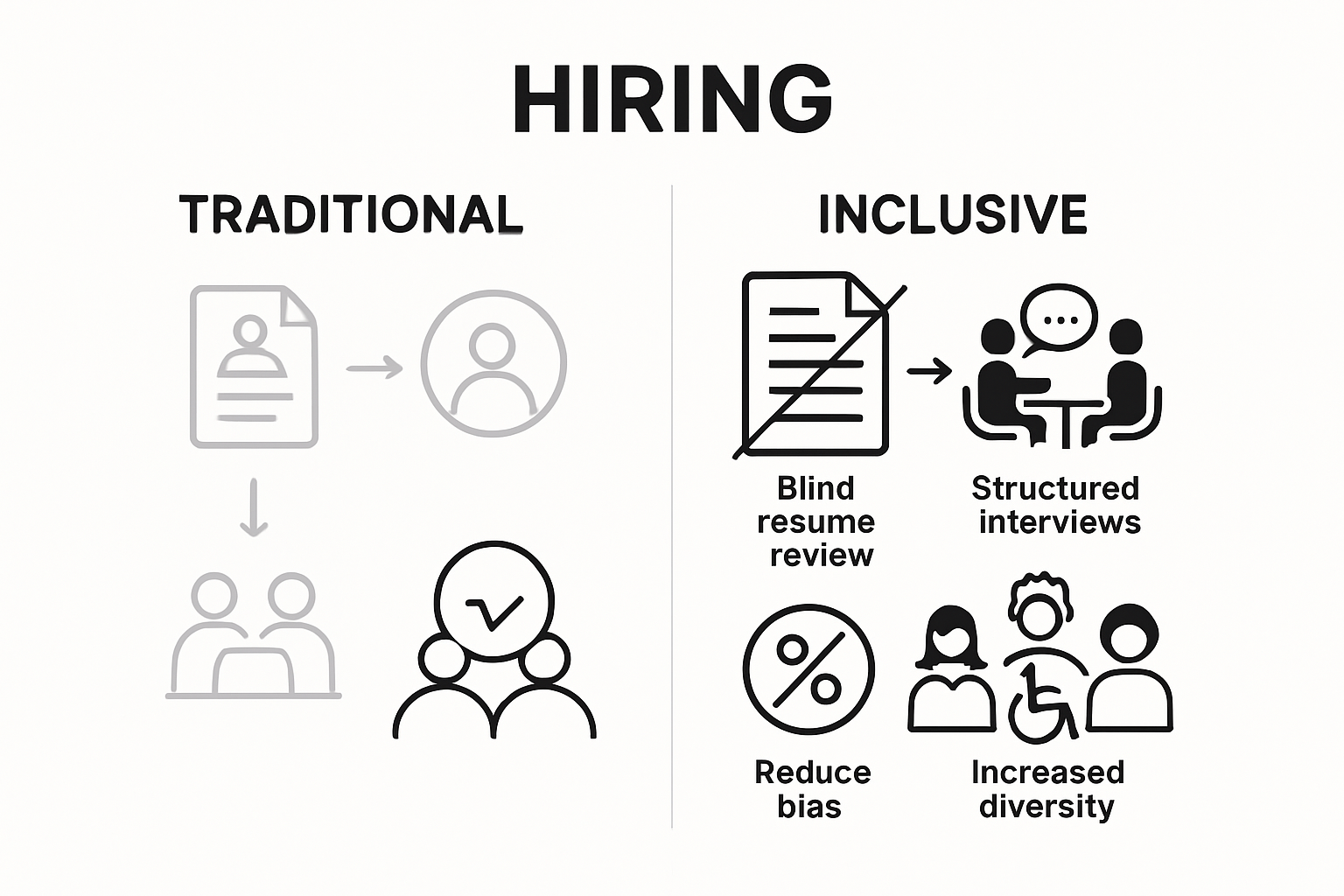
Successful organizations understand that transforming hiring practices requires more than technological solutions. It demands a fundamental cultural shift that values diversity as a core organizational strength. By systematically dismantling traditional recruitment barriers, companies can unlock extraordinary talent pools, foster innovation, and create workplace environments that genuinely reflect the rich complexity of human potential.
Transform Hiring for True Workplace Inclusion
The challenge of updating hiring practices to achieve authentic inclusion centers on dismantling bias and creating equitable opportunities for all professionals. This article highlights that inclusive hiring involves intentional strategies such as blind recruitment, skills-based assessments, and diverse interview panels. If your organization aims to break down barriers that have historically limited diversity, especially within the LGBTQ+ community, understanding and implementing these approaches is critical.
At mygwork.com, we are dedicated to connecting LGBTQ+ professionals with inclusive employers who prioritize diversity and fairness. Our platform acts as a specialized hub to promote equitable hiring by offering a safe space where candidates can showcase their skills and connect with companies committed to bias-free recruitment.
Take the first step toward building a workforce that truly reflects diverse talent. Explore how your organization can adopt inclusive hiring practices by joining a community that values fairness and career advancement. Visit mygwork.com today to find resources, job opportunities, and actionable strategies that translate inclusive hiring from theory into impactful practice.
Frequently Asked Questions
What are inclusive hiring practices?
Inclusive hiring practices are recruitment strategies that prioritize fairness, diversity, and the creation of equitable opportunities for candidates from all backgrounds, aiming to dismantle historical barriers and foster a welcoming environment for diverse talent.
How can organizations reduce unconscious bias in recruitment?
Organizations can reduce unconscious bias by implementing blind recruitment processes, standardizing interview questions, creating diverse interview panels, and using skills-based assessments to evaluate candidates based on their capabilities rather than personal demographics.
What role does technology play in modern inclusive hiring?
Technology, such as algorithmic recruitment tools and AI-powered candidate matching systems, enhances inclusive hiring by identifying talent more accurately, supporting bias mitigation, and helping organizations create more equitable recruitment processes.
Why is bias-free hiring important for workplace diversity?
Bias-free hiring is crucial because it helps dismantle systemic barriers that exclude diverse talent, thereby promoting innovation, creativity, and organizational resilience. A diverse workforce is strategically advantageous and leads to better problem-solving and decision-making within an organization.