
Why your diversity strategy must include bisexual employees
September 18, 2026September marks Bisexual Visibility Month, a critical moment for businesses to pause and evaluate the depth of their LGBTQ+ inclusion efforts. Many organizations have made significant strides in supporting their LGBTQ+ workforce, yet a crucial demographic often remains invisible in corporate culture: the bisexual community.
Research from the Williams Institute at UCLA School of Law consistently indicates that bisexual individuals make up the largest subgroup within the LGBTQ+ community. Estimates suggest that bisexual people account for over 50% of the adult LGBTQ+ population, with many surveys placing the figure closer to 60%. Despite this substantial representation, “bi” erasure, the tendency to ignore, remove, or explain away bisexuality in history, academic research, and the workplace, remains a pervasive issue.
When businesses fail to specifically recognize and support their bisexual employees, they risk alienating the largest portion of their LGBTQ+ talent pool. To build a truly inclusive environment, organizations need to move beyond broad Pride initiatives and address the specific barriers faced by the bi community.
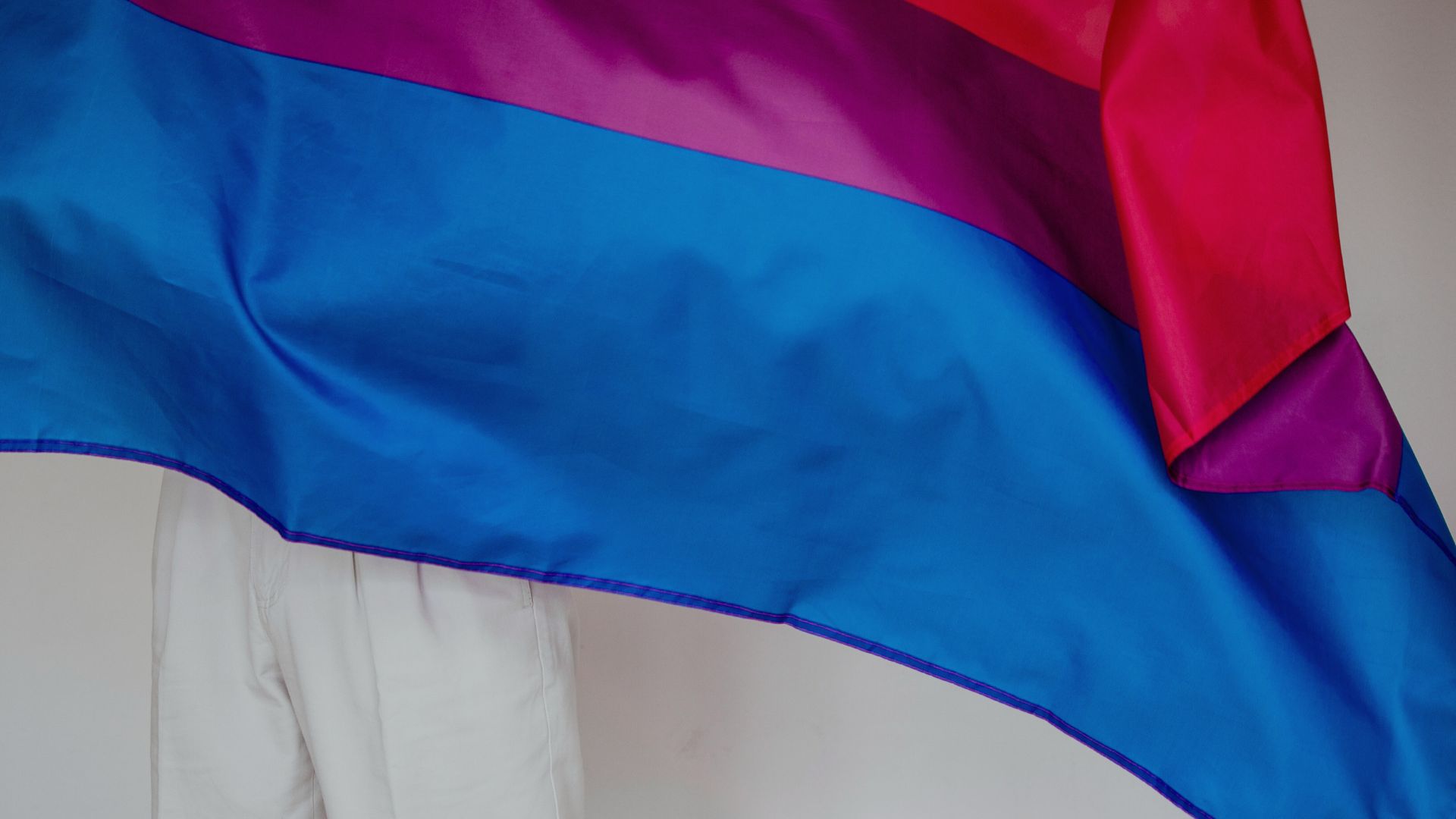
In the workplace, bi erasure often appears in subtle but damaging ways. It occurs when LGBTQ+ programs focus almost exclusively on gay or lesbian narratives, or when the “B” in LGBTQ+ is treated as an afterthought.
Bisexual employees frequently report a “double discrimination” experience. They may feel unwelcome in heteronormative spaces because of their sexual orientation, yet simultaneously excluded from LGBTQ+ spaces because of assumptions that their identity is “not gay enough” or “just a phase.” This environment encourages many bi employees to code-switch or stay closeted to avoid judgment, which stifles authenticity, reduces engagement, and undermines psychological safety.
To create a workplace where bisexual employees can thrive, leadership and HR teams can consider these strategic shifts:
- Data and Language Accuracy
Review internal diversity communications to ensure bisexuality is explicitly named rather than subsumed under general terms like “queer” or “LGBTQ+.” When referencing demographic data or sharing stories, include bisexual identities alongside others. Precise language signals to employees that they are seen, understood, and valued.
- Challenging Assumptions
Bi erasure often stems from the incorrect assumption that an employee’s partner dictates their identity. An employee in a different-sex relationship may be assumed to be straight, and an employee in a same-sex relationship may be assumed to be gay or lesbian.
Build a culture where:
- Managers and colleagues do not rely on relationship status to define someone’s orientation
- Employees are not pressured to label themselves for others’ comfort
- Self-described identities are respected and mirrored in everyday language
The aim is to reduce assumptions so people can share their identity if they wish, without skepticism or dismissal.
- Expanding Employee Resource Groups (ERGs)
If your company has an LGBTQ+ ERG, ensure it includes clear bi representation in both programming and leadership. Practical steps include:
- Involving bisexual employees in ERG steering groups and decision-making
- Hosting events, panels, or listening sessions on bi experiences
- Addressing common stereotypes directly, such as the myth of promiscuity or the expectation to “pick a side”
This approach helps bisexual employees feel that the ERG reflects their experiences and invites their leadership.
- Policy and Benefits Review
Ensure that anti-harassment and discrimination policies explicitly reference sexual orientation and cover the spectrum of LGBTQ+ identities, including bisexuality. Train managers and HR on:
- How bi-phobia and bi erasure show up in comments and decisions
- Why employees should never feel compelled to “prove” their identity
- How to respond when bi identities are dismissed as confusion or a phase
This clarity reinforces that bisexual employees are fully protected and respected within the organization.
Inclusive workplaces are morally important and also central to business performance. When employees feel they can bring their whole selves to work, retention improves, collaboration strengthens, and teams benefit from a fuller range of perspectives.
This Bisexual Visibility Month, treat the “B” in LGBTQ+ as a deliberate focus rather than a silent letter. By centering the experiences of bisexual colleagues, organizations raise the standard of inclusion, making culture more nuanced, responsive, and equitable for everyone.
If you want support in putting this into practice, joining myGwork can connect your organization with LGBTQ+ talent, insights, and tools that help turn bi inclusion from intention into everyday reality.
Interested in becoming a corporate member? Click here for more info.