
Women in Music: Is Equality Within This Industry Possibility?
April 27, 2021The music industry is male-dominated. This is a fact, that has been true for as long as the industry has existed. However, when confronted with this statement many people become defensive. They may start to list all the famous women they know, using their existence as a counter-argument. There are of course many women who have reached stardom, but their example to contradict inequality in the industry is misused. Gender inequality on festival line-ups is a topic that surfaces every year, with each season’s line up letting us down as much as the year before. There is a consistent pattern, where we see many more men and male-led bands than we do women and non-binary artists. According to The Guardian, this year’s festivals are not much better than pre-pandemic with 73% of all-men acts for Isle of Wight, 63% for TRNSMT and 79% on the partial line-up of Kendall Calling. This lack of representation can be observed not only at festivals but in any field of the industry, with 90% of the Grammy’s nominations going to men. So, why is it that women do not have the same place in the music industry as men do, and what could be done to change it?
When it comes to the lack of representation on festival line ups, the people in charge of bookings have a lot to answer for. Yet, when they are asked, they will often blame the lack of women famous enough to be headliners. But to be able to break through in the first place an artist relies heavily on the exposure from live performances. Promoters and festival bookers choose to stay in their comfort zone by mainly featuring male artists not wanting to take a financial risk by including more women and non-binary artists. However, festivals are where artists are discovered by new fans and industry professionals. Small festivals have been better at increasing their representation of women, with over 190 of them agreeing to the PRS Foundation’s Keychange initiative, promising an equal line-up by 2022. The problem however still lays with major festivals who would rather look the other way than make this promise.
Equality within music isn’t just about the artists, but also those that work across the industry. Having women and marginalised groups in key senior roles encourages a change in the big decisions. This includes roles in areas such as marketing, where a big part of the career is built. Putting women in charge of festival bookings also shows a consequent increase in diversity and inclusion. Glastonbury and Latitude festivals are two examples of big festivals with women in charge of booking the line-up. Both festivals have shown a good sense of parity in the general line-up and for the headliners. They are both are still successful and sell out every year.
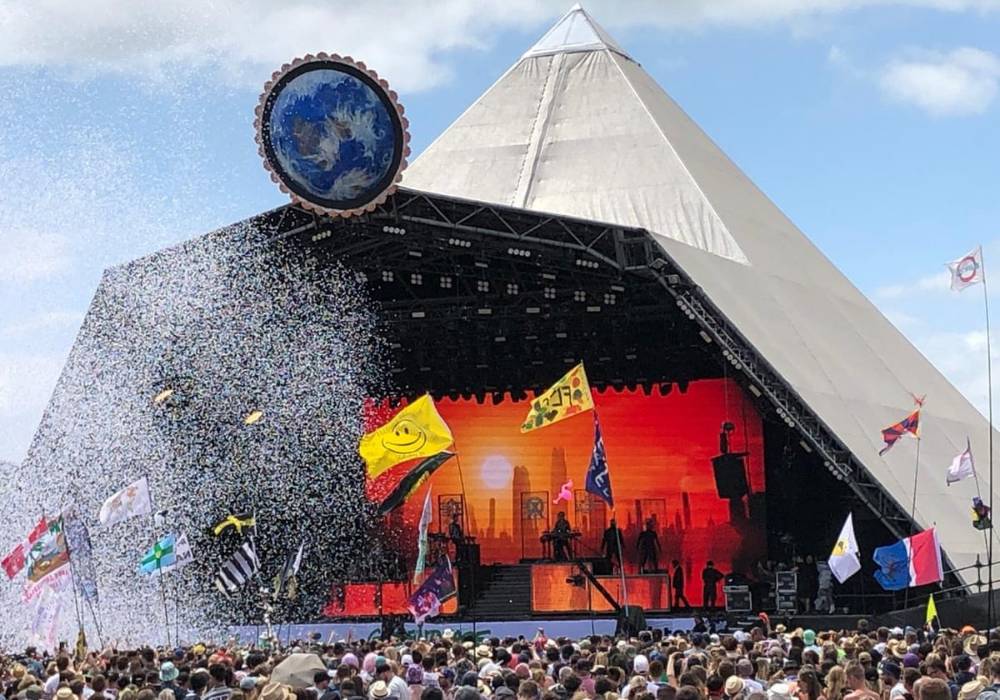
Glastonbury festival 2019
With the frustration of the lack of change in festival line-ups, a few events exclusive to women have emerged in the past years, such as musician Brandi Carlile’s Girls Just Wanna Weekend and We Can Do It Record. However, small events such as these are targeted at fans of the artists and those with a keen interest in music equality. However, we need mainstream representation and buy-in we are to see a change across the industry.
This lack of visibility for female artists leaves young girls with no one to identify or look up to. This then leads to fewer girls likely to start playing music, and if they do, it’s rarely to pursue a professional career. This becomes a vicious circle: the fewer women that are represented, the less likely young girls are likely to want to be musicians.
Another issue for women in music, but also in any professional situation is how they are judged for what they look like instead of what should matter here: their music. Society’s hyper-sexualisation of women often sees them reduced to their appearance, and not the art itself. Women are constantly over-sexualized and fetishized without their consent, this is felt even more so by women of colour and trans women. However, when they reclaim their bodies, it is slut-shaming that can diminish their music. The value of women’s music is then defined by the male gaze, this is exacerbated by the fact that those in senior positions within the industry are mainly men. It proves once again that having women in those important roles could make a change. Any choice of branding or behaviour is a big risk for women and their careers, while male artists will do the bare minimum and not be questioned about the decisions they make or the way they present themselves.
Women are meant to compete with each other to get the “famous female pop star” label that is rarely given out more than once at a time. Whilst one can see her career ascending, another will watch hers slow down. At the same time, men are drawn to collaborate very often, making the balance more uneven.
Finally, when women are encouraged to pursue a career in music, double standards tend to make them seek a future as vocalists in pop music more than any other instrument or genre, even less as producers. Music trends nowadays tend to link songwriting and technology with the rise of hyperpop and electronic, emphasizing the role of production. A study looking at the Billboards Hot 100 and Grammy nominations showed that only 2% of the producers were women. Society’s double standard of men being associated with technology means women are given fewer chances to excel in this area.
This clear inequality caused by cis white men in senior roles affects an even bigger barrier for other marginalised groups such as women of colour and LGBTQ+ artists. While fewer chances are given to women in this field, trans women have got to fight their way through the industry even harder to get the slightest ray of light from the mainstream public on their music. On top of this, the binary structure of gender in the industry excludes non-binary artists from visibility. Award ceremonies never feature categories for non-binary artists – it is not hard to understand the struggle faced for genderqueer artists to find a place and a way to flourish within the music industry.
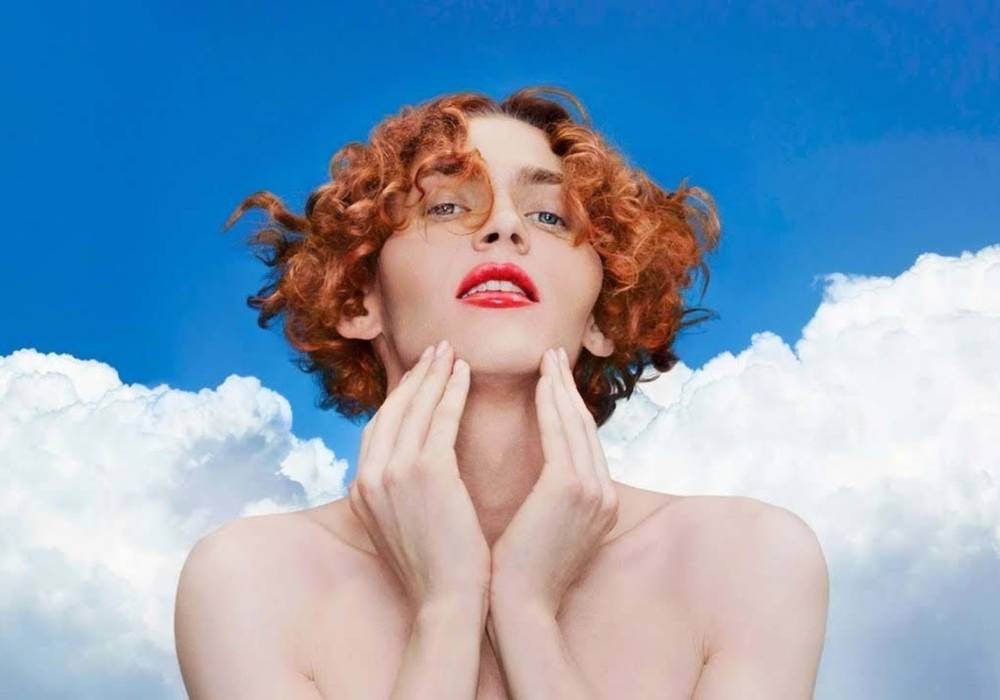
This has led to the trans community creating their own space and industry, majoring in electronic, pop and hyperpop. We have recently lost one of the biggest role models for the trans community in music: SOPHIE, a leader in the electronic production world. She had an immense influence on a lot of genderqueer peers and SOPHIE’s music helped the trans community to gather and evolve with other role models such as Arca, ANOHNI or Kim Petras.
Patriarchal structures exist across our society, and the music industry is no different. Although we have seen a rise in conversations discussing the inequalities within music, a lot is left to be done to truly overturn them. Many of the initiatives to make these changes are aimed at festival line-ups, focusing less on the business side of music. A change in tactic, however, could be the key to overcoming this; by focusing on early music education, we can give the same music opportunities to everyone and see a rise of artists tearing down the patriarchal barriers that came before them.