
Workplace discrimination - how it impacts LGBTQ+ careers
January 19, 2026Facing stereotypes and subtle exclusion in professional settings is a reality for many LGBTQ+ professionals from New York to Sydney.

Understanding workplace discrimination is key to pushing back against barriers that stifle career growth and lessen job satisfaction. By unpacking common misconceptions and exploring how bias truly manifests, you equip yourself to both navigate challenges and advocate for lasting change in organizations worldwide.
Defining Workplace Discrimination and Misconceptions
Workplace discrimination against LGBTQ+ professionals represents a persistent challenge in modern employment environments. This complex issue extends far beyond simple prejudice, involving systematic barriers that can significantly impede career progression and professional development. Workplace discrimination fundamentally occurs when an individual receives unfair treatment based on their sexual orientation, gender identity, or gender expression.
Discrimination manifests in multiple nuanced forms, ranging from subtle microaggressions to overt employment practices that directly disadvantage LGBTQ+ workers. These can include unfair hiring practices, unequal compensation, limited promotion opportunities, hostile work environments, and direct harassment. Research indicates that LGBTQ+ professionals experience higher rates of workplace marginalization compared to their heterosexual and cisgender counterparts, with transgender individuals facing particularly significant challenges.
Common misconceptions about workplace discrimination often minimize its real impact. Many people incorrectly believe that legal protections completely eliminate discriminatory practices, when in reality, these protections vary widely across different jurisdictions and organizational cultures. Some employers mistakenly assume that having a non-discrimination policy automatically creates an inclusive environment, overlooking the nuanced cultural shifts required to genuinely support LGBTQ+ professionals.
Understanding discrimination requires recognizing its systemic nature. It is not just about individual acts of prejudice but about deeply embedded workplace structures that can unconsciously disadvantage certain groups. Comprehensive approaches to addressing workplace discrimination must involve ongoing education, transparent policies, accountability mechanisms, and a genuine commitment to creating environments where every professional can thrive regardless of sexual orientation or gender identity.
Pro tip: Document and report any discriminatory incidents professionally, focusing on specific behaviors and their impact on your professional performance and workplace experience.
Types of Discrimination Affecting LGBTQ+ Employees
LGBTQ+ professionals face a complex landscape of workplace discrimination that extends far beyond simple prejudice. Workplace discrimination patterns reveal multiple systematic barriers that can profoundly impact career trajectories and professional experiences. These discriminatory practices manifest in diverse and often subtle forms, creating significant challenges for LGBTQ+ workers across various industries.
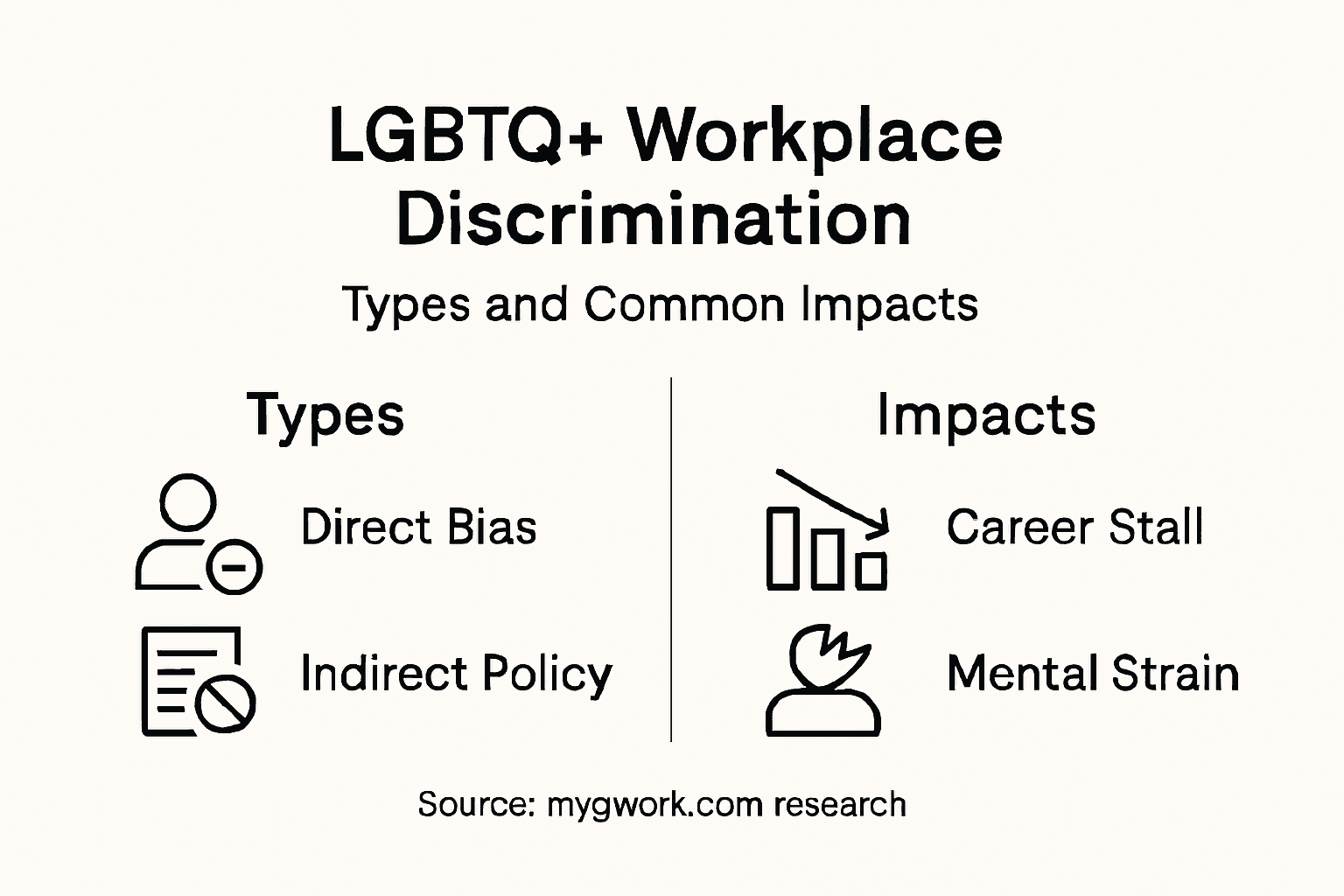
The most prevalent types of discrimination include direct and indirect forms of marginalization. Direct discrimination involves explicit actions like refusing to hire, promote, or provide equal compensation based on sexual orientation or gender identity. Indirect discrimination occurs through more nuanced mechanisms such as workplace policies, cultural practices, and unwritten social norms that systematically disadvantage LGBTQ+ professionals. Discrimination and exclusion strategies demonstrate how these practices can create hostile work environments that prevent genuine professional inclusion.

Specific discriminatory behaviors include invasive personal questioning, intentional misgendering, exclusion from professional networks, denial of career development opportunities, and targeted harassment. Transgender and non-binary employees often experience the most extreme forms of workplace discrimination, facing additional layers of scrutiny regarding appearance, documentation, and gender expression. These experiences can lead to significant psychological stress, reduced job satisfaction, and increased professional instability.
Intersectional discrimination adds further complexity, with LGBTQ+ professionals of color, those with disabilities, or from lower socioeconomic backgrounds experiencing compounded marginalization. Employers must recognize that discrimination is not a monolithic experience but a dynamic interaction of multiple identity factors that can dramatically impact an individual’s professional journey.
Here’s a quick comparison of workplace discrimination types and their long-term impact on LGBTQ+ professionals:
Pro tip: Maintain detailed documentation of discriminatory incidents, including dates, specific behaviors, and potential witnesses, which can provide critical evidence if formal reporting becomes necessary.
Legal Protections and Global Frameworks
The landscape of legal protections for LGBTQ+ professionals varies dramatically across different global jurisdictions, creating a complex patchwork of rights and potential vulnerabilities. Global employment discrimination data reveals significant disparities in legal frameworks protecting LGBTQ+ workers, with some countries offering comprehensive protections while others maintain discriminatory policies that actively marginalize sexual and gender minorities.
In the United States, significant legal progress has emerged through landmark Supreme Court decisions and federal enforcement mechanisms. Workplace discrimination laws now explicitly protect employees from discrimination based on sexual orientation and gender identity under Title VII of the Civil Rights Act. These protections prohibit employers from making employment decisions based on an individual’s LGBTQ+ status, covering critical areas such as hiring, promotion, compensation, and termination.
International legal frameworks demonstrate varying levels of protection, with some regions like the European Union implementing robust anti-discrimination directives, while other countries maintain limited or no legal safeguards for LGBTQ+ professionals. Multinational corporations increasingly develop internal policies that transcend local legal minimums, recognizing that workplace inclusivity requires proactive strategies beyond mere legal compliance. These comprehensive approaches often include explicit non-discrimination policies, diversity training, employee resource groups, and transparent reporting mechanisms for potential workplace discrimination.
Despite growing legal protections, enforcement remains a significant challenge. Many LGBTQ+ professionals still face considerable barriers in pursuing legal recourse, including complex documentation requirements, potential career repercussions, and systemic biases within judicial and administrative systems. The effectiveness of legal frameworks ultimately depends not just on written statutes, but on genuine cultural transformation within professional environments.
Pro tip: Research your specific jurisdiction’s employment laws and document any potential discriminatory incidents with precise details to strengthen potential legal claims.
Employer Responsibilities and Compliance Measures
Employers play a critical role in creating inclusive workplace environments that protect and support LGBTQ+ professionals. Workplace inclusion strategies demonstrate that effective compliance goes far beyond mere legal minimums, requiring comprehensive organizational transformation and genuine commitment to diversity and equity.
Comprehensive compliance measures encompass multiple strategic dimensions. These include developing explicit non-discrimination policies that clearly outline protections for sexual orientation and gender identity, implementing robust training programs that address unconscious bias, and establishing transparent reporting mechanisms for potential workplace discrimination. Organizations must create safe channels for employees to report concerns without fear of retaliation, ensuring confidentiality and providing multiple reporting options that accommodate different comfort levels.
Beyond policy development, employers must actively cultivate inclusive workplace cultures. This requires systematic approaches like diverse recruitment practices, equitable promotion pathways, gender-neutral facilities, and employee resource groups that provide support and visibility for LGBTQ+ professionals. Leadership plays a crucial role in modeling inclusive behaviors, demonstrating that commitment to diversity is not just a procedural requirement but a fundamental organizational value. Successful implementation involves ongoing assessment, regular training updates, and a willingness to adapt policies based on employee feedback and evolving best practices.
Technology and data can significantly support compliance efforts by providing objective metrics and insights into workplace inclusivity. Anonymous employee surveys, diversity dashboards, and structured performance review processes can help organizations identify potential systemic biases and track progress in creating genuinely inclusive environments. These tools enable proactive identification of potential discrimination patterns and support evidence-based interventions.
Review this summary of effective employer strategies for supporting LGBTQ+ inclusivity:
Pro tip: Conduct regular, anonymous workplace climate surveys to gather authentic insights about LGBTQ+ employee experiences and identify potential areas for improvement in your organization’s inclusion strategies.
Risks of Ignoring Discrimination in Workplaces
Ignoring workplace discrimination against LGBTQ+ professionals carries profound and multifaceted consequences that extend far beyond individual experiences. Workplace discrimination challenges reveal devastating impacts on employee mental health, organizational culture, and overall professional productivity, creating systemic barriers that undermine workplace effectiveness.
The psychological toll of unaddressed discrimination is particularly significant. LGBTQ+ employees experiencing persistent marginalization frequently develop chronic stress, anxiety, and depression, which directly compromise their professional performance and personal well-being. Workplace conflict dynamics demonstrate that organizations failing to create inclusive environments experience higher turnover rates, reduced employee engagement, and diminished collective morale. These negative outcomes translate into tangible financial consequences, including increased recruitment costs, reduced productivity, and potential legal liabilities.
Organizational reputation represents another critical risk of discrimination ignorance. In an era of heightened social awareness and transparent corporate practices, companies perceived as discriminatory face significant public relations challenges. Potential employees, customers, and investors increasingly evaluate organizations based on their commitment to diversity and inclusion, meaning that discriminatory workplace cultures can result in substantial talent acquisition difficulties, market perception challenges, and potential economic repercussions.
Moreover, ignoring discrimination creates a cascading effect of negative workplace dynamics. When LGBTQ+ professionals feel unsupported, they are less likely to contribute fully, share innovative ideas, or develop meaningful professional relationships. This suppression of potential undermines organizational creativity, collaboration, and competitive advantage, ultimately limiting the entire workforce’s collective potential.
Pro tip: Regularly conduct anonymous employee sentiment surveys to proactively identify and address potential discrimination risks before they escalate into systemic workplace issues.
Advocating for Inclusion and Safer Work Environments
Advocacy for LGBTQ+ workplace inclusion demands strategic, multilayered approaches that transform organizational cultures from the ground up. Workplace equality strategies emphasize the critical importance of systematic interventions that go beyond superficial policy changes, focusing instead on genuine cultural transformation and meaningful support mechanisms.
Effective advocacy requires comprehensive strategies that address multiple organizational dimensions. This involves developing robust training programs that challenge unconscious biases, creating transparent reporting mechanisms for discrimination, and establishing employee resource groups that provide genuine support networks. Inclusive workplace frameworks highlight the necessity of leadership commitment, demonstrating that true inclusion requires active engagement from executives, managers, and team leaders who must model inclusive behaviors and create psychologically safe environments.
Individual LGBTQ+ professionals also play a crucial role in advocacy. This includes sharing personal experiences when comfortable, supporting colleagues, participating in diversity initiatives, and holding organizations accountable through constructive feedback. Allies are equally important, with their active support and amplification of LGBTQ+ voices creating powerful momentum for systemic change. Successful advocacy involves creating spaces where diverse experiences are not just tolerated but genuinely celebrated and integrated into organizational culture.
Technology and communication platforms can significantly enhance advocacy efforts by providing visibility, connection, and support networks. Digital platforms, internal communication channels, and professional networking spaces offer unprecedented opportunities for LGBTQ+ professionals to share experiences, access resources, and build community resilience. These tools enable collective action, knowledge sharing, and strategic collaboration in pursuing workplace equality.
Pro tip: Document your workplace experiences, build a supportive professional network, and be prepared to constructively engage with organizational leadership about inclusion initiatives.
Take Control of Your Career and Overcome Workplace Discrimination Today
Workplace discrimination creates real barriers that impact LGBTQ+ professionals’ career growth and well-being. If you have experienced unfair treatment, exclusion, or marginalization based on your identity this article clearly shows how these challenges affect advancement and professional fulfillment. You do not have to face these obstacles alone. Building connections with supportive employers and like-minded peers can empower you to navigate your career confidently while promoting inclusion.
Join mygwork.com, the leading platform fostering diversity and inclusion within the workforce. Here you can create a professional profile, discover trusted LGBTQ+ friendly job opportunities, and connect with a vibrant community committed to workplace equality. Take the step now to surround yourself with resources and networks specifically designed to help you thrive despite the challenges of workplace discrimination. Visit mygwork.com and transform your career journey today.
Frequently Asked Questions
What is workplace discrimination against LGBTQ+ individuals?
Workplace discrimination against LGBTQ+ individuals occurs when unfair treatment is based on sexual orientation, gender identity, or gender expression, impacting career advancement and development.
How can I recognize different types of discrimination in the workplace?
Discrimination can be direct, such as being denied a promotion, or indirect, like biased workplace policies. It also includes microaggressions and intersectional discrimination, affecting individuals with multiple marginalized identities.
What legal protections exist for LGBTQ+ employees in the workplace?
Legal protections for LGBTQ+ employees vary widely, with some jurisdictions providing comprehensive protections against discrimination based on sexual orientation and gender identity, often enforced by federal laws.
How can employers create an inclusive environment for LGBTQ+ workers?
Employers can foster inclusivity by developing clear non-discrimination policies, implementing diversity training, establishing employee resource groups, and regularly assessing workplace culture through anonymous feedback mechanisms.