
Workplace Diversity: Complete Guide for Professionals
October 1, 2026
More than half of employees say they perform better in workplaces that embrace diversity and inclusion. Today, organizations face higher expectations from both talent and customers to foster environments where every voice is respected and valued. Understanding workplace diversity is not just about numbers, it is about building teams that thrive through difference and collaboration. This guide explains what true inclusion means, the types of diversity that matter, and how these efforts shape stronger, more resilient organizations.
Key Takeaways
| Point | Details |
|---|---|
| Embrace Diversity for Innovation | Organizations that prioritize diverse perspectives enhance creativity and problem-solving capabilities, leading to improved overall performance. |
| Implement Strategic Inclusion Policies | Clear diversity and inclusion policies are essential to foster a truly inclusive environment where all employees feel valued and empowered. |
| Understand Legal Obligations | Employers must navigate legal considerations to prevent discrimination and ensure equal opportunities while striving for proactive inclusivity. |
| Ongoing Education is Crucial | Continuous training on unconscious bias and cultural competence is vital to support inclusivity and address systemic barriers within the workplace. |
Defining Workplace Diversity and Inclusion
Workplace diversity and inclusion represent more than just corporate buzzwords - they are fundamental strategies for creating equitable, dynamic professional environments where every individual can thrive. According to the Inclusive Excellence framework, diversity is not simply about representation, but about integrating varied perspectives into an organization’s core mission and operational strategies.
Workplace diversity encompasses the recognition and celebration of differences among professionals, including but not limited to race, gender, sexual orientation, age, disability status, religious background, and cultural heritage. It goes beyond mere numeric representation to foster an environment where every employee feels valued, respected, and empowered to contribute their unique perspectives. As research from Equality, Diversity and Inclusion suggests, true organizational excellence emerges when institutions actively support and engage all community members.
The key components of effective workplace diversity and inclusion strategies include:
- Intentional recruitment practices that attract talent from underrepresented groups
- Equitable promotion pathways that provide opportunities for all professionals
- Cultural competence training to build mutual understanding
- Inclusive leadership that champions diverse perspectives
- Ongoing dialogue about systemic barriers and opportunities for growth
By embracing diversity, organizations unlock significant potential: enhanced creativity, broader problem-solving capabilities, improved employee satisfaction, and stronger connections with diverse customer bases. Learn more about our mission to support LGBTQ+ professionals and create meaningful workplace connections that transcend traditional boundaries.
Types of Diversity in the Workplace
Workplace diversity is a multifaceted concept that extends far beyond simple demographic representation. According to Oyster HR, workplace diversity encompasses a wide range of dimensions that collectively shape organizational culture and professional interactions.
Demographic diversity represents the most visible layer of workplace diversity, including characteristics such as:
- Race and Ethnicity: Reflecting the varied cultural backgrounds professionals bring to their roles
- Gender Identity: Recognizing and valuing individuals across the gender spectrum
- Sexual Orientation: Creating inclusive spaces for LGBTQ+ professionals
- Age: Embracing multigenerational workplace dynamics
Beyond demographic characteristics, People Insight highlights deeper dimensions of workplace diversity that profoundly impact organizational culture. Experiential diversity captures the less visible but equally significant differences in professional backgrounds, including:
- Socioeconomic experiences
- Religious and cultural perspectives
- Disability and neurodiversity
- Educational and professional training pathways
These diverse perspectives are not just about representation - they are powerful catalysts for innovation, creativity, and organizational resilience.
Here’s a comparison of key types of workplace diversity:
| Category | Description | Examples |
|---|---|---|
| Demographic Diversity | Outward, visible differences | Race & Ethnicity Gender Identity Sexual Orientation Age |
| Experiential Diversity | Backgrounds and lived experiences | Socioeconomic Status Disability & Neurodiversity Religious Perspective Education & Training |
| When professionals from varied backgrounds collaborate, they bring unique problem-solving approaches, challenge existing assumptions, and create more dynamic, adaptive work environments. Learn more about our mission to support LGBTQ+ professionals and celebrate the rich tapestry of human experience in the workplace. |
Benefits of a Diverse Workplace Culture
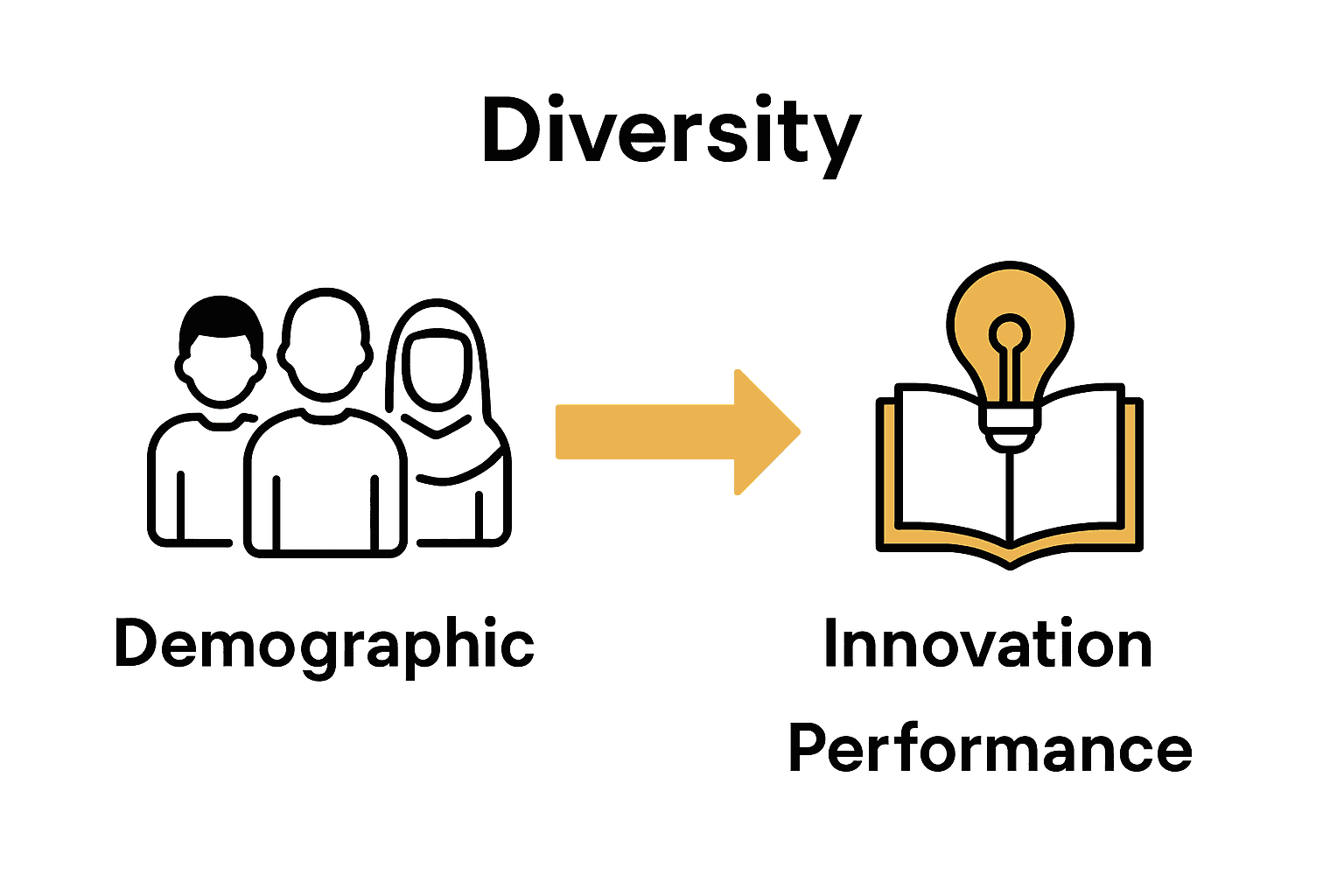
Diverse workplace cultures are not just morally imperative - they are strategic business advantages that drive organizational success. ArXiv research highlights that fostering workplace diversity directly correlates with higher standards of innovation, trust, and employee satisfaction, transforming traditional workplace dynamics.
Organizational Performance Benefits emerge through multiple channels:
- Enhanced problem-solving capabilities
- Increased creativity and innovation
- Broader market understanding
- More comprehensive decision-making processes

- Improved talent attraction and retention
Interestingly, research from ArXiv reveals nuanced insights into team dynamics, demonstrating that while age diversity positively impacts team effectiveness, gender diversity can initially create relational challenges. The critical factor? Psychological safety - creating environments where diverse team members feel respected, heard, and empowered to contribute.
Beyond tangible performance metrics, diverse workplace cultures cultivate profound human connections. They challenge unconscious biases, expand individual perspectives, and create environments where professionals from all backgrounds can authentically express themselves.
 These cultures become catalysts for personal and collective growth, breaking down systemic barriers and reimagining workplace potential. Learn more about our mission to support LGBTQ+ professionals and contribute to meaningful workplace transformation.
Inclusion Strategies for Employers and Teams
Building a truly inclusive workplace requires more than passive good intentions. As explored in the concept of the Illusion of Inclusion, simply having a diverse workforce does not guarantee meaningful integration - organizations must actively work to unlock the full potential of their diverse talent.
Strategic Inclusion Approaches for employers and teams include:
- Developing clear diversity and inclusion policies
- Creating transparent recruitment and promotion processes
- Implementing ongoing unconscious bias training
- Establishing mentorship and sponsorship programs
- Fostering employee resource groups
According to Diversity Charter principles, organizations should develop comprehensive documents that outline their commitment to creating an inclusive workplace. These charters go beyond surface-level representation, focusing on:
- Promoting equal opportunities
- Combating systemic discrimination
- Creating supportive organizational cultures
- Ensuring psychological safety for all employees
Successful inclusion strategies require continuous commitment, open communication, and a willingness to challenge existing organizational norms. This means creating environments where every professional feels valued, heard, and empowered to contribute their unique perspectives. Explore our talent solutions for supporting LGBTQ+ professionals and building more inclusive workplace ecosystems.
Legal Rights, Responsibilities, and Pitfalls
Navigating the complex landscape of workplace diversity requires a nuanced understanding of legal frameworks and organizational responsibilities. Journal of Diversity in Higher Education research highlights the critical importance of understanding institutional obligations in promoting equitable workplace environments.
Key Legal Considerations for employers include:
- Protecting against discriminatory hiring practices
- Ensuring equal opportunity for promotion and advancement
- Providing reasonable accommodations for disabilities
- Maintaining confidentiality of personal information
- Implementing consistent anti-harassment policies
Interestingly, emerging research from ArXiv introduces innovative approaches to addressing systemic inequities, such as developing model-driven recruitment decision support tools that can help mitigate unconscious biases in the screening process. These tools aim to understand and reduce socioeconomic disparities that often create barriers to workplace inclusion.
Employers must recognize that legal compliance is just the minimum standard. True inclusivity requires going beyond mere legal requirements to create environments where every professional feels genuinely valued and supported. Potential legal pitfalls often emerge from:
- Inconsistent policy enforcement
- Inadequate documentation of diversity efforts
- Failure to provide meaningful accommodations
- Neglecting to address systemic barriers
Contact our team for personalized guidance on building legally robust diversity strategies and creating workplaces that truly champion equality and inclusion.
Empower Your Career with Inclusive Connections Today
Understanding the challenges of creating truly inclusive workplaces, especially those highlighted in “Workplace Diversity: Complete Guide for Professionals,” can feel overwhelming. From navigating unconscious bias to finding environments that genuinely support diversity and inclusion strategies, many LGBTQ+ professionals seek a space where they can thrive, be heard, and grow. Recognizing concepts like psychological safety and addressing systemic barriers are essential, but finding allies and career opportunities that align with these values remains a critical need.
Discover a community designed specifically to tackle these challenges head-on. At mygwork.com, you can connect with inclusive employers, access specialized job listings, and engage with resources focused on advancing LGBTQ+ workplace equality. Join a platform where every professional experiences respect and empowerment while building meaningful career relationships. Act now to unlock your potential within a truly supportive network and become part of a movement that is reshaping workplace culture for good. Visit mygwork.com to start your journey toward a more inclusive professional future.
Frequently Asked Questions
What is workplace diversity?
Workplace diversity refers to the recognition and celebration of differences among professionals, including characteristics such as race, gender, sexual orientation, age, and cultural heritage. It promotes an environment where every employee feels valued and empowered.
Why is inclusion important in the workplace?
Inclusion is crucial as it ensures that diverse team members feel respected and heard, thereby unlocking their potential to contribute their unique perspectives. This leads to enhanced creativity, better problem-solving capabilities, and improved employee satisfaction.
What strategies can employers implement to promote diversity and inclusion?
Employers can promote diversity and inclusion by developing clear diversity policies, creating transparent recruitment and promotion processes, implementing ongoing unconscious bias training, establishing mentorship programs, and fostering employee resource groups.
What are the legal considerations for workplace diversity?
Employers must protect against discriminatory hiring practices, ensure equal opportunities for promotion, provide reasonable accommodations for disabilities, maintain confidentiality of personal information, and implement consistent anti-harassment policies.