
World AIDS Day: We Can All Play a Role in Fighting Stigma
December 1, 2021Today marks World AIDS Day, a day where people across the world come together, united in the fight against HIV, to show support for people living with HIV, and to commemorate those who have died from an AIDS-related illness. Founded thirty-three years ago, it was the first-ever global health day and has been vital in spreading awareness and education around HIV throughout the past three decades.
HIV is a virus that was first noticed around the early ’80s. The virus works in a way that weakens your immune system, if untreated it can make it increasingly difficult for you to fight everyday infections and diseases. At the beginning of the epidemic, there was a cloud of homophobia around HIV that still exists today. This was fueled by the media, often referring to the virus as a “gay plague”, with no science to back this up, and was a major barrier in both the development and access of medication to save the lives of those living with HIV.
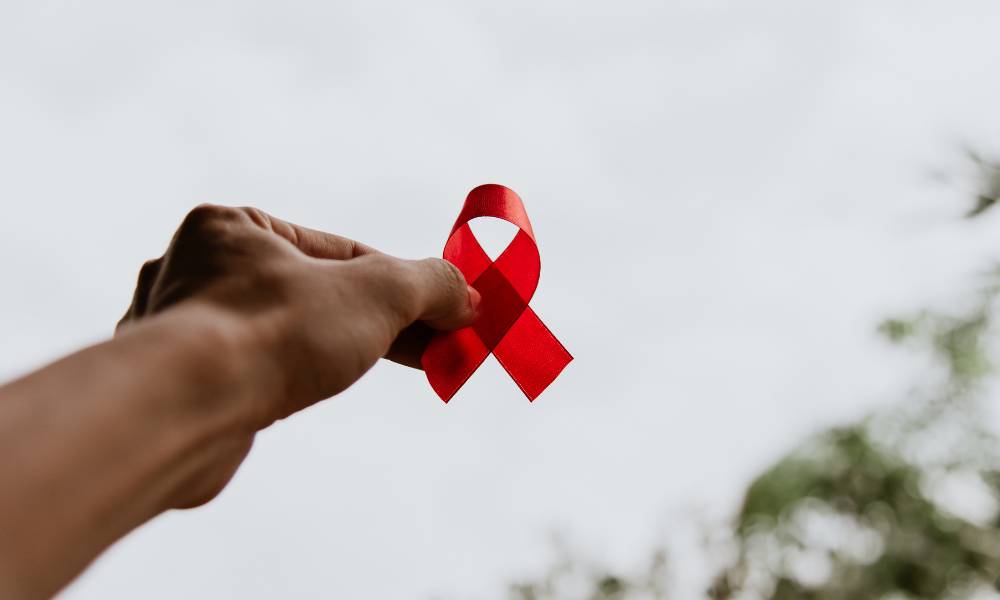
Today, medical advancements have come leaps and bounds, and an HIV diagnosis is not a death sentence, with the majority of people diagnosed with the virus will live long, healthy lives. With effective treatment, people living with HIV can reduce the level of the virus in their body to undetectable, meaning they cannot pass the virus on (even through unprotected sex) and will live a long and healthy life.
Despite this, there is still a huge amount of misinformation surrounding the virus, meaning that although an HIV diagnosis does not come with a death sentence, it does come with a heavy amount of stigma and discrimination. Much of this comes from information that is still rooted in the LGBTQ-phobic attitudes of the 1980s. Although we now have medication that means people living with HIV cannot pass on the virus, many people still hold outdated views and discriminate against those living with HIV. It is one of the only illnesses where the stigma can be more deadly than the illness itself, but through education, we can and must change this.
The workplace has a vital role to play in this. People living with HIV work across professions and industries, and in many parts of the world, such as the UK and Europe, are protected by the law – meaning it is illegal to discriminate against someone because of their HIV status. This means that organizations have a responsibility to ensure that if their employees are living with HIV that they can work free from discrimination.
It’s not just the law urging workplaces to take part in this conversation, with the public opinion backing this up. A recent poll from myGwork showed that 89% of people thought that organizations should be responsible for educating and removing stigma around HIV. This is giant strides forward from previous generations where topics of sexual health have been shunned and silenced. Yet this shows how more and more people agree these are important topics that a workplace shouldn’t shy away from.
On top of this, myGwork’s recent poll shows that education around HIV is also improving. Undetectable = Untransmittable, or U = U, has been used in campaigns to help spread the word that people living with HIV that are on effective treatment cannot pass on the virus. In other words, effective treatment reduces the amount of HIV in a person’s blood so low that it is “undetectable”, and at that point of the virus cannot be transmitted or is “untransmittable”. This is a scientific fact, with countless studies to back it up, and myGwork’s recent poll showed that 79% of people asked could explain U = U if asked.
“People have been living with HIV and taking their medicine and getting to viral suppression for many, many years and living and loving healthily and wholly without passing HIV to their sexual partners,” Tori Cooper from the Human Rights Campaign explains. “And as a Black trans woman that’s so vitally important because so many folks I knew growing up and so many folks I came out with passed away before they got access to HIV medication or because they couldn’t get to an undetectable viral load.”
Thanks to modern medical advancements a world without HIV is now a tangible possibility, something that couldn’t have been dreamed of even a few decades ago. However, for this to become a reality we have to fight the cloud of discrimination and misinformation that follows the virus. Education around HIV and sexual health is moving forward, but we can’t lose momentum. A world without HIV transmissions and stigma is within reach and we all can play a role in reaching it.